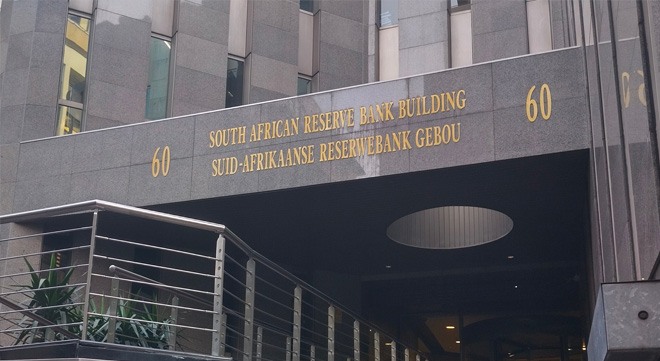
South Africa entered 2026 with inflation at target and expectations well anchored, but the external environment has shifted. The South African Reserve Bank (SARB) says higher global energy prices – driven by the escalating Middle East conflict – have “deteriorated” the near-term inflation outlook and introduced a more complex policy trade-off.
In its April 2026 Monetary Policy Review, released on Tuesday, the SARB reports that headline inflation slowed to 3% in February 2026, with 2025 inflation averaging 3.2% – a 21-year low. However, “headline inflation is projected to rise temporarily in the near term as the oil shock feeds through”, before returning to target from late 2027.
Headline inflation increased to 3.1% in the 12 months to March, Statistics South Africa said yesterday. Prices increased on average by 0.6% in March compared with February.
The SARB’s baseline forecast shows headline inflation peaking at 4% in the second quarter of 2026 and averaging 3.7% for the year, before easing back to target.
The Bank states that “the near-term inflation outlook has deteriorated significantly”, with risks “skewed to the upside”, reflecting uncertainty around oil prices, supply disruptions, and second-round effects.
It notes that sustained Brent crude prices above US$100 per barrel could lift inflation to 4.6% in 2026, keeping it above target until the fourth quarter of 2028.
Underlying pressures remain contained. Core inflation averaged 3.2% in 2025, while inflation expectations declined to 3.6%, a “record low”, following the adoption of the 3% target and the broader disinflation trend.
The SARB also notes that temporary relief measures – including a R3 per litre fuel levy reduction – should moderate the near-term inflation impact of higher oil prices.
The SARB reiterates that it “remains committed to achieving the 3% inflation target over the medium term”.
Within its flexible inflation-targeting framework, policymakers may look through temporary, first-round effects of supply shocks such as higher fuel prices. However, policy will respond if these shocks feed into broader and persistent pressures.
The Review states: “Monetary policy cannot prevent the direct impacts of higher energy prices, as these reflect in surveyed inflation immediately. Its role is to prevent broader and persistent inflation pressures through second-round dynamics in wages and inflation expectations. These risks increase when shocks are large or prolonged, as price- and wage-setting behaviours may deviate materially from expected patterns.”
Well-anchored inflation expectations, together with the lower 3% target, are highlighted as providing a buffer that allows monetary policy to accommodate typical cost-push shocks with less risk of secondary inflation pressures.
The SARB reduced the policy rate by 25 basis points to 6.75% in November 2025 and has since held it unchanged, with the stance described as “moderately restrictive”.
The decision reflects “caution amid rising geopolitical tensions, as well as uncertainty about the outlook for inflation and inflation expectations”.
The Review highlights the role of judgement in policy decisions. The SARB’s Quarterly Projection Model (QPM) – its core forecasting tool used to generate inflation and interest rate projections – had suggested a rate cut in early 2026, but the Monetary Policy Committee’s risk assessment and judgement around the QPM baseline forecast “enable more robust policy decisions than reliance on the model alone would allow”.
Market pricing has adjusted accordingly, with markets now anticipating policy rate increases this year, compared with expectations of cuts prior to the conflict.
Over the medium term, the real policy rate is projected to converge to its neutral level by 2028 as inflation returns to target and the output gap closes.
Scenario analysis: divergent paths for inflation and rates
The SARB sets out alternative scenarios that differ in the duration and severity of the energy shock, as well as associated movements in risk premia and the exchange rate.
In the baseline, headline inflation averages 3.7% in 2026, easing to 3.3% in 2027 and 3% in 2028, consistent with a return to target.
The intermediate scenario assumes a relatively short conflict of about two months, after which the Strait of Hormuz re-opens and the oil supply gradually normalises. The risk premium rises by about 10% at its peak and the rand depreciates by about 5%.
Under this scenario, inflation rises to 4.05% in 2026, before moderating to 3.6% in 2027 and returning to target in 2028. The policy response is limited, with the policy rate projected at 6.67% at the end of 2026, indicating modest tightening.
The severe scenario assumes a conflict lasting more than a year, with significant damage to energy infrastructure and prolonged disruption to key shipping routes. The risk premium increases by about 20% and the rand depreciates by about 10% at its peak.
In this case, inflation increases to 4.56% in 2026 and 5.53% in 2027, remaining above target at 3.45% in 2028. The policy rate is projected to rise to 8.17% by the end of 2026, before declining gradually.
The Review explains that such front-loaded tightening reflects the need to act early, given the lags in monetary policy transmission, to limit second-round effects and prevent inflation expectations from becoming unanchored.
Growth outlook: fragile recovery amid rising headwinds
The SARB characterises South Africa’s economic recovery as fragile, with growth supported by consumption but constrained by structural factors.
Real GDP expanded by 1.1% in 2025, supported by household consumption, including the effects of easing inflation, lower interest rates, equity-related wealth gains, and withdrawals under the two-pot retirement system.
Investment activity weakened over the year, despite some improvement in the second half, reflecting ongoing structural constraints. This reduced its contribution to overall GDP growth.
Growth is projected to increase to 1.4% in 2026, rising to about 2% over the medium term, broadly in line with estimated potential output.
The SARB expects household consumption to remain a key driver, while investment is projected to recover as domestic demand firms and structural bottlenecks ease. It also notes that “credible commitments to lower inflation and stabilise public debt have reduced macro-economic risk and lowered long-term borrowing costs, lifting sentiment”.
However, risks to growth are “skewed to the downside”. A sustained increase in fuel prices could “significantly erode household real disposable income”, while fuel shortages could disrupt production.
The SARB also highlights “the peril of stagflation”, reflecting the combination of weaker growth and higher inflation risks in the current environment.
Policy trajectory: data-dependent, target-focused
The SARB emphasises that policy will remain guided by incoming data and evolving risks, stating it will “continually evaluate policy settings as new data is received” within the framework of its 3% inflation objective.
The Review presents an environment in which inflation is currently at target and expectations are well anchored, but increasingly exposed to external shocks, requiring a cautious and responsive policy stance.