
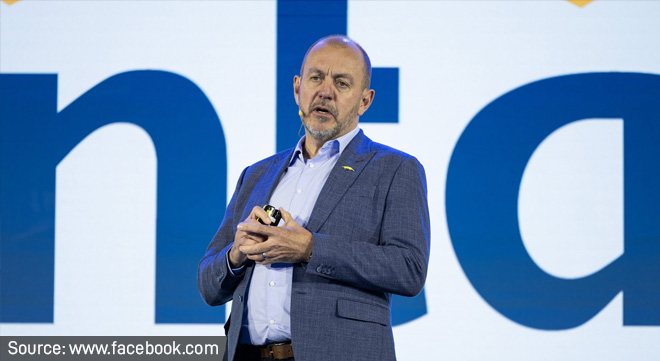
When Santam’s Fanus Coetzee (pictured) addressed delegates at the recent PSG Annual Conference, his message centred on a hardening reality for brokers and advisers: product and price are no longer enough to secure relevance.
Customers can now compare policies online, switch providers digitally, read policy wording themselves, and challenge exclusions directly. At the same time, insurers are investing heavily in automation, AI-assisted underwriting, predictive analytics, and direct-to-consumer platforms.
“The days when product at a price was good enough to compete is over,” said Coetzee, who is the chief executive of Santam Broker Solutions.
He cited industry data showing that only 56% of South African personal-lines consumers purchase insurance through the broker channel, while intermediary penetration in commercial insurance has already declined to about 78%.
That shift is placing increasing pressure on advisers who compete primarily on pricing.
“If you’re going to depend on just price,” he warned, “you’re in trouble.”
Clients increasingly expect something more difficult to quantify: speed, clarity, advocacy, guidance, and support when things go wrong.
“Price is visible,” Coetzee argued. “Value is understood… but only in hindsight.”
That, in his view, changes the role of advisers fundamentally. The future belongs less to product distributors and more to professionals capable of translating complexity, context, and risk into practical certainty for clients.
That shift formed the foundation of his broader argument: insurance may be enabled by technology, but trust is still built through human experience.
“Insurance is not a product,” he said. “It is a promise delivered in a moment of vulnerability.”
Claims as differentiator
Coetzee traced one of the industry’s clearest lessons to April 2022, when Storm Issa devastated parts of KwaZulu-Natal’s South Coast.
More than 400 people died. Thousands of homes were damaged or destroyed. Santam alone paid more than R2 billion in claims.
Large-scale catastrophe events, he argued, expose both the strengths and the weaknesses of the insurance industry very quickly.
“Clients don’t wake up excited about an insurance policy,” he said, “but they certainly don’t forget a claims experience.”
Coetzee said many insurers and brokers still mistakenly treat claims as an administrative process rather than the defining moment of the client relationship.
“Claims is not a process. It is a stage,” he said. “And on that stage… you either prove your value… or you lose it.”
The distinction matters because claims place clients in emotionally charged situations involving fear, confusion, financial pressure, and uncertainty.
“When you show up during a claim,” he said, “you bring clarity to confusion… you bring calm to chaos… you bring advocacy when it matters most.”
At that point, he argued, advisers stop being intermediaries and become trusted partners.
“How you show up at claims stage defines you,” was the lesson he drew from those experiences.
AI and automation are powerful – but humans remain irreplaceable
Coetzee acknowledged how aggressively the insurance industry has invested in technology over the past decade.
Online platforms, AI-assisted underwriting tools, automated claims systems, predictive analytics, and direct-to-consumer distribution models have fundamentally changed the operating environment.
He credited technology with improving efficiency, reducing friction, and allowing insurers to scale far more effectively than before.
He pointed to the 2017 Knysna disaster as an example.
When storms hit the southern Cape, digital systems processed massive claims volumes while maintaining service levels.
But the fires that followed exposed the limits of automation.
More than 500 homes were destroyed after flames spread through Knysna under extreme wind conditions.
Instead of relying solely on digital systems, Santam established a temporary physical claims office in the town. Brokers walked traumatised clients directly into the office, many carrying little more than the clothes they were wearing after losing homes, possessions, and pets.
Coetzee described sitting across from clients listening to stories of midnight evacuations, destroyed memories, and overwhelming loss.
“In their time of desperation and vulnerability,” he said, “no digital agent knew what a warm human did on the other side of the table.”
Technology can issue policies, process transactions, and automate workflows, he argued. It cannot replicate empathy, reassurance, or human presence.
“It’s going to be okay,” remains one of the most important things a client can hear during a crisis.
That reality, he suggested, will become even more important as AI capability expands.
“The guy that’s going to beat you,” he said, “is the one better at the AI – but not forgetting that you need to leverage the fact that you’re human.”
Crisis reveals partnership
Several of Coetzee’s examples centred on periods where the insurer-broker relationship came under pressure.
The Covid-19 pandemic, particularly the contingent business interruption disputes that followed lockdowns, tested relationships across the industry.
Santam received more than 3 000 business interruption claims linked to lockdown-related losses. The disputes became highly contested because they tested both policy wording and broader questions around fairness and responsibility.
“At first, we were forced to put down a strict interpretation,” Coetzee said, describing the insurer’s initial stance as legally defensible and financially prudent.
Over time, however, he argued that fairness ultimately “trumped technicality”.
The experience reinforced his broader argument that insurance works best when insurers and brokers operate as aligned partners rather than separate transactional businesses.
Crisis events expose whether relationships are transactional or built on trust.
“In times of crisis,” he argued, “transactional relationships fail but trusted partnerships thrive.”
Data has changed everything
Coetzee described modern insurance as increasingly driven by data.
Predictive analytics, geospatial modelling, behavioural indicators, claims trend analysis, automation, and AI-assisted underwriting now shape how insurers assess, select, and price risk.
But he cautioned against overestimating what algorithms can do in isolation.
“Data without context is dangerous,” he said.
He illustrated the point through the story of a farming client seeking higher fire liability cover.
Risk models initially rejected the request because the property bordered a plantation, lacked nearby municipal firefighting capacity, and appeared highly exposed on paper.
The broker did not challenge the data itself. Instead, the broker introduced context: natural firebreaks, riverbeds, and physical realities that the algorithm could not interpret properly.
The underwriting outcome changed once that nuance was added.
“Algorithms do not sit across from clients,” Coetzee said. “It does not understand nuance.”
Data, he argued, explains what is happening. Human judgement explains why it matters.
“Data provides the clever answers,” he said, “but from wisdom comes the right questions.”
Trust is the moat
Coetzee closed by returning to a concept he described as the defining competitive advantage for advisers: trust.
Using the image of a medieval castle, he argued that advice forms the “castle” while trust functions as the “moat” protecting it.
The castle consists of technical capability: understanding the client’s risk, interpreting grey areas in underwriting, and translating lived reality into insurable truth.
The moat is built differently.
It is built through transparency, advocacy, proactiveness, and consistently showing up when clients need support most.
“People don’t buy insurance from brokers because they understand risk,” he said. “They buy it from people they trust with the promise up-front and that they will deliver on the promise at the end of it.”
For Coetzee, the future of intermediation will belong to advisers who combine technology with humanity rather than choosing between them.
Automation may scale operations. Data may sharpen underwriting. AI may accelerate decision-making.
Trust, he argued, remains harder to replicate.


What a magnificent article
They are now preaching the way we were trained many years ago. Your company sells itself by service ESPECIALLY when a claim occurs. One hears horror stories of how cliensts are treated by in the main untrained staff and/or half trained external Iassessors sitting hundreds of kilometers away from you.
I am impressed by the article and hope that companies including brokers will learn to walk the talk