
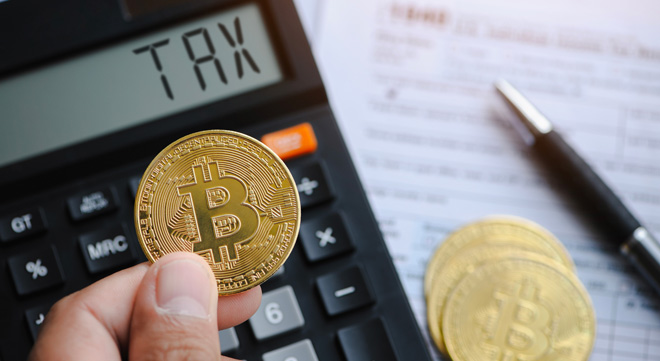
South Africans who trade, swap, mine, stake, or spend crypto assets may trigger tax consequences through certain crypto transactions even if they never convert their holdings into rands, according to a new draft guide published by the South African Revenue Service.
SARS’s Draft Guide to the Taxation of Crypto Assets, published on 1 July 2026, sets out SARS’s draft interpretation of how existing income tax and capital gains tax (CGT) rules apply to crypto assets. SARS states that the guidance is “foundational, rather than overly specific”, because of the pace of innovation in crypto assets and distributed ledger technology.
The draft guide deals with selected income tax and CGT consequences for people transacting in or holding crypto assets. It does not deal with the treatment of crypto assets under the Value-Added Tax Act.
SARS also states that the guide is not an official publication as defined in the Tax Administration Act and is not a binding general ruling.
Jashwin Baijoo, partner and head of strategic engagement and compliance at Tax Consulting SA, said in commentary that the draft guide “goes a long way” towards providing taxpayer certainty in the crypto sector. He said uncertainty about how to declare crypto transactions and their proceeds has contributed to historic non-compliance among crypto traders.
Crypto assets are generally not treated as money
The guide explains that, for the purposes addressed in the guide, crypto assets are generally not treated as money, currency, or foreign currency. SARS says crypto assets are also not “shares” and are not currently treated as assets traded on a “recognised exchange” for the relevant rules discussed in the guide.
The draft guide says the preferred interpretation of the legal nature of crypto assets is that although they are versatile and capable of negotiability, they are not currency and therefore not foreign currency. SARS states that crypto assets “belong more appropriately in the realm of intangible assets”.
This distinction matters because SARS says the rules applicable to shares do not apply to crypto assets. In particular, the statutory three-year rule in section 9C of the Income Tax Act, which may deem proceeds from certain shares to be capital in nature after three years, does not apply to crypto assets.
SARS also says crypto assets are included in the definition of “financial instrument” in section 1(1) of the Income Tax Act. This classification has consequences for CGT, personal-use asset treatment, trading stock, and certain anti-avoidance rules.
Tax consequences may arise without a rand conversion
For investors and tax advisers, one of the most important practical points is that SARS does not treat crypto tax as relevant only when a person cashes out into fiat currency.
The draft guide says the disposal of crypto for fiat currency can have tax consequences, depending on whether the crypto asset is held on revenue or capital account. If it is revenue in nature, the receipts are included in gross income and, after applicable deductions, subject to normal tax. If it is capital in nature, the proceeds are dealt with under the CGT rules.
However, SARS also deals with crypto-to-crypto transactions. It says exchanging one crypto asset for another is considered a barter transaction, unless the process involves an intermediary fiat conversion followed by a separate purchase. In a barter transaction, the taxpayer is treated as having disposed of the first crypto asset and acquired the second.
SARS states that the income tax and CGT consequences occur at the time of the crypto-to-crypto transaction and are “not deferred until the crypto asset is sold for fiat money”.
The same principle may apply when crypto is used to pay for goods or services. SARS says a payment using crypto may be structured as a direct barter transaction between two parties, or it may involve an intermediary that converts the crypto asset into fiat currency and pays the seller. The tax treatment depends on the actual structure of the transaction.
SARS cautions that it is important to understand the different steps involved in a transaction so that the tax consequences can be correctly determined.
Capital or revenue treatment remains fact-specific
The main dividing line in the draft guide is whether a crypto asset is held on capital account or revenue account. SARS says the Income Tax Act does not define whether an amount is capital or revenue in nature, and that courts have held there is “no single infallible test of invariable application”.
SARS says the taxpayer’s intention in relation to the crypto asset is important, including the intention at acquisition, while holding the asset, and at disposal. However, the taxpayer’s stated intention is not decisive on its own and must be supported by objective facts.
The draft guide says factors that may be relevant include the taxpayer’s conduct, the nature of the taxpayer’s business or occupation, the frequency of similar transactions, the period for which the crypto asset was held, the anticipated holding period at acquisition, and the nature of the risk undertaken.
SARS also considers the fact that many crypto assets do not provide an income stream such as interest, dividends, or rent. It compares this feature to Krugerrands, where returns are typically realised only through disposal. SARS says an investment that produces no or low ongoing return may, depending on the facts, indicate an intention to resell at a profit.
The guide states that crypto assets are generally highly volatile. SARS says a taxpayer who shows a low frequency of transactions and a long holding period may be able to sustain a capital intention, but where past transactions indicate that crypto assets were sold, exchanged, or moved to capitalise on market fluctuations, there is a stronger likelihood of a revenue intention.
The absence of a bright-line test is important. A taxpayer who held a crypto asset for several years will not automatically have a capital gain, and a taxpayer who traded infrequently will not automatically escape revenue treatment. SARS’s position is that all the facts must be considered.
Trading stock and losses
Where crypto assets are held as trading stock, SARS says the normal trading stock rules apply. Expenditure incurred in acquiring a crypto asset that constitutes trading stock will generally qualify for a deduction under section 11(a), subject to the normal requirements.
Because crypto assets are financial instruments, SARS says crypto assets held as trading stock at year-end must be included in closing stock at cost price, rather than at a diminished value. The draft guide also notes that the Income Tax Act prohibits the use of the last-in-first-out method for stock valuation.
SARS also discusses the ring-fencing of assessed losses for certain trades conducted by natural persons. The guide notes that the trades listed in section 20A include the acquisition or disposal of any crypto asset. If the ring-fencing provisions apply, a crypto asset trade loss may be carried forward and set off only against income from that trade in a later year.
Mining and staking rewards
SARS treats mining as a trade. The draft guide describes mining as a proof-of-work process in which a miner validates transactions and may be rewarded with a newly minted crypto asset or transaction fees.
According to SARS, the miner must include the market value of the crypto asset in gross income when the reward is received or accrues, which SARS illustrates as generally being when the crypto asset is added to the miner’s digital wallet. SARS says the reward is revenue in nature because it is received for the work performed in validating transactions.
SARS says similar principles apply to staking. In proof-of-stake arrangements, validators risk capital in the form of crypto assets to help validate transactions and may receive additional crypto assets as a reward. SARS says the discussion on mining also applies to staking in relation to the inclusion of the market value of crypto earned in gross income, as well as possible trading stock treatment.
The draft guide also cautions that staking arrangements are not necessarily standard. Where staked crypto assets are forfeited because of penalties under blockchain rules, the tax outcome will depend on the details of the arrangement and the applicable forfeiture.
Crypto paid to employees
The guide also addresses crypto received in an employment context. SARS says crypto assets received by an employee as salary or granted as a benefit or advantage in respect of employment may be included in gross income.
The draft guide gives the example of an employee whose salary is partly paid in cash and partly in a crypto asset. SARS says the cash component must be included in gross income, while the crypto component is a benefit granted in respect of employment and must be included at its cash equivalent value.
SARS also states that an employer who pays remuneration in the form of crypto assets must, prima facie, withhold and pay over employees’ tax to SARS, subject to the detailed facts and the Fourth Schedule rules.
Airdrops and hard forks
SARS’s treatment of airdrops depends on whether the receipt is fortuitous or whether the recipient did something to earn the asset.
The draft guide says an airdropped crypto asset generally involves an amount received or accrued to the taxpayer. The question is whether that amount is revenue or capital in nature. SARS states that receipts are generally revenue if they are not fortuitous but are “designedly sought and worked for”.
A passive airdrop may therefore be treated differently from an airdrop received in return for specific promotional tasks, services, or other work. SARS’s examples distinguish between a taxpayer who merely claims an airdrop and an influencer who receives crypto assets in return for agreed promotional activity.
Hard forks are also dealt with separately. SARS says a hard fork can result in the creation of a new crypto asset, which is received by holders of the original crypto asset. The receipt of the new asset does not constitute a disposal of the original asset from the holder’s perspective.
If the new asset is held on capital account, SARS says its cost may be nil because no consideration was given. If it is held as trading stock, section 22(4) may deem the cost to be equal to market value on the date it is received or accrued.
SARS says a soft fork is generally different because it is a backward-compatible software update that does not result in a split of the blockchain or the creation of a new crypto asset. Therefore, a soft fork generally does not generate a tax event.
Donations of crypto assets
The draft guide says crypto assets constitute property for donations tax purposes. A gift of crypto may therefore be a gratuitous disposal of property and may be subject to donations tax, subject to any applicable exemptions.
SARS states that donations tax is levied at 20% on the value of property disposed of under donations to the extent that the value of the current and previous taxable donations on or after 1 March 2018 does not exceed R30 million, and 25% to the extent the aggregate value exceeds R30 million.
Record-keeping and disclosure
SARS places significant emphasis on compliance and documentation. The draft guide says taxpayers must maintain records, books of account, or documents relating to crypto asset transactions.
The records should assist taxpayers in satisfying SARS that they have complied with the law and in discharging their burden of proof. SARS says records may be needed to support deductions, market values used as proceeds, capital gains or losses, and whether a transaction was revenue or capital in nature.
The necessary records must generally be kept for at least five years from the date of submission of the return. Where a taxpayer is not required to submit a return but has received income, incurred a capital gain or loss, or engaged in an activity subject to tax, records must generally be kept for five years from the end of the relevant period. Longer retention may apply where records are relevant to an audit, investigation, objection or appeal.
The guide also refers to the Crypto-Asset Reporting Framework. SARS says regulations relating to the framework were gazetted on 28 November 2025, with implementation from 1 March 2026. The guide states that reporting crypto asset service providers will generally be required under the framework to collect and report detailed transaction data to the relevant tax authority, which may then exchange the data with other tax authorities.
Guide signals increased regularisation
Baijoo said that although the guide is not binding, it signals enhanced regularisation and monitoring aligned with SARS’s strategic initiative of promoting voluntary compliance. He also said SARS has established a dedicated Crypto Revenue Augmentation Unit to track and audit digital asset transactions.
He said the publication of the guide is particularly relevant for crypto traders who may now wish to regularise historic non-compliance, including through the SARS Voluntary Disclosure Programme.
SARS has published the draft guide for public comment, with a due date of 31 August 2026. Comments may be emailed to policycomments@sars.gov.za.

