
South Africa’s new 3% inflation target was always going to face a credibility test. The fuel shock triggered by the conflict involving the United States, Israel, and Iran may simply have brought that test forward sooner than expected.
Earlier this month, South African Reserve Bank Governor Lesetja Kganyago said the central bank was not ruling out further rate hikes after successive fuel price increases pushed inflation risks sharply higher.
Read: South Africa’s new inflation target gets its first big test
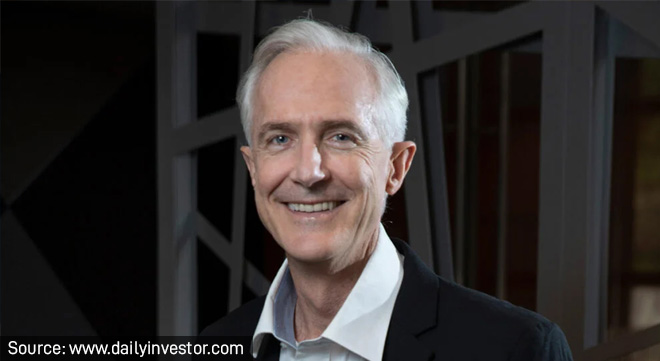
This week, Arthur Kamp (pictured), chief economist at Sanlam, offered additional insight into why inflation may prove more difficult to contain over the next few years – both globally and in South Africa.
A more inflationary global environment
During a Sanlam media roundtable and follow-up Q&A session this week, Kamp argued that the challenge extends beyond the current spike in the oil price.
He said the global economic backdrop has shifted materially over the past decade as the world moved away from the highly integrated trading environment that followed China’s entry into the World Trade Organization in 2001.
In Kamp’s view, rising protectionism, geopolitical fragmentation, and looser fiscal policy globally are creating a world more likely to generate structurally higher inflation than the low-inflation environment to which investors became accustomed before and immediately after the 2008 global financial crisis.
Read : Sanlam: clients need advisers’ counsel in a more fragmented world
Those global inflation pressures are emerging just as South Africa is attempting to anchor inflation around its new 3% target.
Why the 3% target now faces pressure
The SARB formally shifted from its long-standing 3%-to-6% inflation target range to a 3% target in November 2025. The new framework aims to anchor inflation expectations lower over time, reduce borrowing costs, and improve long-term economic stability.
Kamp said the credibility of the Reserve Bank remains one of the central strengths supporting the new target.
“To be clear, we do have a credible central bank,” he said.
But he also warned that lowering inflation expectations across the economy takes time – particularly among businesses, labour, and households.
Kamp explained that inflation expectations are shaped partly by current inflation levels and partly by what consumers experience directly in daily life.
Fuel prices play an outsized role because consumers see the increases immediately.
“If something affects inflation expectations, it’s the petrol price, right, because it moves immediately. People see it, and they feel it straight away,” he said.
The concern for policymakers is not only the direct fuel price increase itself, but whether it spreads more broadly through the economy into wages, food prices, transport costs, and pricing behaviour.
More than just an oil shock
Kamp said South Africa entered this period with inflation expectations among business and labour at closer to 4% than to the new 3% target.
At the same time, several inflation pressures were already building beneath the surface.
Services inflation – which makes up more than half of the inflation basket – has remained above 4% for extended periods. Housing-related inflation has started firming alongside a gradual housing market recovery. Producer price pressures have also been rising.
The oil shock now adds another layer of inflation risk.
Kamp said Sanlam’s base case currently assumes oil prices remain elevated but broadly near their peak before gradually moderating next year.
Under that scenario, inflation would likely rise meaningfully from current levels and peak around the first quarter of next year.
Kamp said Sanlam’s base case currently sees inflation averaging about 4.9% in the first quarter of next year.
Higher rates may still lie ahead
That outlook would probably require at least one further interest rate increase from the SARB, according to Kamp.
“At least one,” he said when asked how many hikes he currently expects.
He suggested a second increase could become necessary if inflation expectations deteriorate further or if the oil shock intensifies.
Kamp repeatedly emphasised that the biggest uncertainty is the oil market.
The key variables include whether shipping disruptions worsen around the Strait of Hormuz, how quickly alternative supply routes develop, whether global demand weakens, and how long strategic petroleum reserves can continue cushioning supply shortages.
“If you’re starting to talk about something like, let’s say, $150 [per barrel], that’ll be a very difficult situation to deal with,” he said.
Under that scenario, inflation could move to 6% and above, forcing the SARB into a far more aggressive tightening cycle.
Why the rand and gold still matter
Kamp nevertheless stopped short of predicting a severe economic downturn.
He argued that South Africa is benefiting from higher gold and precious metals prices, which improve export earnings and partly offset the oil shock through stronger terms of trade.
That additional foreign income has also helped to support the rand despite global volatility.
“We have been quite constructive on the rand for a long time,” Kamp said.
He said inflation should gradually moderate again next year if oil prices stabilise and second-round inflation effects remain contained.
Inflation is not just a Reserve Bank problem
But Kamp also made clear that sustaining inflation closer to 3% over the long term will likely require more than monetary policy alone.
He pointed to infrastructure reform, improved logistics, lower administered costs, stronger private-sector investment, and faster employment growth as critical parts of the equation.
“We need investment to employ more people,” he said.
That broader reform process remains closely linked to political stability and policy continuity.
Kamp said Sanlam remains focused less on the specific composition of the government and more on whether economic policy continues supporting infrastructure reform, fiscal discipline, and institutional credibility.
What consumers should expect
For consumers, the immediate picture remains uncomfortable.
Fuel, transport, and food costs are likely to remain under pressure for some time, while interest rates may stay higher for longer than many households expected earlier this year.
Kamp, however, argued that periods like these historically tend to pass – even if they feel severe in the moment.
“These shocks do dissipate eventually,” he said.

