
South Africa already has plenty of banks. Sanlam is adding another banking option anyway.
The group has secured regulatory approval to offer transactional banking services through GoTyme, with the service expected to reach the open market in early 2027. It is a curious move for an insurer with established businesses in insurance, investments, wealth, and credit – particularly when Discovery Bank and Old Mutual Bank have already entered the market.
But Sanlam says the aim is not to build another traditional bank. Instead, it wants to add banking to the broader financial-services relationship it has with its customers.
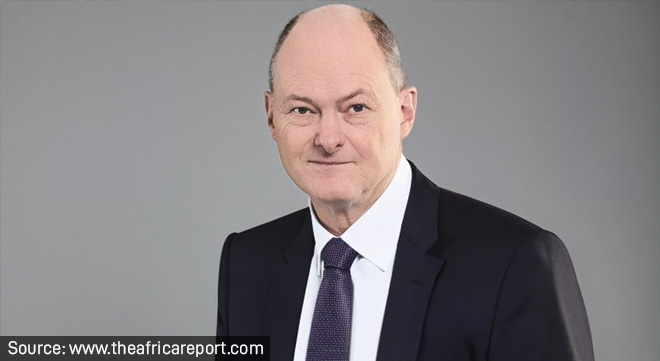
Paul Hanratty (pictured), Sanlam’s group chief executive, said the banking and rewards proposition could “create an opportunity in the long run for the South African business to create stickier customers and to improve cross sell”.
During the first six months of 2026, Sanlam also reshaped its Indian portfolio, completed the sale of its South African active asset-management business to Ninety One, completed the final regulatory integration of SanlamAllianz in Africa, and expanded Santam into the Lloyd’s market.
The moves span different parts of the group, but they have one thing in common: investment now, with the financial benefits expected to build over time.
That is already showing in the numbers.
The numbers at a glance
For the six months to 30 June 2026, Sanlam reported:
- Core earnings: R7.377 billion, up 1% on a comparable basis.
- Adjusted headline earnings: R7.741bn, down 22% on a comparable basis.
- Operating profit: R7.289bn, down 2% on a comparable basis.
- IFRS attributable profit: R13.2bn, up 29%.
- New business volumes: R223.6bn, up 22% on a comparable basis.
- Net client cash flows: R77.6bn, up 42% on a comparable basis.
- Life insurance new business: R58.1bn, up 14%.
- General insurance new business: R26.4bn, up 7%.
- Investment-management new business: R155.5bn, up 29%.
- Value of new business: R1.049bn, down 7%, with the margin at 1.8%.
- Adjusted return on equity: 18.4%.
- Adjusted return on group equity value: 15.5% annualised.
- Group economic solvency: 177%.
- Discretionary capital: R2.321bn, within Sanlam’s R1bn to R3bn target range.
The R223.6bn in new business is a measure of volume rather than revenue or profit. It includes R155.5bn in investment-management new business, R58.1bn in life insurance and R26.4bn in general insurance.
In life insurance, new business increased 14%, but value of new business fell 7% to R1.049bn, with the margin declining to 1.8%. Sanlam attributed this to a shift towards market-linked annuities, which are less capital-intensive but generate less value upfront.
Sanlam said sustainable underlying earnings growth was about 7% before abnormal claims and other period-specific impacts. Future-growth investments reduced comparable core earnings growth by a further 3%.
What changed during the six months?
India is becoming an increasingly important part of Sanlam’s growth plans.
The group completed a series of transactions in the Shriram ecosystem, increasing its exposure to the life and general insurance businesses while its stake in Shriram Finance was diluted following a major capital injection by Japan’s MUFG.
Shriram Finance’s loan book grew 15% during the period, and its net interest margin improved to 8.8%.
Hanratty described India as “a key growth vector for the group”, saying the transactions had increased the long-term value of the business. He also pointed to the benefit of having the two insurance businesses positioned to cross-sell into the credit business.
The other major portfolio change was in asset management.
Sanlam completed the sale of its South African active asset-management business to Ninety One in February. About R402bn in assets under management moved across, leaving Sanlam with an effective economic interest of about 9% in Ninety One. Sanlam’s own asset-management operations are now focused on solutions, wealth, and platform businesses.
Read: Sanlam pivots towards partnerships as active management model shifts
Hanratty described Ninety One as Sanlam’s “long-term partner for active asset management”. He said the transaction had helped the remaining asset-management businesses to grow operationally and had increased the value of the group’s attributable earnings and group equity value.
In South Africa, the group has been building its retail proposition around branches, digital platforms, rewards, credit, and transactional banking.
South Africa: adding banking to the relationship
Sanlam had 156 retail mass-market branches operational by June and expects to reach 200 by year-end. It has also established a retail credit joint venture with GoTyme and received regulatory approval to offer transactional banking services through the partnership.
Hanratty said Sanlam is seeking to replicate its Indian approach in South Africa by combining banking, credit, insurance, and other financial services within the same customer relationship. The credit venture is still bedding down its systems before it expands.
The banking proposition is being tested internally before a phased roll-out to staff, intermediaries, and clients, with the open market targeted for the first quarter of 2027. Hanratty said the rewards programme will also be closely tied to the banking services, with beta testing planned later this year.
Discovery Bank and Old Mutual Bank have already established themselves in the market. Sanlam is entering later, but it is doing so without building a bank from scratch. GoTyme provides the banking capability, while Sanlam brings its existing customer base, distribution, and financial-services offering.
The transaction account adds an everyday banking relationship to businesses that customers may use less frequently, such as insurance and investments.
The credit operation is developing alongside it. Earnings were held back by slower loan growth and technology spending as the platform was being bedded down.
The life business also reflects a deliberate change in product mix.
Life insurance new business increased 14%, but value of new business fell 7%. Sanlam attributed this to a shift from higher-margin life annuities towards market-linked annuities. These are more capital-light and allow Sanlam to retain client assets that can generate future asset-based fees.
Pan-Africa: integration gives way to underwriting
The SanlamAllianz integration programme is now largely complete.
The Moroccan integration was completed from a merger and regulatory perspective in July, bringing the final country into the programme. SanlamAllianz has also started its dividend and cash-remittance cycle.
The next challenge is performance.
Severe weather events in Morocco, Madagascar, and Mauritius contributed R195 million after tax and non-controlling interests in large losses. The Pan-Africa general-insurance underwriting margin fell to 9.1%, from 11.9%.
Hanratty said management is reviewing markets where the risk-return equation does not make sense, including Madagascar.
With the integration work largely behind it, Sanlam’s focus is shifting to underwriting discipline and cash generation.
Santam takes another step into international markets
Santam’s Syndicate 1918 is another business in its build-out phase.
The syndicate has entered the Lloyd’s market, with full-year gross written premiums expected to reach about R1.3bn.
The accounting treatment of Lloyd’s syndicates means costs are recognised upfront while premiums and profits are recognised over a longer period. Sanlam therefore expects an operational loss of up to R550m in 2026.
Read: Santam’s Lloyd’s bet faces R550m loss as revenue lags costs
The longer-term objective is access to specialist international insurance markets and a more diversified earnings base.
What happened to the earnings?
The 1% increase in comparable core earnings needs to be read alongside the performance of the individual businesses.
Investment management’s core earnings rose 48% on a comparable basis to R0.7bn. Net client cash flow was R48bn and new business volumes reached R156bn.
Credit and structuring also grew, driven primarily by India.
General insurance was the major drag. Santam absorbed just under R700m in flood and wildfire claims net of reinsurance in South Africa, while Pan-Africa was affected by catastrophe losses and weaker underwriting.
There were also higher costs from growth initiatives, including Credit, Banking and Rewards, the Lloyd’s syndicate, and the expansion of Sanlam’s Indian distribution network.
Excluding these future-growth investments, Sanlam says comparable core earnings would have risen by about 4%.
Investment markets added further pressure. Adjusted headline earnings fell 22%, reflecting weaker shareholder investment returns, lower equity markets in Morocco and weaker bond and equity markets in India, as well as unrealised mark-to-market losses on Sanlam’s Ninety One interest.
IFRS attributable earnings increased 29% to R13.2bn, largely reflecting accounting gains from corporate activity, including the disposal of the active asset manager and the dilution of Sanlam’s Shriram Finance stake following the MUFG investment.
Sanlam has said it will focus its earnings analysis on core earnings as the better indicator of underlying performance and cash-generating capacity.
There is still room to invest – but less than there was
The group ended June with a solvency ratio of 177%, compared with 183% at December 2025.
Discretionary capital was R2.3bn, down from R8.1bn at year-end, but still within Sanlam’s R1bn to R3bn target range. Much of the capital previously ring-fenced for the Shriram insurance transactions has now been deployed.
Sanlam expects improved cash conversion to support its dividend despite the weaker earnings result.
There is still plenty to prove.
The GoTyme-powered banking proposition has yet to reach the open market. The reshaped Shriram portfolio needs to deliver the higher returns and cash generation Sanlam is targeting. Pan-Africa needs to improve its underwriting performance, while Santam’s Lloyd’s business is still building its book.
For now, Sanlam has strong new business and client flows, alongside a sizeable investment programme that is weighing on earnings.
The banking proposition will reach the open market in 2027. Its performance will provide a clearer indication of whether Sanlam can turn the additional customer relationship into the growth and returns it expects.

