
South Africa’s monetary policy outlook has shifted sharply after successive fuel price shocks this year, raising questions about whether interest rates may need to rise again – just months after the South African Reserve Bank formally adopted its new 3% inflation target.
For consumers already under pressure from high borrowing costs and weak economic growth, the key question is whether the latest shock will force the SARB to tighten policy further in the coming months.
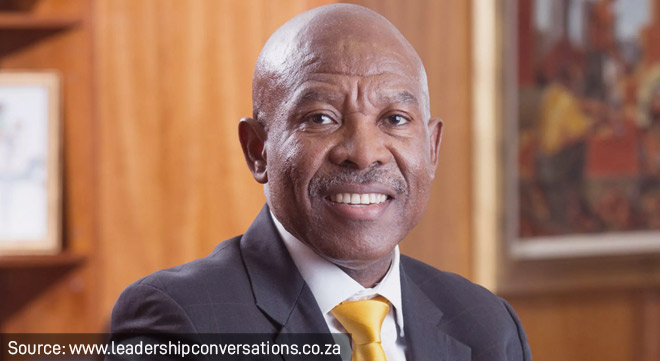
The clearest indication yet of how the Reserve Bank is approaching that question came in a public lecture delivered by Governor Lesetja Kganyago (pictured) at Rhodes University on 4 May, titled “Supply shocks, monetary policy and the 3% target”.
In the address, Kganyago laid out how the SARB views the fuel shock, why inflation risks have become more complicated, and how policymakers are approaching future rate decisions.
Kganyago said the fuel shock is severe, inflation risks are rising, and the SARB is not ruling out rate hikes. At the same time, the central bank is reluctant to commit to a fixed policy path while global conditions remain highly uncertain.
Much now depends on whether the current fuel shock remains temporary – or starts feeding into food prices, wages, and inflation expectations more broadly.
The fuel shock driving the concern
The pressure on monetary policy has been triggered by successive fuel price increases in March, April, and May, largely driven by global oil prices surging above US$100 a barrel amid escalating conflict in the Middle East.
The increases began in March, when petrol rose by 20 cents per litre and diesel by between 62 cents and 65 cents.
That was followed by a dramatic jump on 1 April, when petrol increased by R3.06 per litre and diesel by between R7.37 and R7.51 per litre.
A second major increase came into effect on 6 May, adding another R3.27 per litre to petrol prices and R5.27 to diesel.
Taken together, petrol prices have risen by about R6.53 per litre since March, while diesel prices have surged by between R13.26 and R13.43 per litre in just three months.
That has pushed inland 95 unleaded petrol prices to about R26.63 per litre, with coastal prices near R25.76. Wholesale diesel prices are now above R32 per litre inland and above R31 on the coast.
Without government intervention, the increases would have been even steeper.
National Treasury introduced temporary fuel levy relief from April, cutting the general fuel levy by R3 per litre for both petrol and diesel until 5 May.
Read: Fuel relief now, answers later as the government buys time on price shock
The relief was then extended into May and June. For May, petrol retained the R3 per litre reduction, while diesel relief was increased to R3.93 per litre – effectively reducing the general fuel levy on diesel to zero for the month.
In June, the relief will be halved to R1.50 for petrol and R1.96 for diesel before falling away completely from 1 July, when the full levy returns.
That creates another inflation risk later in the year because part of the current shock has effectively been delayed rather than removed.
Treasury estimates the intervention will cost the fiscus billions of rand in foregone revenue, with the government indicating that the shortfall will be funded through stronger-than-expected revenue collections, contingency reserves, and adjustments elsewhere in the fiscal framework.
The impact on consumers has already been visible. Fuel consumption dropped sharply in April – by as much as 35% according to telematics data – as households cut back on travel and discretionary spending.
Read: Motorists cut fuel use after April price shock
A tougher test for the new 3% target
The fuel shock comes less than a year after the SARB replaced its long-standing 3% to 6% inflation range with a 3% target.
The SARB formally adopted the new framework in November last year, replacing the target range that had been in place since 2000.
Read: SARB clarifies 3% inflation target as policy shifts draw mixed reactions
Under the new framework, inflation is targeted at 3%, with a tolerance band of plus or minus one percentage point. That effectively creates a 2% to 4% range, but with 3% as the explicit objective rather than the previous midpoint approach.
The change was jointly announced by Finance Minister Enoch Godongwana and Kganyago on 12 November 2025.
The rationale was to lower inflation expectations, reduce the inflation premium built into borrowing costs, strengthen long-term economic stability, and align South Africa more closely with international central banking practice.
But the lower target also leaves the SARB with less room to tolerate prolonged inflation shocks without risking damage to its credibility.
Kganyago acknowledged this directly in his lecture, describing the recent surge as “the biggest jump in fuel price inflation in the history of inflation targeting”, with fuel moving rapidly “from deflation to double-digit inflation”.
Markets already tightening
Financial conditions have already become more restrictive, even without a formal repo rate increase.
Kganyago noted that markets entered 2026 expecting rate cuts, but those expectations have largely disappeared as inflation risks intensified.
He pointed out that the one-year Treasury bill rate rose from 6.95% at the end of February to 7.76% by the end of April – what he described as “some implicit tightening, even without the SARB raising rates”.
That means borrowing conditions are already tightening for households, businesses, and the government before the Monetary Policy Committee has formally moved rates.
Kganyago also cautioned that inflation expectations are not yet firmly anchored at the new target.
“The new target is less than a year old,” he said. “We have made good progress in that time, building credibility at 3%, but we have not completed the journey.”
The SARB, therefore, enters this period of volatility from what Kganyago called a “broadly neutral” position: inflation had been at target, policy was already moderately restrictive, and credibility had improved, but the transition to the new framework remains incomplete.
After weakening initially in March, the rand later recovered to roughly pre-crisis levels, helping to limit imported inflation pressures for now.
But Kganyago warned that South Africa cannot ignore the global interest-rate environment indefinitely.
“It is hard to sit out a global tightening cycle,” he said.
More than just fuel
For the SARB, the bigger danger is that the fuel shock spreads into the broader economy.
Kganyago identified food inflation as a particular concern, warning that the Middle East conflict has major implications for fertiliser and diesel costs – both key inputs in food production and distribution.
That risk is compounded by the possible return of El Niño conditions next year, which could bring drier weather to southern Africa and add further pressure to food prices.
Persistently higher food inflation alongside the fuel shock would pose what Kganyago described as “serious risks to inflation expectations”.
The SARB is therefore watching closely for signs that inflation pressures are becoming embedded more broadly in the economy through wage settlements, core inflation, pricing behaviour, and inflation expectations.
If businesses and consumers begin assuming inflation will remain elevated for longer, the central bank may feel compelled to respond more aggressively.
The outlook remains highly uncertain because the Middle East conflict is still evolving and oil market conditions can shift rapidly.
“The shock is only about two months old,” Kganyago said, noting that developments in the Middle East could change rapidly depending on military escalation, ceasefire negotiations, or disruptions to key oil shipping routes such as the Strait of Hormuz.
No pre-commitment on rates
For now, the SARB is deliberately avoiding firm guidance on rates.
Kganyago said policymakers would “keep our options open” while studying incoming data for evidence of second-round inflation effects.
“In our next few meetings, we will have to make tough decisions about whether second-round effects are coming or whether we have enough space to look through,” he said.
That means the SARB is not ruling out rate increases – but neither is it signalling that hikes are inevitable.
Instead, the Reserve Bank is relying increasingly on scenario analysis. According to Kganyago, the SARB’s latest projections include a baseline scenario where rates remain unchanged, an intermediate scenario where rates rise moderately, and an adverse scenario involving larger increases.
In each scenario, the SARB’s projections still assume inflation returns to target over time.
“We cannot offer certainty about our next steps,” Kganyago said. “Instead, we want to maximise certainty about where inflation is going – specifically, that it is going back to target.”
The road ahead
The outlook for interest rates now depends largely on whether the fuel shock proves temporary – or starts feeding into broader inflation.
If fuel and food pressures stabilise, the rand remains resilient, and inflation expectations stay contained, the SARB may be able to leave rates unchanged in coming meetings.
But if second-round effects emerge through wages, food prices, or broader pricing behaviour, the central bank has made it clear that it is prepared to tighten policy further to defend the 3% target.
Kganyago said any future rate increases would be aimed at protecting low and stable inflation.
“If we do have to raise rates, it will be to sustain low and stable inflation, and all the benefits that brings,” he said.


