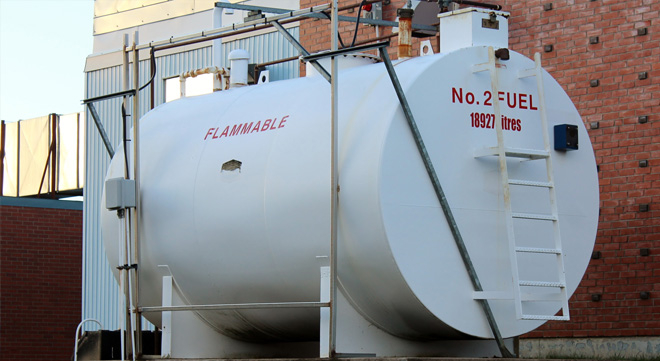

Businesses building up fuel reserves on their own premises to cushion rising prices and keep operations running could be increasing their exposure to regulatory, safety and insurance risks if the change is not formally assessed and disclosed, says GIB Insurance Brokers.
In a commentary on the growing trend of on-site fuel storage, GIB said fuel-dependent sectors such as agriculture, freight and logistics, and construction have been moving to store diesel and petrol on site to improve continuity and reduce vulnerability to price volatility. In agriculture, fuel is used not only to power machinery and transport produce, but also to help keep operations running off-grid during electricity instability.
Kobus Groenewald, a consultant at GIB Insurance Brokers, said the operational benefits of storing fuel can obscure the risk implications if businesses scale storage quickly or incrementally without revisiting the controls and disclosures insurers expect.
“Fuel storage is governed by a layered set of safety standards and municipal by-laws,” Groenewald said. “With businesses across the spectrum moving quickly to accommodate their fuel needs on site, they need to be amending their risk management practices and policy disclosures just the same, or they may find themselves operating outside the conditions insurers expect to see in place.”
GIB noted that industry bodies, including the South African Insurance Association, have flagged increased fuel storage by both households and businesses amid speculation around supply and higher costs. Their guidance is that petrol and other flammable liquids should be stored only in controlled quantities and in compliance with municipal regulations and established safety practices.
Small fuel stores can still trigger compliance obligations
A key misconception, the broker said, is that fuel stored in drums, containers, or small tanks is automatically a low-risk exposure. In practice, even relatively modest quantities of petrol or diesel may fall under flammable-substances regulations and municipal fire safety by-laws.
Those rules vary between municipalities, but they generally set thresholds for how much fuel may be stored on site without special approvals. When storage exceeds those limits, businesses may be required to install approved flammable stores or obtain certification from local authorities.
Even where quantities remain within permissible thresholds, storage conditions need to meet basic safety expectations, according to the commentary. These typically include storing fuel in certified containers, keeping it in well-ventilated areas away from ignition sources, ensuring proper labelling of fuel types, and displaying clear warning signage indicating that flammable liquids are present. Separation from electrical equipment or open flames is also essential, along with ensuring that basic fire protection equipment is available nearby.
Beyond fire risk, GIB said the physical environment around fuel storage is an important part of risk control. Storage areas should be designed to prevent spills from spreading, often through bunded areas or containment trays, and businesses should have some form of spill response plan in place. Where fuel is transferred between containers or equipment, precautions to prevent static discharge are also important, the broker said.
Groenewald said the risk profile can shift without businesses fully recognising the change, particularly where fuel storage grows informally.
“We understand the practical reality of the matter, where fuel storage on premises develops gradually with a few extra drums here and there, and over time the need to formally review and disclose information to update insurance processes can be overlooked,” he said. “Consider this your sign to engage your broker for a full review.”
He added that agricultural and commercial insurance policies do not always prescribe a fixed litre limit for fuel storage. Instead, underwriting decisions typically rely on clear disclosure of the exposure and confirmation that the insured is complying with applicable regulations and safety standards.
Disclosure and underinsurance concerns
“Where fuel storage is not fully disclosed or documented, insurers may only become aware of the exposure after a loss event has occurred, which is obviously not ideal,” Groenewald said, adding that this is why brokers encourage clients to revisit how fuel storage is recorded within their insurance arrangements.
In many cases, the solution is not particularly complicated, he said. Businesses should confirm whether fuel is stored on the premises beyond what is in vehicles or generators, record the quantities involved and document how it is being stored. With that information, brokers and underwriters can assess whether the controls are appropriate and whether any changes are required.
GIB said fuel storage and handling obligations can also arise under multiple overlapping frameworks, including the Occupational Health and Safety Act and related safety regulations governing hazardous substances, as well as relevant South African National Standards dealing with dangerous goods storage, depending on the nature of the operation.
Municipal fire safety by-laws are another critical layer, the broker said, because they determine storage limits and may require specific infrastructure or permits if limits are exceeded. As the rules differ between municipalities, businesses operating across multiple sites may face different compliance requirements at each location.
The commentary also flagged that the value of fuel being stored should be factored into insurance arrangements. Larger on-site reserves mean that more insured value may be sitting within a single premises at any given time, and if sums insured have not been adjusted to reflect the higher value of stored fuel, businesses could face underinsurance in the event of a loss.
“When fuel storage is approached as part of a structured risk review, it becomes manageable,” Groenewald said. “The challenge arises when storage develops informally and the insurance programme has not been updated to reflect that reality. That is when businesses can be caught off-guard.”