
As severe weather events become more frequent and harder to predict, insurers face growing pressure to manage losses without pricing more clients out of cover.
Fanus Coetzee, the chief executive of Broker Solutions at Santam, has seen how much the insurance landscape has changed since he joined the insurer in 2001.
“When I was still a laaitie, that’s before 9/11, same week actually as 9/11, I joined Santam in the claims department, and I heard people talk about cats. So, I thought, you know, we were in pet insurance,” he recalled.
He soon realised they were talking about catastrophic events – the floods, hailstorms, and fires that can leave insurers facing claims from hundreds or thousands of policyholders.
Back then, Coetzee said, a flood here or a hailstorm there happened “once a blue moon”. Hailstorms struck in successive years, in 2012 and 2013, followed by fires and storms in 2017.
“Then we hit this last half of the decade, and things really started getting worse,” he said.
The severity and frequency of catastrophes have increased, with less time between events and less certainty about what comes next. Failing infrastructure can compound the damage, making losses harder for insurers to manage.
“Traditionally, it was one event a year, an isolated, benign experience elsewhere. But now there’s repeated CAT losses,” he said.
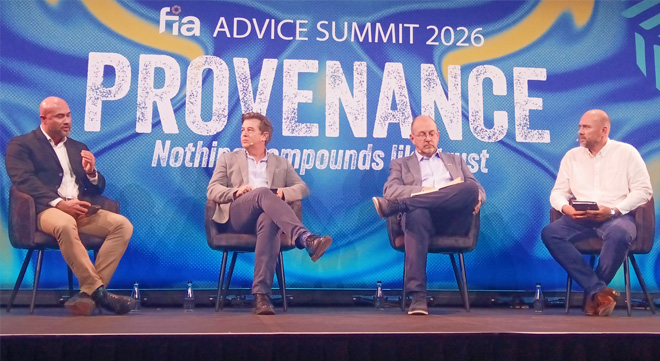
Coetzee was speaking at the FIA Advice Summit 2026, where Herman Scheepers, chief executive of Renasa Insurance Company, and Darryl Grater, chief growth officer at Discovery Insure, discussed what climate volatility means for the insurance industry.
Repeated losses put pressure on insurers’ capital and force them to rethink their reinsurance arrangements. Reinsurers want better information about where risks are concentrated, what mitigation measures are in place, and which risks insurers are prepared to take on.
The question is no longer simply whether to insure a property.
“Now it’s a case of how do we insure this? Under what circumstances? And do so sustainably,” Coetzee said.
Brokers have local knowledge insurers need
KwaZulu-Natal endured devastating floods in 2022. Cape Town has experienced more recent flooding, while the Eastern Cape, Limpopo, and Gauteng have also faced floods or hailstorms.
Scheepers referred to a regulatory survey tracking 154 events over 30 years. He said the pattern had shifted from one or two events every other year to four or five a year more recently.
Poor infrastructure can make the damage worse. In smaller towns, especially, inadequate drainage and neglected water management can turn severe weather into a much bigger loss than expected, even where fewer properties are insured than in a major city.
Pricing alone will not solve the problem. Insurers also need a clearer picture of conditions on the ground, particularly in areas where they have no physical presence. Scheepers believes brokers and advisers can help fill that gap.
He asked how insurers could draw on the local knowledge of brokers and advisers who understand what is happening with infrastructure in the areas where they operate.
Brokers may know where drainage is poor or local infrastructure is struggling to cope – details that may not show up in claims data or risk models. Sharing that knowledge could help insurers to assess risks more accurately and identify what needs to change to keep more properties and businesses insurable.
Better information, earlier conversations
Grater said there was no single reason insurance premiums increased. Insurers had to consider the frequency and severity of claims, infrastructure, the types of assets being insured, and the cost of repairs and salvage.
Climate volatility makes those calculations more difficult.
For example, Discovery Insure paid more than R140 million in claims following the KwaZulu-Natal floods in 2022. At the time, it had about 8% of the personal lines market. A year later, it paid more than R40m for initial flooding claims and a further R140m for hail claims. As Grater pointed out, Discovery Insure was only 11 years old at the time
He also cited a Marsh McLennan report which found that the number of weather-related disasters had risen fivefold over the preceding 50 years. The report noted that the increase, together with the growing value of assets and the movement of populations into high-risk areas, had contributed to higher losses.
At the same time, more people and assets are concentrated in cities, increasing the potential impact when an event occurs.
Insurers are increasingly looking beyond past claims to assess what might happen next. Climate models and mapping tools such as RiskScape can help to identify flood and other climate-related risks at individual properties and across insurers’ portfolios.
This gives insurers and brokers an opportunity to talk to clients before disaster strikes. A property that presents a risk may need better drainage or other mitigation measures; it should not necessarily be declined outright.
“Better data should support better decisions. It shouldn’t necessarily result in more punitive pricing or more exclusions,” Grater said.
Risk surveys can help to identify where a property is vulnerable and what could be done to reduce the risk. But, as Scheepers pointed out, they can also lead to difficult conversations with clients.
“A survey should never be seen as an insurer trying to mitigate its risk or trying to get out of risk,” he said.
The aim should be to improve the property for the client’s benefit and, where possible, to keep it insurable. For brokers, that means helping clients to understand what needs to change and why, rather than simply delivering a list of requirements from the insurer.
AI can speed things up, but it cannot predict everything
Artificial intelligence is helping insurers to analyse information that would once have taken much longer to process.
Coetzee said AI can bring together claims records, weather and climate data, geographical information, property details and images to help insurers assess risks and respond to events.
He pointed to flooding in the Western Cape in May as an example. Santam was able to map potentially affected clients overnight, estimate likely claims costs, and sort claims according to their probable severity. Some could be processed quickly, while others required more direct human attention.
Coetzee said the models were only as good as the data fed into them. Insurers still needed to consider the circumstances of individual clients, including information that might sit with a broker rather than in a database.
They also needed to look beyond speed and efficiency to consider the consequences of their decisions: whether cover remained accessible and affordable, and whether the insurance model was sustainable over time.
Or as Grater summarised it: “The short version, if you had to put this in Copilot. AI is not going to fix the climate volatility variable.”
He also referred to the WTW 2026 Advanced Analytics and AI Survey, published in March. The survey covered 59 property and casualty insurers in the United States and Canada. It found that close to 80% used advanced rating and pricing models, while 33% used advanced analytics for claims fraud detection and 29% for severity assessment.
The figures illustrate how analytics is being used in underwriting and claims, but technology does not remove the need for accountability, transparency, and human judgement when decisions affect clients.
Coetzee emphasised the importance of retaining human oversight when using AI in underwriting. “What is ultimately important, though, is not to take the human out of the loop,” he said, noting that models depend on the quality of the data they receive and need to be checked against the context of individual clients. That context, he added, includes information that may not be captured in the data.
Modelling can also not eliminate the uncertainty of changing weather patterns. Grater pointed to the El Niño cycle as an example of why weather-related risk cannot be reduced to a simple assumption that one region will be dry while another is wet. He cited the 2023 cycle, when Zimbabwe experienced its worst drought in 100 years while flooding in neighbouring Mozambique displaced hundreds of thousands of people.
“That’s one weather cycle,” he said, pointing to the challenge for insurers operating across the region.
Will the market shrink?
Scheepers raised a question that hangs over the industry as losses mount: “Is our market shrinking? Are we going to have fewer clients with all of this?”
He believes some risks will become uninsurable, but the industry can play a role in limiting how far that goes.
Brokers and advisers, he said, are becoming “risk architects rather than quote providers and cover providers”. Their role is not simply to find cover, but to work with clients and insurers to manage risks that might otherwise become uninsurable.
Scheepers recalled concerns after the 2022 KwaZulu-Natal floods that insurers might withdraw from the region. The experience highlighted the importance of improving risk measures and restoring confidence in the area’s insurability.
He also sees scope for insurers and municipalities to work more closely. Insurers know where claims have occurred, while municipalities have information about infrastructure weaknesses. Sharing that information could help to identify where preventative work is most urgently needed.
Although insurers already support some firefighting services, helicopters, and drones for wildfires, Scheepers questioned whether more could be done to prevent losses before disaster strikes, rather than spending billions responding to the damage afterwards.
Coetzee called for insurers and brokers to share information throughout the year instead of waiting until renewal.
“Don’t wait to share new data, new context with us at renewal, but let’s underwrite constantly,” he said.
Keeping the risk pool sustainable
Making cover more accessible does not mean accepting every risk without considering the consequences for other policyholders.
Coetzee recalled advice from a former colleague: “You can’t write away a bad risk.”
Policyholders trust insurers to manage the risk pool responsibly. Where risks can be reduced through reasonable preventative measures, failing to address them can leave other policyholders carrying part of the cost.
That makes it important for clients to understand why maintenance and risk improvements matter, even when the conversation with an insurer is uncomfortable. The objective is not merely to meet underwriting requirements, but to reduce avoidable losses and to help keep the pool sustainable.
For Coetzee, however, the broker’s value goes beyond assessing risks and explaining policy conditions. Technology can help insurers to make faster, better-informed decisions, but it cannot replace the trust built through personal experience.
Many brokers, he said, have stood beside families whose homes have burned down or whose memories have been washed away. That experience gives them a way to explain the value of prevention that no model can replicate.
“When you speak to the next client, and you give them all of this information, your true benefit is this: you can tell them a story about why it matters because you’ve been there before, and AI can’t have that personal relationship and give those words of trust and support and affirmation.”