
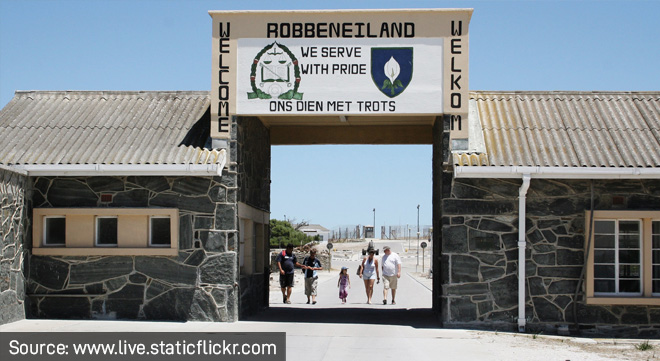
The Pension Funds Adjudicator has upheld the withholding of a former Robben Island Museum chief financial officer’s withdrawal benefit after finding there was sufficient prima facie evidence of alleged dishonesty and loss allegedly arising from that conduct to justify the freeze.
The ruling does not determine whether Karabo Ramela committed fraud or whether the museum suffered the losses it claims. Rather, the Adjudicator found that the employer had presented sufficient evidence, for purposes of withholding the benefit, to bring the alleged conduct and alleged resulting loss within section 37D of the Pension Funds Act, while the fund had followed a procedurally fair process in reaching its decision.
Ramela was initially employed as the museum’s CFO on a six-month short-term contract from December 2022. After applying for the advertised position, he was formally appointed as CFO on a five-year fixed-term contract from 1 June 2023. He was dismissed in June 2025.
Ramela was a member of the Alexander Forbes Retirement Fund, Provident Section, where his fund credit stood at R389 534.33 in December 2025.
On 13 July 2025, after his dismissal, the museum asked the fund to withhold the benefit pending proceedings arising from alleged fraud and misconduct. The museum alleged that Ramela had falsely represented that he was a member of the South African Institute of Chartered Accountants (SAICA) when he applied for the CFO position.
According to the determination, the position had been advertised on the basis that the successful candidate had to be a chartered accountant registered with SAICA. The fund said the museum had informed it that Ramela was shortlisted based on the information in his CV and a recruitment agent’s assurance that he was a SAICA member.
The museum said it later received whistleblowing information that Ramela had falsely claimed to be a member. It contacted SAICA, which, according to the fund’s submissions, confirmed that he had not been a member since 2017.
The museum opened a criminal case and told the fund it intended to institute civil proceedings to recover alleged losses.
Ramela disputes fraudulent misrepresentation
Ramela disputed that there was a prima facie case of fraud or unjust enrichment. His legal representative told the fund that the allegation of fraudulent misrepresentation was misplaced, and the conduct could instead be characterised as innocent misrepresentation.
According to the fund’s account recorded in the determination, Ramela said his SAICA membership had been terminated for non-payment of fees, which he attributed to the economic impact of the Covid-19 lockdowns. He said he had tried unsuccessfully to reinstate his membership between March and July 2023.
The determination records, however, that he had indicated in the CV submitted to the museum that he was a registered SAICA member.
Ramela also alleged that the matter was “a classic case of occupational detriment”, and he continued to be punished for making a protected disclosure. He argued that the museum’s actions were deliberately dilatory and punitive.
He further submitted that, seven months after the museum first indicated an intention to take legal action, he had not been criminally charged or sued for the alleged dishonest misconduct.
Separate protected-disclosure litigation
Ramela’s protected-disclosure contention has also featured in separate High Court litigation. The Adjudicator’s determination does not indicate that he relied on the Court’s findings in deciding whether the pension benefit could lawfully be withheld.
In May 2025, the Western Cape High Court dismissed an application in which Ramela sought, among other relief, an interim interdict preventing the museum and others from subjecting him to occupational detriment and orders for remedial action under the Protected Disclosures Act.
The Court found, among other things, that the information on which Ramela relied was already known to the museum or was the subject of investigations, and his disclosure to the Minister of Sports, Arts and Culture was not made in good faith. Judge Daniel Lekhuleni found there was no causal link between a protected disclosure and the disciplinary action, which had begun before the alleged disclosure.
The Court also considered the alleged misrepresentation of Ramela’s SAICA status. Without deciding the merits of the disciplinary charges, Judge Lekhuleni said Ramela did not dispute on the papers that he was not a SAICA member in good standing when he was appointed CFO. The judge described the charge as serious and said Ramela should be given an opportunity to answer it in the appropriate forum.
Ramela sought leave to appeal to the Supreme Court of Appeal (SCA) or, alternatively, a full bench of the High Court. He argued, among other things, that the Court had erred in finding that he had not made a protected disclosure and in its conclusions about the timing and bona fides of the alleged disclosure.
In August 2025, Judge Lekhuleni dismissed the application for leave to appeal with costs.
He maintained that the alleged disclosure was not made in good faith and described it as a “stratagem” to circumvent the disciplinary process. He also found that the museum’s disciplinary action was not retaliatory.
Other allegations not determined
The museum also referred to alleged mismanagement of funds, irregular payments, and non-compliance with supply-chain management requirements. It claimed, among other amounts, about R2 million in irregular expenditure arising from alleged procurement irregularities.
Pension Funds Adjudicator Lebogang Mogashoa made no finding on those allegations. He said the museum had placed no facts before him concerning the alleged mismanagement, irregular payments, or supply-chain breaches, leaving him without information to determine those aspects.
The museum also claimed that Ramela had received about R4.35m in remuneration and a leave payout under false pretences, and its alleged loss exceeded the value of his pension benefit.
Why the benefit could be withheld
Section 37D permits a fund, in specified circumstances, to deduct compensation for damage caused to an employer by a member’s theft, dishonesty, fraud, or misconduct. A deduction may be made where the member has admitted liability in writing or where a court judgment has been obtained.
Although the section does not expressly provide for withholding a benefit while proceedings are pending, the courts have recognised an implied power to do so. Mogashoa referred to the SCA’s decision in Highveld Steel and Vanadium Corporation Ltd v Oosthuizen, which recognised the authority of a fund to withhold a benefit pending the finalisation of proceedings that could result in a permissible deduction.
The fund must, however, be satisfied that the employer has established a prima facie case.
Mogashoa said the requirement is met where there is evidence that, if accepted, would establish a cause of action. The fact that the evidence is contradicted does not necessarily defeat a prima facie case, and the threshold may be met even where the probabilities are against the party advancing it.
In Ramela’s case, the museum relied on the SAICA affidavit and disciplinary evidence to support its allegation of fraud and misrepresentation. Mogashoa said the affidavit indicated that Ramela did not appear on SAICA’s register of chartered accountants.
“A fund may only invoke section 37D(1)(b) if the conduct is dishonest or has an element of dishonesty,” he said.
Mogashoa found that, prima facie, the conduct had an element of dishonesty.
He also had to consider whether the alleged damage flowed from the alleged dishonest conduct. He referred to the KwaZulu-Natal High Court’s decision in Umgeni Water v Naidoo and Another, which concerned an employee who had allegedly misrepresented that he held a required university degree.
In that case, the Court reasoned that the employer would not have contracted with the employee or paid him had it known he lacked the qualification he professed to have.
Mogashoa noted that the museum had not instituted a civil damages claim against Ramela. However, it had sent him a letter of demand seeking damages, while the criminal matter was in the hands of prosecutors.
He found that the museum was not responsible for any delay in the criminal process.
“Therefore, the Adjudicator is satisfied that the loss alleged against the complainant arises from dishonesty. Accordingly, it falls within the grounds provided in section 37D(1)(b) of the Act. Thus, the withholding of his benefit is substantively lawful,” Mogashoa said.
Fund followed fair process
Mogashoa separately considered whether the fund had followed a procedurally fair process before deciding to withhold the benefit.
The fund notified Ramela of the museum’s request and gave him an opportunity to make written representations. He responded through his legal representative before the fund decided in October 2025 to withhold the benefit.
Mogashoa found that Ramela had been afforded an opportunity to respond to the allegations, and the fund had made its decision after considering his representations.
The process therefore complied with the audi alteram partem principle and the withholding was procedurally lawful.
The fund also said it would require regular progress updates from the museum. If it found that the museum was unduly delaying the civil or criminal proceedings, it would reconsider the matter and, where appropriate, release the benefit.
Mogashoa dismissed Ramela’s complaint.

