The South African Reserve Bank has ramped up its push to shift the inflation target to 3%, but Finance Minister Enoch Godongwana has made it clear that no change will be made without going through the formal consultation process led by National Treasury, Cabinet, and the Presidency.
At the May 2025 Monetary Policy Committee (MPC) meeting, the SARB argued that the current target range of 3% to 6% is too wide and should be replaced with a 3% anchor.
Read: Can the SARB anchor inflation at 3% without hiking rates?
At last week’s MPC meeting, SARB Governor Lesetja Kganyago presented updated forecasts, showing that headline inflation would rise in the near term. He highlighted that under a 3% objective, core inflation would remain close to 3% and expectations would align with this level by 2027, supported by a stronger rand. If the 4.5% midpoint was retained, “there is no learning, and the exchange rate is more depreciated, so inflation reverts to 4.5% instead”.
Kganyago said lower inflation creates space for lower interest rates. Under a 4.5% objective, rates bottom out at about 7%, whereas a 3% target allows for rates to dip slightly below 6% over the medium term. Although real rates would be temporarily higher, he acknowledged “a modest growth sacrifice, which helps anchor expectations at lower levels”.
According to governor, the prospect of a lower target has already strengthened the rand and reduced long-term borrowing costs. Kganyago said the MPC now prefers inflation to settle at 3%.
“In line with this, we have decided to aim for the bottom of our inflation target range of 3% to 6% … We will use forecasts with a 3% inflation anchor at future meetings. The South African Reserve Bank will also continue working with the National Treasury to complete target reform and achieve permanently low inflation.”
Responding to speculation that he would confirm the new target in the Medium-Term Budget Policy Statement, Godongwana said there were no such plans.
“As I emphasised during the Budget presentation, any adjustments to our inflation-targeting framework will follow the established consultation process … not unilateral announcements that pre-empt legitimate policy deliberation.
“Any changes to the target, if necessary, will follow this process that I have outlined above,” he added.
25 basis points repo rate cut
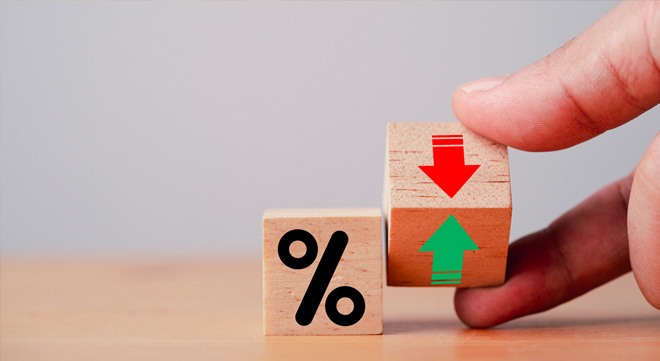
The MPC’s decision last week to cut the repo rate by 25 basis points to 7% and the prime lending rate to 10.5% – effective 1 August – marks a key shift in its monetary policy stance after months of tightening and holding.
Kganyago said major central banks were largely in a “wait-and-see” phase. In the United States, he noted emerging inflationary pressure from tariffs, with policy remaining “modestly restrictive”. In Europe, inflation is lower and policy more neutral. All the major central banks left rates unchanged at their most recent meetings.
“Turning to South Africa, in May we warned that economic activity for the first quarter of 2025 was looking weak. Statistics South Africa has since reported that growth was just 0.1%, in line with our expectations. However, there was also a downward revision to earlier GDP data. Along with an assumption of higher US tariffs on South Africa, this has caused us to mark down our 2025 growth forecast. That said, the recent data flow has been positive, suggesting that the economy picked up in the second quarter of the year.”
He said underlying growth remains constrained by supply-side issues, such as logistics. “Higher levels of uncertainty also seem to have affected output, with business and consumer confidence deteriorating in the first half of the year. However, we still expect modestly higher growth in the coming years, supported by ongoing structural reforms.”
Risks to the growth outlook are viewed as balanced.
On inflation, Kganyago said the rand has strengthened and inflation expectations have eased. June CPI showed headline inflation at 3% and core at 2.9%, the bottom of the target range.
“That said, food inflation has risen, mainly due to meat prices. Fuel prices are also falling more slowly now, compared to the recent past. We therefore expect headline inflation to rise over the next few months, averaging 3.3% for the year, in line with our earlier forecasts. Prices then stabilise around the target objective over the rest of the forecast period.”
Growing confidence in inflation trajectory
Maarten Ackerman, the chief economist at Citadel, said the rate cut was widely expected and reflects the Reserve Bank’s growing confidence in South Africa’s inflation trajectory.
“The 25bps rate cut is fully in line with our expectations. It reflects the SARB’s growing confidence in South Africa’s inflation outlook and creates room for more accommodative monetary policy in a very weak growth environment.”
Ackerman said a combination of factors supported the decision, including weak domestic economic conditions, persistently low inflation, and a global monetary shift towards easing.
“The South African Reserve Bank has been more cautious than some of its global peers, but this cut suggests that inflation is now firmly anchored and opens the door for a more flexible approach going forward,” he added.
He said the move signals that the SARB is comfortable with the inflation trajectory and is “willing to provide support to the economy, as long as price stability remains intact”.
What the SARB rate cut means for consumers and investors
Johan Minnie, the chief executive of Consult by Momentum, said the rate cut brings some relief for indebted consumers because monthly home loan and car repayments may drop slightly, freeing up cash. But he advised using this breathing room wisely.
“Start by paying off high-cost debt like credit cards, revolving credit or retail store accounts. Once that’s done, channel the savings into your home loan – it’s one of the most tax-efficient ways to build wealth over time.”
He suggested also boosting retirement fund or retirement annuity contributions, which are tax-deductible and benefit from compound interest.
“Alternatively, commit to additional discretionary savings for future goals like education or travel. Whatever you do, resist the urge to increase your everyday spending or take on new instalments, as short-term satisfaction can erode long-term stability. This small rate drop may not feel dramatic, but used wisely, it can help you build more financial resilience.”
Focusing on the outlook for investors, Ackerman said South Africa still boasts one of the highest real interest rates globally, making local fixed income investments relatively attractive.
“This is good news for income-seeking investors, particularly in a volatile global environment,” he said.
However, Ackerman cautioned investors against reacting too quickly: “A single rate cut doesn’t justify wholesale portfolio changes. Investors should remain focused on long-term objectives and consider the full interest rate cycle.”
Lower interest rates typically support growth in equities and property by reducing the cost of capital. “This cut could provide some tailwind to those sectors, especially in a low-growth environment,” he noted.
What the SARB rate cut means for traders
From a trader’s perspective, Zihaad Israfil, the chief executive of CFI Financial Group South Africa, said the cut is a signal to re-evaluate strategies, particularly in growth-sensitive sectors and currency markets.
CFI Financial Group is a global online trading provider.
According to the group, with borrowing costs reduced, confidence in risk assets such as equities typically improves.
“Sectors tied to domestic consumption and infrastructure often benefit, while the weaker rand – frequently a by-product of lower rates – can create volatility and opportunity in forex markets. For those tracking pairs like USD/ZAR or assessing momentum on the JSE, market sentiment is likely to shift in the coming days.”
However, Israfil cautioned against reactive trading.
“Markets are never static. A rate cut isn’t just an economic adjustment – it’s a message,” he said. “Understanding how that message fits within the global narrative is how traders maintain discipline and precision.”
Will there be another rate cut this year?
Looking ahead, Ackerman said he believes there’s room for at least one more cut before the end of the year.
“Beyond that, we expect the SARB to pause and reassess the data, particularly inflation trends and global developments.”
He said although the SARB’s focus remains on local inflation, global forces such as disinflation, geopolitical risks, and shifting international rate cycles indirectly shape South Africa’s policy room.
“The relatively stable rand has also helped the SARB feel more confident in easing. A stronger rand helps limit imported inflation, one of the key risks the SARB typically monitors.” he explained.