South Africa’s growth lag is no secret – but the South African Reserve Bank sees a way forward. With lower inflation, de-risking, and smarter debt management, the country could regain momentum and create space for lower interest rates to support growth.
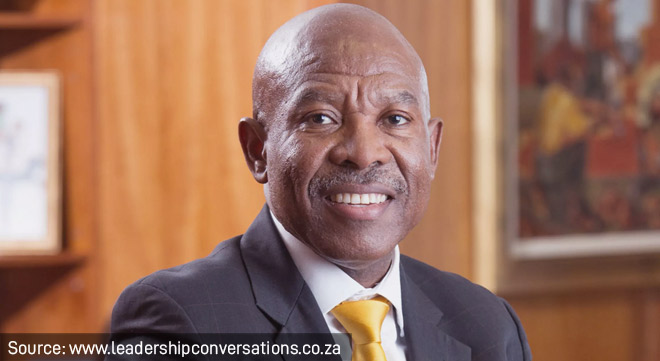
Speaking at the National School of Government this week, the SARB Governor Lesetja Kganyago (pictured) didn’t hold back. Saying it like it is, Kganyago recapped that economic growth has averaged a mere 0.8% annually over the past ten years – worse than 87% of other economies.
“The few countries doing worse than us are those that suffered major disasters, like war or macro-economic collapse. Examples include Sudan, Lebanon, and Ukraine. Given that we have had peace and basic macro-economic stability, South Africa’s growth is extremely disappointing.”
Inflation hasn’t been much better. Over the past decade, the average rate was 5.1%.
“This is not a catastrophe. Venezuela and Zimbabwe have excessive inflation rates of 9 000% and 251%, respectively. However, our inflation performance is still mediocre. Our price level is more than 60% higher than it was in 2015. Something that cost R60 ten years ago now costs about R100.”
In short, South Africa is in the bottom 10% of the class for growth and the bottom 30% for inflation.
“This is not the kind of country report you want.”
But Kganyago said it is not too late to turn things around. Reducing interest rates through permanently lower inflation and de-risking, he said, is key to improving the country’s economic trajectory.
SARB eyes lower inflation to ease rates and boost growth
South Africa formally adopted an inflation target of 3% to 6% target in February 2000, announced by then Finance Minister Trevor Manuel, with the first benchmarks applying to 2002. The target quickly became the backbone of the SARB’s monetary policy, with the repo rate used to keep inflation within range.
Early challenges included a 2002 spike to around 11% following a sharp rand depreciation, which the SARB curbed through higher interest rates. Inflation stayed mostly within the target band from 2003 to 2007, but food and oil shocks in 2008 pushed rates above 13%, forcing further hikes before the global financial crisis led to cuts. Since then, inflation has been volatile but generally near the upper half of the band, with breaches caused by currency weakness, droughts, and oil price hikes.
In recent years, the SARB has aimed for the midpoint of 4.5%, but Kganyago said the central bank now prefers 3% within the existing target range.
“It would also allow policy to be more flexible, even if inflationary shocks materialised. Improving the credibility of monetary policy could strategically offset the deteriorating fiscal position, slowing growth and the effects of weakened institutions.”
Kganyago described the current moment as an opportunity: “Actual inflation has eased to 3%, presenting us with a chance to achieve permanently lower inflation, at low cost – what economists call ‘opportunistic disinflation’.”
SARB modelling shows that a 3% inflation objective could cut interest rates by more than 100 basis points compared with the current 4.5% midpoint, while still keeping policy credible.
“There is a lesson here, and that lesson is that lower inflation allows for lower rates. This logic is not always intuitive, and indeed many people think a lower target means higher rates,” said Kganyago.
He explained that the normal policy rate of 7.25% includes 4.5 percentage points for inflation compensation and 2.75 percentage points for global rates plus country risk.
“If we lower inflation to 3%, then we can take 1.5 percentage points of inflation out. But lowering inflation to 3% will also reduce inflation volatility and country risk, the latter, perhaps by half a percent. As country risk and inflation falls, we could aim for a neutral policy rate of something more like 5.25%.
“This is something we hope to deliver with our new preference for having inflation settle at the lower end of our 3% to 6% target range. This cannot be a promise, but it can be a serious aspiration.”
Growth depends on tackling country risk
But South Africa’s high interest rates aren’t only about inflation – country risk is the second-biggest driver, said Kganyago. Much of the problem, stems from repeated forecasts of debt stabilisation that never materialise.
“Relative to gross domestic product (GDP), debt has risen in every year since 2008. As National Treasury points out, we have experienced one of the fastest debt increases of any country. We also have one of the highest debt levels in comparison to our peer group.”
He said addressing the fiscal challenge often feels like a choice between painful spending cuts or tax hikes.
“But to my mind, the bigger picture is not so bad. The fiscal position may be strained, but we have independent and credible monetary policy. This means we can still achieve a reasonably attractive macro-economic mix.”
Kganyago said credible fiscal consolidation would lower country risk, improve investor confidence, and help the rand, easing inflation.
“All the drivers point in the same direction: credible fiscal consolidation would lower country risk. Improved investor confidence would also help the rand, which eases inflation. Tight fiscal policy might reduce demand, but that would also be disinflationary.”
He cautioned against framing the debate as growth versus consolidation.
“It is sometimes asserted that South Africa does not have a debt problem; it has a growth problem. No doubt, sustained, high growth could solve our debt problem. But it does not follow that the economy is capable of flourishing in the context of fiscal fragility.”
High taxes, expensive borrowing, and a sub-investment grade rating, he said, make fiscal multipliers small.
“Extra government spending does little or nothing for total output.”
He added that growth alone, without fiscal adjustment, cannot fix the problem.
“The best thing we could do for growth, on top of structural reforms, is to deal decisively with the country risk premium. It is not growth or stabilisation; it is growth through stabilisation. And that is because de-risking the economy, in addition to boosting confidence, would open up monetary policy space.”
High debt costs threaten growth – lower rates could ease the burden
Recent fiscal debates have focused on growth, revenue, and spending – but Kganyago said there is a fourth consideration: how debt is financed.
“We all know debt financing is a huge spending item, 5% of GDP, more than spending on health, policing, and basic education. This reflects a large stock of debt. But it also reflects the interest rates on that debt.”
Kganyago points to steep long-term borrowing costs. While short-term policy rates are high, the 10-year bond yield is just below 10%, about 300 basis points above the short-term rate, with the 2048 bond even higher.
“As economists say, our yield curve is very steep. This reflects risks that are not present in the overnight cash rate, mainly credit risk. You are asking investors to lock in exposure for decades and endure losses if debt does not stabilise and rates rise further. They are willing to bear that risk – but at a high price.”
He warned that paying 10% interest on debt while nominal GDP grows at 5% eventually crowds out private investment and other spending priorities.
“If we borrow to pay only interest on existing debt, we open ourselves up to a debt spiral.”
Kganyago said permanently lower inflation and de-risking could reduce debt costs.
“This would make a big difference. Just to put some indicative numbers on this, for a debt stock of R5 trillion, every percentage point you save in interest is worth R50 billion. By contrast, a one-percentage point increase in value-added tax raises about R30bn. And we could realistically save on debt costs.”
Monetary and fiscal policy must work together to boost growth
Kganyago said that although setting debt issuance is the role of National Treasury, good monetary policy can create opportunities that a nimble debt manager could seize.
“The objective should be unlocking a virtuous circle, where lower interest rates improve fiscal dynamics, and better fiscal dynamics in turn lower rates. Doing this requires a macro-economic set up where the SARB and National Treasury play complementary roles.”
Kganyago cautioned, however, that a flourishing economy also requires reliable infrastructure and functional municipalities.
“There are clear micro-economic problems behind our unfavourable growth performance. The proper response to this is structural and governance reforms, which are ongoing. It is vital that these continue at pace.”
He sees a macro-economic opportunity alongside these reforms: “With a lower inflation target and fiscal policy that firmly prioritises debt stabilisation, we could achieve sustainably lower interest rates. This would give monetary policy more space to support growth, and it would give fiscal policy respite from high debt costs.”