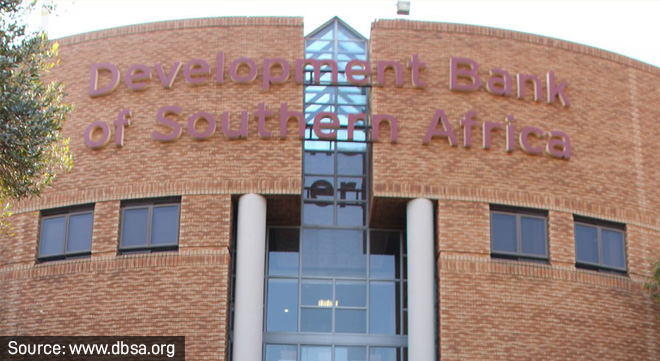

The High Court in Johannesburg has dismissed Hollard’s application for leave to appeal against an order requiring the insurer to pay R11.5 million to the Development Bank of Southern Africa (DBSA) under an advance payment guarantee.
Judge Nelisa Mali also dismissed an application by Pheane Edwin Sodi for leave to appeal in a linked matter in which the Court ordered Sodi (jointly and severally with Nhlabanele Jeophrey Ramahlaleroa) to pay Hollard R39 820 769.93 under indemnity and suretyship arrangements connected to the guarantees.
The leave-to-appeal decision, delivered on 5 May 2026, follows Judge Mali’s merits judgment of 15 January 2026, which dealt with two connected disputes: DBSA’s call on Hollard’s advance payment guarantee, and Hollard’s related attempt to recover its exposure from the contractor and individuals who signed indemnity and suretyship documents in Hollard’s favour.
In the DBSA proceedings, the contractor is identified as G5 Group (Pty) Ltd, described in the judgment as a company that used to be known as NJR Projects (Pty) Ltd.
In the linked recovery proceedings, Hollard sued NJR Projects and Ramahlaleroa and Sodi. The merits judgment records it was not in dispute that NJR Projects, duly represented by Ramahlaleroa and Sodi, signed a deed of indemnity in Hollard’s favour, and that both also signed suretyship and indemnity documentation.
The project and the guarantee
The dispute arose from a construction project for additional accommodation at the Parys Department of Correctional Services. The Court recorded that DBSA issued a tender in 2018, and the contractor was appointed for a contract value of R282 736 949.24, with a principal building agreement concluded in March 2019.
The contractor requested an advance payment of R35 009 018.50 to procure materials to meet timelines. DBSA required an advance payment guarantee, which Hollard issued in DBSA’s favour.
The judgment records that the guarantee included a guarantee advance payment sum of R23 060 000, an expiry date of 31 October 2022, and a stated recoupment framework, including an 18-month recoupment period commencing in May 2021, with a listed monthly recoupment amount and provision for irregular schedules.
It also set out a demand mechanism under which DBSA could call for payment and included clauses stating DBSA had an “absolute right” to arrange its affairs with the contractor, and that the guarantee (with the required demand notices) would be regarded as a liquid document for purposes of obtaining a court order.
Default and DBSA’s demand on Hollard
The merits judgment records it was common cause the contractor defaulted in relation to repayment/recoupment of the advance payment, and DBSA had recovered R10 931 544.09.
On 11 October 2022, DBSA issued a notice of default and indicated an intention to terminate if the default persisted. On 17 October 2022, the principal agent issued Interim Payment Certificate No. 48 reflecting an amount described in the judgment as minus R11 547 075.65, which the court recorded as indicating the contractor’s indebtedness to DBSA in that amount.
DBSA then demanded payment from Hollard under the guarantee: first by email on 28 October 2022, and then at Hollard’s physical address on 31 October 2022.
Hollard’s attorneys responded on 3 November 2022, objecting that the demand was premature on its calculation of the seven-day period. Further correspondence followed, including an allegation by Hollard that the recovery statement had been materially altered.
Hollard’s defences on the merits
In DBSA’s application, the court framed the central issue as whether Hollard was liable to pay DBSA R11 547 075.65 under the advance payment guarantee.
Hollard advanced three principal defences, as summarised in the merits judgment:
- Non-compliance: DBSA’s demand process did not comply with the guarantee requirements, including objections on timing, documentation, and the recoupment regime.
- Full recoupment: the advance payment had been recovered in full, relying on Hollard’s interpretation of Certificate 48 and the recovery entries.
- Fraud: DBSA’s claim was tainted by fraud, based on discrepancies Hollard identified between versions of Interim Payment Certificate 48 and related entries.
DBSA disputed these defences and said, among other things, that differences in the documents amounted to clarification/correction rather than fraud.
What the High Court decided in January
On compliance, the Court recorded DBSA’s explanation that it had issued a first written demand to the contractor, and a later letter corrected a figure described as an error rather than constituting a new demand. The court accepted this explanation and found the demand was not fatally defective on the facts before it.
On recoupment, the Court rejected Hollard’s contention that the advance had been fully recouped, referring to material indicating an outstanding shortfall. It also recorded DBSA’s point that Hollard’s recovery claim in the linked proceedings was described as inclusive of the amount DBSA was claiming from Hollard under the guarantee.
On fraud, the Court held that fraud could not be inferred from the papers, and Hollard had not adduced sufficient evidence of fraud on DBSA’s part.
The Court concluded that Hollard was liable to pay DBSA under the advance payment guarantee. It ordered Hollard to pay R11 547 075 within seven days, to pay interest at the prescribed rate from 31 October 2022 to final payment, and to pay costs on Scale C.
Hollard’s recovery claim and the Sodi order
The second dispute concerned Hollard’s attempt to recover amounts it said it was exposed to pay under the guarantee instruments, relying on an advance payment guarantee and a performance guarantee, together with the deed of indemnity and deed of suretyship and indemnity.
The merits judgment records that Hollard issued a performance guarantee in favour of DBSA for R28 273 694.93, and DBSA later delivered a written demand for payment on that guarantee on 12 December 2023, arising from alleged failure to complete the works and termination.
During the hearing, the Court recorded that it emerged that NJR Projects had been liquidated, that an order for payment had already been granted in favour of Hollard against Ramahlaleroa, and that the remaining adjudication proceeded against Sodi.
In its final order in the recovery matter, the Court ordered Sodi, jointly and severally with Ramahlaleroa, to pay Hollard R39 820 769.93, plus interest at 12.5% a year from 30 January 2024 to final payment, and costs, including the costs of two counsel on Scale C.
The Court also extended a rule nisi and postponed Hollard’s claim against the liquidated first respondent sine die, with no order as to costs, in the terms recorded in the order.
Leave to appeal refused
In the leave-to-appeal judgment delivered on 5 May, Judge Mali recorded that Hollard and Sodi sought leave to appeal under section 17(1) of the Superior Courts Act, and that both applications were argued together.
The judge summarised Hollard’s proposed appeal grounds as including contentions that the Court erred in finding the advance payment had not been fully recouped; erred in its interpretation and application of the advance payment guarantee; erred in permitting correction of the interim payment certificate; and erred in concluding that alleged non-compliance with the guarantee requirements was not dispositive. The leave judgment records that Sodi aligned himself with these submissions.
Judge Mali held that the threshold for leave to appeal is stringent and found the grounds advanced did not establish reasonable prospects of success or any compelling reason for an appeal to be heard.
The judge described the fraud premise underlying several complaints as “unsustainable”, recording that no factual foundation had been laid to substantiate fraud and no evidence had been adduced to support collusion between DBSA and the contractor.
The Court dismissed both applications for leave to appeal, with costs on Scale C.
Click here to download the May 2026 judgment.