Two years ago, Alexforbes set out to change how it engaged with independent financial advisers (IFAs).
For much of its 90-year history, the group built its reputation as a retirement fund consultant, administrator, and institutional investment adviser. But in recent years, it has invested heavily in expanding its retail capabilities, strengthening intermediary relationships, and building products aimed at supporting adviser-led distribution.
The latest annual results suggest those efforts are beginning to bear fruit.
For the year to the end of March 2026, Alexforbes reported a 39% increase in retail new business flows to R36.5 billion, while retail operating income rose 15% to R768 million. Retail assets under management increased 21% to R112.3bn and assets under advice grew 17% to R131bn.
The group’s adviser force also expanded from 279 advisers to 315 over the year.
Taken together, the figures point to growing momentum in a segment that management increasingly sees as an important contributor to future growth.
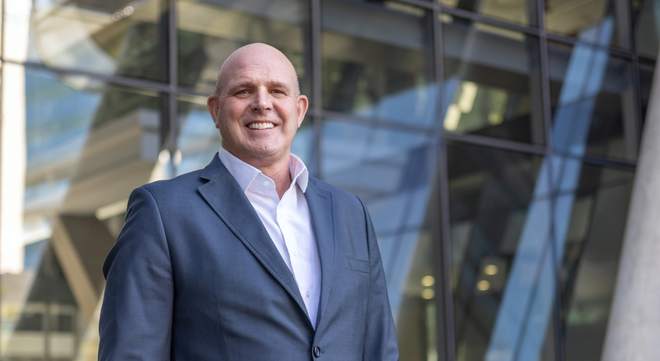
“The foundation is of the work that’s been done to build off this business, clarity in terms of the segments that we want to play, clarity in terms of the spaces that we want to play, tech-enabled processes, service mechanisms in place, and this is the start of ramping that up,” chief executive Dawie de Villiers (pictured) said during the presentation of the group’s annual results last week.
Although institutional consulting and retirement administration remain core to the business, Alexforbes appears increasingly focused on building a broader distribution ecosystem that includes advisers, retail investors, and intermediary partners.
That strategy is not new.
In 2024, Alexforbes launched an advice partnership model designed to give independent advisers access to the group’s institutional advice frameworks, research capabilities, and intellectual property while allowing them to retain their independence.
The initiative formed part of a broader effort to position Alexforbes as a partner to advisers rather than a competitor. It was accompanied by investments in intermediary support capabilities, the acquisition of a majority stake in TSA, the integration of the former OUTvest platform, and the launch of a discretionary fund management (DFM) offering.
The following year, the group established a dedicated retail division, expanded adviser enablement programmes, and launched Alexforbes One, an umbrella fund aimed at employers, members, and intermediaries.
Products built for advisers
The adviser strategy is increasingly evident not only in Alexforbes’ distribution efforts, but also in the products it is bringing to market.
During the year, assets under management in the group’s umbrella fund business increased 20% to R197.7bn, supported by positive net cash flows and favourable market performance.
In its results commentary, Alexforbes described the launch of Alexforbes One as a significant milestone for its institutional umbrella fund offering, adding that the fund is outperforming the industry on asset growth and continues to gain market traction.
The fund was launched in 2025 with a strong intermediary focus and was positioned as a platform that supports independent advice, simplifies administration, and enhances member engagement.
Alexforbes said it continues to broaden and expand its institutional ecosystem, with a particular focus on building and strengthening relationships with IFAs and clients.
The growth of the umbrella fund business, therefore, appears closely aligned with the group’s broader intermediary strategy.
Retail becoming a bigger contributor
Management believes retail will play an increasingly important role in the group’s future growth trajectory.
Retail assets now account for approximately R119bn of Alexforbes’ total R733bn in assets under management and administration.
“It’s R119 [16%] billion of the R733bn, and we’re expecting that to become a bigger portion of the total assets under management as we grow out from here,” De Villiers said.
The company also continues to invest in adviser support structures, technology platforms, and strategic partnerships.
Among the initiatives highlighted during the results presentation were partnerships with fiduciary specialists and tax consultants, aimed at enhancing the value proposition available to both advisers and their clients.
“We don’t try and do everything ourselves,” De Villiers said, noting that partnerships form an important part of the group’s approach to delivering client solutions.
A stronger push on AI
Technology is also becoming a bigger part of that support framework. Management said Alexforbes has established a formal artificial intelligence capability and governance structure and is already deploying AI across client servicing, analytics, risk management, and operational processes. The group has adopted Microsoft Copilot as its enterprise AI platform as part of a broader move from experimentation to practical deployment.
During the results presentation, management spoke about using technology to improve client experience, strengthen decision-making, and help the business scale as retail and intermediary activities grow. Rather than presenting technology and advice as competing models, Alexforbes appears to view them as complementary parts of its future growth strategy.
The latest results suggest that Alexforbes’ retail and intermediary strategy is moving beyond the investment phase and into execution.
Whether that momentum can be sustained remains to be seen. The adviser market remains fiercely competitive, with established players such as Sanlam, Momentum, Old Mutual, and Discovery continuing to compete aggressively for intermediary relationships and retail assets.
However, the numbers suggest that Alexforbes’ long-running effort to position itself as an adviser-friendly partner is beginning to generate tangible results.