The South African short-term insurance industry has always operated in an environment defined by risk. In recent years, however, the intensity, frequency, and interconnectedness of risks have demanded an evolution in how the industry responds.
The industry has historically demonstrated resilience, paying out more than R78 billion in claims to households and businesses, thereby contributing to economic continuity and the resilience of communities. This track record illustrates the critical role that short-term insurance plays in enabling recovery and protecting livelihoods.
We cannot, however, continue to rely on legacy systems to address today’s escalating challenges. We must evolve. From geopolitical instability and cyber threats to extreme weather and infrastructure collapse, the risks we face are multiplying. Managing these risks demands greater underwriting discipline, stronger capital management practices, and enhanced foresight capabilities, with tools such as scenario planning proving essential in helping management teams to anticipate and respond to these external shocks.
Climate risk, in particular, has emerged as an area of priority. Since 2000, the costs linked to human-driven climate change have nearly tripled, rising from $149bn between 2000 and 2004 to a projected $435bn between 2020 and 2024.
In response, the industry is investing in advanced data analytics and artificial intelligence to strengthen its ability to assess and price climate-related risks accurately. Geo-mapping technology allows organisations to map and understand exposure at the level of individual properties. By overlaying weather and environmental data with location-specific information, we can make more informed underwriting and pricing decisions.
At Santam, we are going one step further by partnering with the Council for Scientific and Industrial Research and supporting local governments in developing climate adaptation plans using data from the GreenBook, an online tool that presents scientific evidence and practical adaptation actions for South African cities and towns.
We have also aligned with global frameworks such as the Task Force on Climate-related Financial Disclosures to guide our climate response.
Where risks become uninsurable, it is not only an economic concern but a social one. The insurance industry must play an active role in preparing clients for future climate-related risks. As more businesses recognise climate change-induced extreme weather events as a present reality, interest in proactive risk management is growing. Our task is to support that momentum by educating stakeholders and investing in the right tools.
Equally important is the evolving role of brokers. As the risk landscape becomes more complex, brokers remain vital in helping clients understand and manage exposures. Their role is shifting beyond distribution to one that must now also focus on offering risk-management advice informed by data and technology. By embracing analytics, brokers can become even more valuable partners in building resilience.
Another priority is affordability and access. If insurance is to be a force for good, we must develop more inclusive and accessible products. That means innovating around affordable solutions and working to drive financial inclusion. We also need to refine our pricing strategies in the face of high inflation, particularly in the wealth segment, where expectations are evolving. This requires stronger collaboration with intermediaries and an enhanced focus on value rather than just cost.
Crucially, none of this can be achieved in isolation. Public-private partnerships are vital in responding to large-scale risks, particularly in vulnerable communities. One promising model is the Partnership for Risk and Resilience programme, which brings insurers and municipalities together on initiatives such as flood defence, firefighting, and disaster preparedness. This type of cooperation is essential to ensure that climate events do not undermine economic progress or widen inequality.
Emotional intelligence is another underappreciated but increasingly important attribute in our sector. Each uninsured or underinsured asset represents a potential setback, not just for individuals but for entire communities. Cultivating empathy, adaptability and awareness among staff helps us stay human-centred in an era defined by complexity.
Insurance is often described as the business of managing risk, but it is also the business of enabling opportunity. By empowering individuals and businesses with the freedom to be more resilient, a thriving insurance sector remains a critical component in a healthy economy.
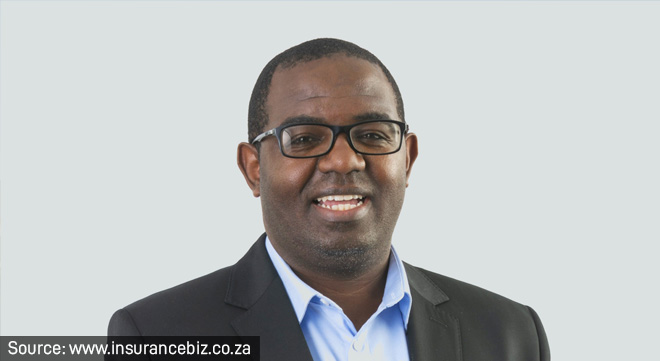
Thabiso Rulashe is the head of strategy and investor relations at Santam.
Disclaimer: The views expressed in this article are those of the writer and are not necessarily shared by Moonstone Information Refinery or its sister companies.