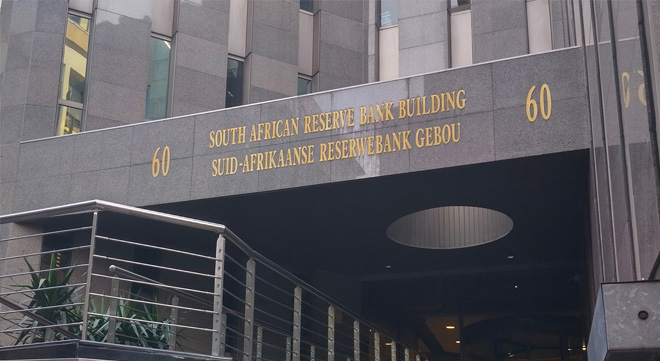

In December 2025, the South African Reserve Bank was urging market participants to accelerate the transition from the Johannesburg Interbank Average Rate (JIBAR) to the South African Rand Overnight Index Average (ZARONIA). Nine months later, the transition has moved into its legislative phase.
The General Finance Laws Amendment Bill (B21-2026), now before Parliament, proposes amendments to the Financial Sector Regulation Act (FSRA) to deal with contracts that still reference an official benchmark when it is discontinued. Written submissions close at 12pm on 12 October 2026, with public hearings scheduled for 13 October.
JIBAR is due to cease immediately after its final publication on 31 December 2026. The SARB and the Market Practitioners Group (MPG) have identified ZARONIA as the preferred successor rate.
The proposed legislation does not set the JIBAR cessation date. Instead, it provides a statutory mechanism for contracts that cannot be amended, or do not contain an effective fallback, before JIBAR disappears.
From JIBAR reform to legacy contracts
The case for replacing JIBAR has not changed. The SARB began its interest-rate benchmark reform programme in 2018, following concerns about widely used benchmarks and the need for rates that comply with international benchmark principles. The MPG was subsequently established as a joint public- and private-sector body to oversee the transition.
In 2022, ZARONIA was designated as the preferred successor to JIBAR. Since then, the MPG has worked on conventions, fallback language, credit adjustment spreads and the infrastructure required to support ZARONIA-linked markets.
When Deputy Governor Rashad Cassim addressed the MPG conference in December 2025, he identified three remaining areas of work: restricting new JIBAR exposures, dealing with legacy contracts and developing a forward-looking term measure of ZARONIA.
Read: Countdown to JIBAR cessation: SARB urges market to step up transition to ZARONIA
The first of these has since taken effect. The “No new JIBAR” initiative commenced on 1 May 2026, with limited exceptions. New financial contracts should reference ZARONIA or another suitable reference rate, while existing JIBAR exposures may be maintained, amended or hedged. The Prudential Authority and the Financial Sector Conduct Authority have also issued joint supervisory expectations for the initiative.
Work on Term ZARONIA has also progressed. The MPG selected FTSE Russell as administrator of the forward-looking term rate, although its final endorsement remains subject to sufficient liquidity developing in the ZARONIA derivatives market.
The remaining JIBAR exposures are still substantial. The SARB estimated that, as at 31 December 2025, approximately R2.6 trillion in assets, R1.5 trillion in liabilities and R38.4 trillion in derivatives related to legacy JIBAR exposures remained outstanding. About R4 trillion of the remaining exposure was in cash products.
The February 2026 transition recommendations note that some JIBAR-linked contracts extending beyond 2026 still did not contain fallback language. They set out three possible approaches for legacy exposures: active transition, passive transition through contractual fallbacks, and a legislative route.
What the Bill would change
The Bill proposes inserting a new Chapter 2A into the FSRA dealing with “official benchmarks”. It would give the SARB the power to designate replacement benchmarks, adjustment spreads and essential technical, administrative or operational changes to affected legacy contracts. It could also specify the date from which the replacement applies.
Different arrangements could be applied to different categories of legacy contracts. The Bill also expressly allows the SARB to designate a synthetic benchmark – a rate designed to replicate the characteristics of a discontinued benchmark – either temporarily or permanently, with an adjustment spread where necessary to maintain economic equivalence.
The statutory mechanism would apply to legacy contracts that have no fallback provisions, or where the fallback does not provide a workable permanent replacement. This includes provisions that do not identify a replacement benchmark or determining person, or that require third-party consent that has not been obtained.
Where the statutory mechanism applies, the designated replacement benchmark and adjustment spread would take effect for the affected contracts. Essential technical, administrative, and operational changes would be deemed to form part of the contract, and a determining person would not need further consent to make those conforming changes.
The Bill also deals directly with contractual consequences. The selection or use of a designated replacement benchmark would not, by itself, constitute a breach of the contract, permit unilateral termination or suspension, or render the contract void. Existing rights to payment remain unaffected.
The SARB would generally have to publish a proposed designation or determination, give reasons and allow interested parties at least 30 days to make submissions. It would then have to consider those submissions and publish a response.
What has changed since the 2025 draft?
National Treasury published the draft General Finance Laws (Official Benchmarks and Procurement) Amendment Bill for comment on 1 December 2025. The original deadline of 31 December was later extended to 23 January 2026.
The draft already proposed a statutory mechanism for replacing benchmarks in legacy contracts, including powers for the SARB to designate replacement benchmarks, adjustment spreads and a synthetic benchmark.
The Bill now before Parliament contains a number of drafting changes. For example, its definition of a legacy contract covers an agreement that uses an official benchmark that has been, or will be, discontinued, and the framework applies to relevant contracts irrespective of the location or domicile of a counterparty.
The current Bill also provides for different replacement arrangements and effective dates for different categories of legacy contracts and expressly allows the SARB to designate a replacement benchmark that applies from a specified effective date.
The consultation mechanism has also been refined. The current Bill requires the SARB to publish a statement responding to submissions, whereas the December draft provided for a different process where the SARB acted without prior consultation because of financial-stability concerns.
There has also been a change to the Public Procurement Act provision. The December 2025 draft proposed that the Minister of Finance review implementation within 12 months and report to Parliament within three months after that review. The current Bill retains the 12-month review period but extends the period for making the report public and submitting it to Parliament to 15 months.
The transition is now focused on the contracts that cannot be moved away from JIBAR through existing fallback provisions or agreement between the parties.
B21-2026 would give the SARB a statutory mechanism to determine a replacement benchmark, adjustment spread and necessary contractual changes for specified categories of legacy contracts.