
“Baby, you’re a firework. Come on, let your colours burst…” Katy Perry might just as well have been singing about Discovery.
Since opening its doors in 1992 as a small specialist risk insurer, the group has expanded into health insurance, life insurance, short-term insurance, investments, banking, and wellness. It listed on the JSE in 1999, launched Vitality in 1997, and has since taken its behavioural model into international markets through partnerships with some of the world’s largest insurers. Through the Global Vitality Network, Discovery works with insurers including AIA, John Hancock, Sumitomo Life, and Ping An.
The financial trajectory has been as impressive. In its interim results for the six months to December 1999, Discovery reported group profit attributable to shareholders of R41 million. By the year ended June 2025, its normalised operating profit had reached R15.21 billion.
So, what has been fuelling the spark?
Discovery attributes much of its success to its shared-value model. The term has become almost inseparable from its corporate identity, but beyond the presentations, product launches, and Vitality rewards, what does shared value mean? How does it generate value for clients, the business, and society – and how has Discovery applied the same idea to different businesses?
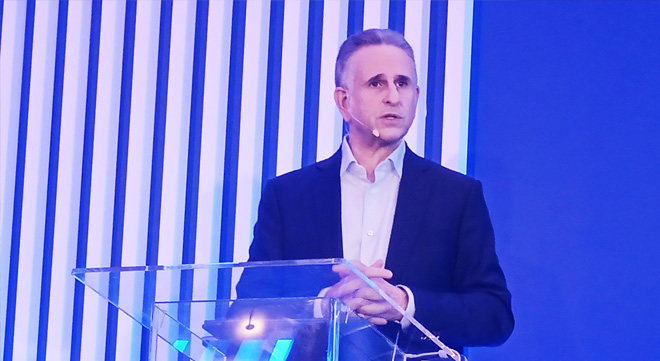
Kenny Rabson (pictured), the chief executive of Discovery Invest, unpacked the thinking at a recent briefing on the next evolution of the business – Discovery Invest’s new family wealth ecosystem, including the Family Wealth Consolidator.
The Family Wealth Consolidator is the latest application of the model to long-term investing. It allows eligible family members to combine qualifying investments for fee purposes, while giving them a consolidated view of their family’s wealth. The structure also offers access to benefits such as lower administration fees and Vitality Money paybacks.
Read: Keeping wealth in the family: A new approach to intergenerational investing
From managing claims to changing behaviour
Discovery’s approach began in healthcare. When the company was established, private health insurers largely paid for treatment after people became ill, with limited control over the cost and supply of healthcare.
Discovery looked at the problem from the other side: could it reduce the demand for healthcare by helping people to stay healthier?
When Vitality launched five years later, it gave the company a way to act on that idea. Instead of limiting its role to paying claims, Discovery began rewarding members for physical activity, preventive health screenings, and healthier food choices. The thinking was that preventing illness could reduce claims and improve the insurer’s financial performance, allowing some of the savings to be returned to members.
That became the basis of the shared-value model.
The commercial mechanics
Rabson described the model as an ecosystem involving three parties: the client, the product provider, and society.
Discovery’s proposition is that everyone can benefit. Clients receive incentives and, potentially, better outcomes. The business benefits from improved risk experience and stronger client relationships. Society benefits when people are healthier, safer, and better prepared financially.
The group identifies behaviours that could improve a client’s health, driving, or financial position, and uses incentives to encourage them. If those behaviours change, the company expects to see an improvement in the risks associated with the product. That could mean fewer insurance claims, fewer credit defaults, or investment clients who start earlier, contribute more and keep their money invested for longer.
Discovery retains value from the improved risk experience, while using part of the additional profit to fund further incentives.
“It’s kind of a self-funding model,” Rabson said.
The cycle depends on the financial benefit being greater than the cost of the incentives. Discovery’s annual reporting describes this as a process in which improved behaviour leads to better risk outcomes and an actuarial surplus, part of which is reinvested in incentives.
Data is central to making this work. Vitality has evolved from rewarding members for completing health assessments to using wearable devices, driving telematics and digital platforms to track activity and tailor incentives. Discovery can use that information to assess behaviour over time and adjust its interventions.
One model, different risks
The shared-value principle has since been applied across Discovery’s businesses. The behaviour being encouraged changes according to the product.
In life insurance, Discovery focuses on lifestyle behaviours associated with chronic conditions, including cancer, heart disease, and stroke. Rabson referred to weight management, not smoking, and limiting alcohol consumption as examples. The commercial argument is that healthier clients may be less likely to claim for certain dread diseases or disabilities. A better claims experience can improve the economics of the business, while allowing Discovery to return value through benefits such as PayBacks and cash conversions.
In motor insurance, Vitality Drive uses telematics to track driving behaviour and reward safer drivers. Fewer accidents should mean fewer claims and lower claims costs.
Banking applies the principle to personal financial management. Discovery Bank’s Vitality Money programme rewards behaviours such as spending less than one earns and maintaining emergency savings.
In long-term savings, Discovery seeks to encourage clients to start earlier, contribute regularly, preserve retirement savings when changing jobs, and manage withdrawals in retirement.
Does the model deliver?
By partnering with strategy theorists such as Michael Porter and applying the science of behavioural economics, Discovery has built a model that operates across more than 35 countries and reaches millions of members. But do rewards and digital nudges genuinely change behaviour at scale, or simply reward people who were already healthy, wealthy, and disciplined?
Academic research, actuarial data, and longitudinal studies from South Africa and internationally have provided evidence that incentives can influence decisions.
In healthcare, Discovery’s Science of Vitality Journal reports that its most engaged Diamond members had an 81% lower risk of death from COVID-19 than members who were not engaged. A separate 13-year review by Discovery Health found that unengaged Vitality members had about three times the age- and sex-standardised death rate of highly engaged members in the decade before the pandemic. The researchers cautioned that factors such as underlying disease burden and socio-economic status could also contribute to the differences.
Independent research has also examined the effect of financial incentives on food choices. Health economists Dr Roland Sturm and Ruopeng An of the RAND Corporation studied grocery purchases by 170 000 South African households between 2009 and 2012. Published in the American Journal of Preventive Medicine, the research used household fixed-effects and difference-in-differences models to account for selective participation. It found that a 25% rebate on healthy foods was associated with a 9.3% increase in the share of household food expenditure allocated to healthy foods, including an 8.5% increase in the share spent on fruit and vegetables. Spending on less desirable foods also declined.
In motor insurance, Discovery reports that Vitality Drive members reduce their accident risk by 15% within the first month of joining the programme and have a 56.9% lower fatality rate than the South African average, according to its 2025 Sustainability Report.
Research cited by Shared Value Africa found that more advanced and engaged drivers had 30% lower claim frequency and 34% lower claim severity than base and neutral drivers. These are comparisons between driver groups, rather than proof that incentives alone account for the differences.
The same approach extends to banking. An academic case study by Liam Hyland, Avani Sebastian, and Yudhvir Seetharam, published in the Journal of Economic and Financial Sciences, examined how behavioural finance principles are incorporated into Discovery Bank’s business model. Discovery has also reported lower default rates and higher deposit balances among its more engaged clients, although these comparisons do not establish that incentives alone produced the results.
The scale of the proposition
The numbers give a sense of just how far Discovery’s shared-value model has travelled. In its 2026 integrated report, the group reported that it returned R17.2bn to clients through its shared-value dividend in the year ended June 2026. Members also clocked up more than 725 million healthy activities, contributing to an estimated 5.2 million life years saved globally.
Discovery Life accounted for more than R2.4bn in shared-value benefits, including PayBacks and Cash Conversions. The group’s financial statements also show that Vitality benefit expenses rose from R6.092bn in FY2025 to R6.391bn in FY2026.
The investment business has its own sizeable numbers. Launched in October 2007, Discovery Invest now has more than R200bn on its platform, according to Rabson.
He said it had generated more than R26bn in shared value for clients through investment boosts and fee refunds. Over the past five years, that works out to approximately R9m in value generated every day.
Not bad for a business that has grown from a single insurance offering into a group returning billions to clients – and, if its trajectory is anything to go by, the fireworks are far from over.