

Retirement planning has traditionally assumed that people stop working, become financially dependent on their children, and spend less as they get older. But many South African retirees are doing none of these things.
Some continue earning through consulting, part-time work or small businesses. Others support adult children, grandchildren, and unemployed family members. And as families become more spread across the world, travel to visit them is becoming part of retirement spending.
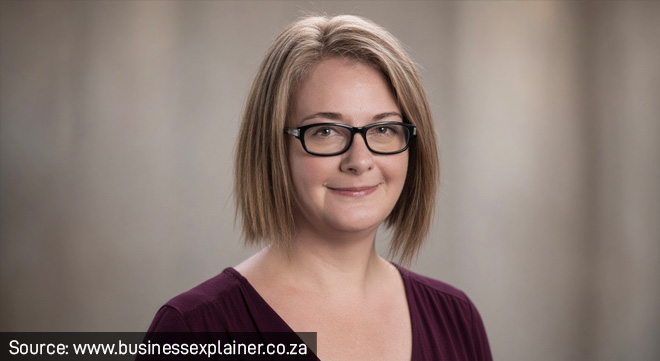
Mariska Redelinghuys (pictured), employee benefits and fiduciary specialist at PSG Wealth, said the gap between the industry’s traditional picture of retirement and the lives many retirees lead is widening.
“We have been confusing retirement with old age,” she said during a presentation at the EBnet Evolutionaries Conference, the industry’s annual virtual week that began on 26 October 2026.
“The traditional model assumes a hard stop. Modern reality looks much more like a transition.”
Retirement does not necessarily mean stopping work
Redelinghuys said many people retire from formal employment in their early 60s while remaining healthy, productive, and economically active.
Some move into consulting, contract work, board positions, part-time professional roles, or family businesses. Others start small businesses.
“In many cases, retirement is not the end of earning an income; it’s simply the end of one income source,” she said.
Retirement planning has often assumed that income from work stops when people retire. But as more people continue working in some form, retirement products and employee benefits need to keep pace with less predictable working lives.
Redelinghuys said retirement should increasingly be treated as a process rather than an event.
“We need to design products for a gradual transition, not a sudden stop.”
The retired sandwich generation
Another assumption is that retirees become financially dependent while their children become independent.
Redelinghuys said the opposite is increasingly true. Many retirees continue supporting their families long after leaving formal employment.
Some help adult children to pay for their grandchildren’s education. Others support unemployed family members, help their children buy their first homes, or provide money to start businesses.
She described them as the “retired sandwich generation”.
This ongoing support can place pressure on retirement income, particularly when retirees are also facing rising healthcare costs.
Redelinghuys said the industry needs to recognise that retirees’ financial responsibilities do not necessarily end when they stop working.
Healthcare costs do not follow general inflation
Retirees may spend less on work-related expenses and retirement fund contributions, but other costs can rise substantially.
Healthcare is one of them.
Redelinghuys said medical scheme contributions have risen faster than the consumer price index for many years, while healthcare costs continue to outpace general inflation.
She attributed this to increased use of medical services, higher specialist fees, new medical technology, and an ageing membership profile.
“The problem is that retirees don’t spend inflation; they spend on groceries, electricity, and healthcare.”
A retirement income that increases in line with CPI may not be enough if healthcare costs rise much faster.
“This matters most later in retirement, when healthcare often takes up a growing share of the household budget,” she said.
Retirement is becoming more global
Redelinghuys said retirement planning also needs to account for families living across different cities, provinces, and countries.
A retiree may remain in Johannesburg while a daughter works in London, a son has relocated to Dubai, and a grandchild studies in Australia.
For many, regular travel to visit family is no longer an occasional luxury but a recurring household expense.
“Many retirees now plan their annual budgets around staying connected to families overseas,” she said.
This can keep spending higher for longer and make retirees reluctant to lock away all their capital when they expect large discretionary expenses.
Redelinghuys said financial wellbeing in retirement is increasingly measured by more than the ability to meet monthly living expenses.
“For many, financial success means the freedom to stay connected to family wherever they may live.”
She said this changes the industry’s focus from income replacement to “lifestyle preservation”.
Certainty and flexibility need not be competing choices
Redelinghuys said the assumption that retirees fit neatly into categories requiring either a life annuity or a living annuity does not reflect their different needs.
“Some retirees require certainty, others require flexibility, but many require both,” she said.
She pointed to hybrid annuities, which combine elements of a living annuity and a life annuity, as one way of providing both flexibility and a guaranteed income.
“Instead of treating certainty and flexibility as competing objectives, hybrid solutions recognise that retirees often need a combination of both.”
She said the industry should stop treating retirement products as separate choices and consider how product combinations could better meet individual needs.
“The future belongs less to product silos and more to product combinations.”
Planning for longer lives
Retirement projections often focus on average life expectancy, but Redelinghuys said retirees experience individual outcomes rather than averages.
A 65-year-old who remains healthy may live well into their 80s or 90s, increasing the risk that retirement savings will need to last longer than expected.
“Retirement planning therefore needs to focus on longevity risk, not simply average longevity,” she said.
“The question is not how long the average retiree will live. The question is what happens if this retiree lives much longer than the average.”
She also cautioned against responding to rising costs by simply increasing retirement income drawdowns.
Higher drawdowns may provide short-term relief but increase the risk of running out of money later.
“Longevity risk remains one of the dominant retirement risks facing pensioners, and sustainable income planning may require materially lower drawdown assumptions than many retirees initially expected.”
The answer, she said, may not always be to withdraw more, but to restructure how retirement income is generated.
Redelinghuys said a more realistic view of retirement would affect investment strategies, drawdown guidance, the use of guaranteed income and hybrid solutions, medical scheme design, and retirement communication.
The industry, she said, needs to stop designing solutions for a retiree who has stopped working, stopped supporting others, and gradually spends less.
“Today’s retirees are healthier. They live longer. They support families longer, and they face healthcare costs that often grow faster than their retirement income.”
The challenge is to design retirement solutions for the retiree who actually exists.