

Trust was the central theme of the FIA Advice Summit 2026, held at the Sandton Convention Centre on 13 October. Under the banner “Provenance: Nothing Compounds Like Trust”, speakers examined how artificial intelligence, changing risk exposures, and regulatory developments are affecting the advice profession.
The discussions ranged from using AI to reduce administrative work to the implications of climate volatility for insurance pricing and the growing complexity of healthcare choices. Across these subjects, advisers face a common challenge: adapting their practices while maintaining sound judgement, accountability, and meaningful client relationships.
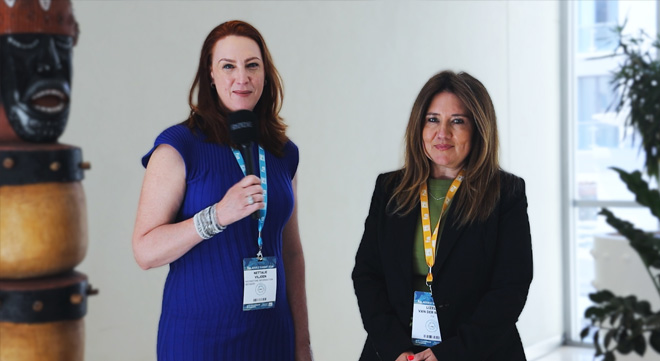
Moonstone was on the ground at the summit, capturing the event and speaking to the Financial Intermediaries Association’s chief executive, Lizelle van der Merwe (pictured), and FIA president Ronald King about the issues shaping the advice profession.
Watch our video coverage here:
FIA Advice Summit 2026 – Puts the Future of Financial Advice in Focus
What’s on the FIA’s agenda? Interview with FIA CEO Lizelle van der Merwe
The FSCA and the intermediary: An interview with FIA President Ronald King
AI creates capacity, but judgement remains essential
In “The Advisor’s Edge: AI-Enabled Practice in the Real World”, Pierre Geyer, executive head of broker distribution at Bryte; Selven Govender, executive head of affinity – consumer and commercial at Marsh; and Morné Stoltz, head of intermediated distribution at Momentum Insure, discussed practical applications of AI in advice practices.
Tools that assist with meeting notes, client summaries, and customer relationship management can reduce administration and free up time for client engagement. But AI-generated information still needs to be checked, and advisers remain responsible for the advice they provide.
The session “Wisdom over Noise: Why Human Judgement Matters More in the Age of AI” examined the other side of that equation. Carl Coetzee, executive head of distribution at Auto & General; Nicola Comninos, chief executive of EasyRetire, an EasyEquities business; and Mauritz van den Heever, senior wealth manager at Wealth Associates, considered the importance of critical thinking and human judgement when information is readily available but not always reliable.
For advice practices, the challenge is to use technology where it improves efficiency without allowing speed to come at the expense of suitability, oversight, or accountability.
Independence, scale and regulatory change
The future structure of advice businesses was debated in the “Financial Advisor Shoot-Out”, featuring Guy Holwill, founder and chief executive of Fairbairn Consult, and Bruce Kirsch, director of Renaissance Wealth Management.
The discussion considered the competing demands of independence and scale. Although scale can offer operational advantages, practices must still maintain the quality of service and professional judgement on which client relationships depend.
Regulatory developments will also shape how advice practices operate. In “In Conversation with the FSCA: A Three-Year Regulatory Outlook”, Farzana Badat, deputy commissioner at the Financial Sector Conduct Authority, spoke with Ronald King, FIA president and head of public policy and regulatory affairs at PSG Wealth. Their discussion covered AI supervision, open finance, vulnerable customers, and retirement fund reform.
These developments will require firms to consider not only new regulatory obligations, but also how changes affect their operations and the advice they give.
Climate volatility puts pressure on risk models and insurance
Climate risk featured in two sessions examining its implications for financial planning and insurance.
In “Brace for Impact: Climate, Risk and the Long Horizon”, Willie van Graan, chief risk and underwriting officer at Hollard Insure; Marvellous Rukundu, retail chief executive at Old Mutual Insure; and Muzi Dladla, executive manager for stakeholder management at SASRIA, discussed the potential effects of changing weather patterns on property, agriculture, infrastructure, and clients’ long-term financial plans.
The discussion included the prospect of a strong El Niño and the possibility of more severe weather conditions. For advisers, climate exposure is relevant when assessing clients’ assets, financial plans, and the availability of insurance cover.
The insurance industry’s response was considered in “When Risk Compounds: The Insurance Industry’s Response to Climate Volatility”, featuring Darryl Grater, chief growth officer at Discovery Insure; Herman Scheepers, chief executive of Renasa Insurance Company; and Fanus Coetzee, chief executive of Santam Broker Solutions.
Severe weather can generate related claims across multiple properties and businesses, placing pressure on insurers’ risk models and pricing. Data and AI can help insurers to refine underwriting, identify patterns and improve claims and fraud detection, but they do not remove the uncertainty associated with climate-related losses.
For advisers, understanding how insurers assess risk, adjust premiums, and limit cover is increasingly important when helping clients to make decisions about protection.
Healthcare costs complicate advice
In “Healthcare in Transition: AI, Complexity, Spiralling Costs, and the Future of Advice”, Gary Feldman, executive head of health insurance at Jigsaw, and Damian McHugh, chief marketing officer at Momentum Health, considered the role of AI in underwriting, product design, claims, and communication.
The discussion also addressed the pressure of rising healthcare costs and the use of network-based and risk-tiered models. These arrangements raise questions about affordability, access to care, and the choices available to consumers.
Advisers need to explain what different products cover, where their limitations lie and how those details affect individual clients. A lower-cost option may suit one household but leave another without the level of protection it needs.
Education and skills must keep pace
Dr Kershen Pillay, chief executive of the Graduate Institute of Financial Sciences, addressed education and future skills, including G20 priorities and collaboration between business and education initiatives.
As technology and regulation change the work advisers do, technical knowledge needs to be supported by critical thinking, clear communication, and the ability to interpret information in the context of a client’s circumstances.
COFI puts the reasoning behind advice in focus
The Conduct of Financial Institutions Bill featured in “The Regulatory Record: A COFI Fireside Chat”, with Lezanne Botha, senior manager in the regulatory frameworks department at the FSCA; Chantal Manson, chief specialist: legal business partner, legal and regulatory at Liberty; and Barend van der Westhuizen, head of external distribution at the Professional Provident Society.
The discussion addressed the need for financial institutions to demonstrate not only that processes were followed, but that decisions were appropriate and achieved the intended results for clients.
As Botha put it: “The shift is really moving from documenting what was done to evidencing why it was done and whether it achieved the intended purpose.”
For advisers, this places the reasoning behind a recommendation, its suitability for the client and the evidence supporting the decision at the centre of a sound advice file.
Read: COFI: What must an advice file prove beyond compliance?
Trust starts with people
The programme also considered the role of leadership and team culture in building trust. In “Earned, Not Given: Trust and Architecture of a Winning Team”, Philip Snyman, head coach of the South African Blitzboks, and Vaughan Jones, chief executive of Garrun Group, discussed values, teamwork, and performance under pressure.
For advice practices, consistent service depends partly on the people behind it: their ability to work together, maintain shared standards, and deliver on commitments to clients.
The summit’s theme connected these discussions. AI may change how advice is prepared, climate volatility may alter risk assessments, and regulatory reform may change what firms must demonstrate. Advisers will still need to explain their decisions, show why recommendations are suitable, and deliver service that clients can rely on.


