
Six months ago, National Treasury said it was preparing legislation to put fiscal sustainability into law.
The proposal formed part of the Budget’s strategy to stabilise South Africa’s debt and then bring it down. Treasury said the framework would be based on principles rather than a fixed numerical rule, following a recommendation in its 2024 Macro-economic Policy Review.
The legislation has now been drafted.
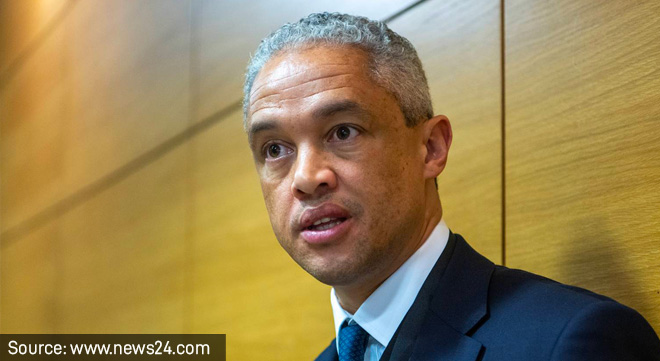
National Treasury director-general Dr Duncan Pieterse (pictured) told delegates at the RMB Morgan Stanley Big Five Investor Conference in Johannesburg earlier this week that the technical work has been completed.
In practical terms, a fiscal anchor is a framework for keeping government’s spending, revenue and borrowing on a sustainable path. The 2026 Budget committed Treasury to developing legislation that would entrench those principles and require each new administration to set out a plan consistent with sustainable public finances.
Treasury’s position is that fiscal sustainability should become a durable requirement rather than something that changes with each administration.
“Our proposal will ensure that future governments do not repeat the costly fiscal mistakes of the past,” Pieterse said.
Staying the course
In the Budget Speech on 25 February, Finance Minister Enoch Godongwana spoke about a turning point in South Africa’s debt trajectory.
Read: Is South Africa finally turning the corner on debt?
The Budget projected that gross debt would stabilise at 78.9% of GDP in 2025/26 before declining over the medium term. The primary budget surplus was projected to rise from 0.9% of GDP in 2025/26 to 2.3% by 2028/29.
Since then, the fiscal framework has had to absorb a sharp oil-price shock, temporary fuel-levy relief, and a significant change in the inflation and interest-rate outlook.
So far, National Treasury says the fiscal targets “remain on track to deliver on our fiscal targets, even though the outlook for growth and inflation has shifted since the current Middle East war began”.
Pieterse explained that for the past three years, the country’s fiscal strategy has been anchored by two objectives. First, to stabilise the debt-to-GDP ratio in the 2025/26 fiscal year and then reduce it. Second, to run growing primary surpluses, where revenue exceeds non-interest spending by an ever-wider margin.
The primary balance is the difference between government revenue and non-interest spending. Pieterse argued that it provides a more direct indication of the government’s fiscal choices than the debt-to-GDP ratio, which is also influenced by economic growth and inflation.
“We have now run primary surpluses for three consecutive years and are on track to deliver a fourth.”
This is the first time this has been achieved since the global financial crisis. Before that crisis, the government had achieved primary surpluses for more than a dozen years. After the global financial crisis, the government ran primary deficits for 13 consecutive years.
Pieterse said the prolonged deficits, combined with weak economic growth, caused debt to triple and debt-service costs to soar, crowding out other government spending and contributing to the loss of South Africa’s investment-grade credit status.
“When government revenue exceeds non-interest expenditure, there is a surplus available that can be used to meet our debt obligations and, importantly, to reduce the amount of debt that needs to be financed over time. That is what allows debt to stabilise as a percentage of GDP and, ultimately, to start declining.”
This year, National Treasury is projecting a primary surplus of about R131 billion, which is R100bn larger than it was three years ago.
2026 put the fiscal framework under pressure
According to Pieterse, fiscal credibility is ultimately tested by the ability to deliver when events beyond the government’s control put the fiscal framework under pressure. This year has provided just such a test.
At the start of the year, the economic outlook was relatively benign. Inflation was falling, the rand had strengthened, and oil prices were lower. The South African Reserve Bank had been cutting interest rates, with the possibility of further cuts forming part of the outlook.
Then the Middle East conflict happened.
Brent crude rose from $64.46 a barrel in January to $103.90 in May. Higher oil, gas, and fertiliser prices fed into global inflation and caused major central banks to pause their easing cycles.
South Africa was not insulated from the shock.
The Reserve Bank warned in March that headline inflation could move towards 4%, with fuel inflation exceeding 18% in the second quarter. May inflation came in at 4%, with energy prices a major contributor.
The Monetary Policy Committee subsequently raised the repo rate by 25 basis points to 7%.
The impact was also felt directly in the fiscal framework.
Without intervention, petrol prices were expected to rise by more than R3 a litre in April, while diesel would have increased by more than R7.
The government responded by cutting the general fuel levy by R3 a litre from 1 April. The measure was extended through May and June, with diesel relief increased to R3.93 a litre in May. The relief was then phased out before the levy returned to its normal level in July.
The total cost was estimated at R17.2bn in foregone tax revenue. Treasury said the revenue would be recovered through higher-than-expected tax revenue and underspending, and the measure would not change the fiscal framework approved in the Budget.
Pieterse pointed to the latest revenue numbers as evidence that the fuel levy relief had not derailed the fiscal framework. Collections were running “comfortably ahead of Budget estimates despite the fuel levy relief”, he said.
Revenue and spending measures
Pieterse said the 2025/26 financial year ended positively, with revenue and expenditure both outperforming the projections made in February.
He also told investors that revenue in the current financial year was ahead of Budget projections, with corporate income tax performing strongly.
On the expenditure side, Treasury has been using the Targeted and Responsible Savings (TARS) initiative to identify programmes that can be reduced, closed, or reprioritised. The 2026 Budget identified R12bn in TARS savings over the medium term.
Pieterse also pointed to an audit of government employees aimed at identifying so-called ghost workers, as well as efforts to improve operational and financial performance at Eskom and Transnet.
The Budget had already identified specific areas for savings, including a reduction of about R8.4bn in the Public Transport Network Grant over three years and an expected R3bn from improved targeting and beneficiary verification in the social-grant system.
The first phase of the Early Retirement Programme approved 7 687 applications, while the payroll audit identified 4 323 suspicious cases on PERSAL (the human resource and payroll system that manages administrative records, salaries, and benefits for employees across all central government departments, provincial administrations, the South African Police Service, public education, and correctional services).
Investors are watching the borrowing numbers
The fiscal position has also been tested in financial markets.
Global bond yields rose sharply during the year, but Pieterse said South Africa fared better than many other markets during the period of heightened volatility.
He pointed to the performance of the rand, the progress of the borrowing programme, and demand for government debt.
Treasury secured all the foreign funding included in its borrowing programme, with most of the funding coming on concessional terms.
It has also used floating-rate notes, non-competitive auctions, and an infrastructure bond tap as part of its borrowing strategy.
“Some of our bond spreads are now comparable to emerging-market peers with investment-grade ratings.”
The next step is the legislation itself. Treasury is due to provide an update on the fiscal anchor at the Medium-Term Budget Policy Statement on 21 October, when it is expected to set out more detail on how the principles will be embedded in law.

