
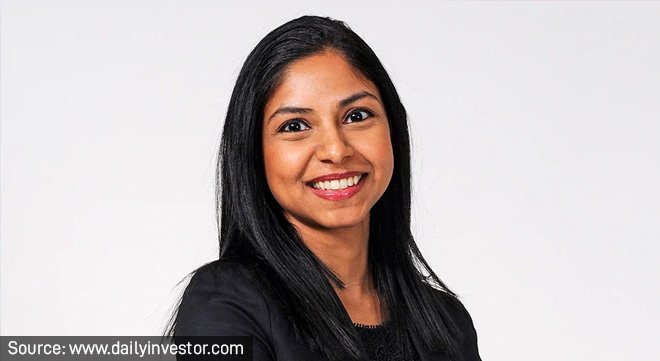
Listening to Sanisha Packirisamy (pictured), chief economist at Momentum Investments, one gets the sense that the world isn’t entering a brave new era – rather, it’s circling back to an older pattern. Power is becoming more transactional and competition for resources is intensifying.
She argues the post-war liberal order is fraying – the system built after 1946 on multilateral co-operation, Western leadership, and faith in markets. What’s emerging isn’t deglobalisation, but a reset of the “global operating system”, with governments prioritising domestic pressures over “the ills of a global economy”.
Packirisamy was speaking at Curate’s first annual global investor day in Cape Town last week, where speakers unpacked the forces reshaping global markets.
Why politics is driving the shift
Packirisamy traces the current upheaval to the West’s internal failures. She argues democratic governments did not create enough middle-income jobs and inequality widened as “the rich became richer and the poor became poorer”. At the same time, many ignored demographic change, leaving ageing societies underprepared – including on pension reform.
That gap between promise and reality fed anger, and in 2024 – the biggest election year in decades – voters made it clear they wanted something different. Centrist politics, she said, “hasn’t served them well. It hasn’t fixed the cost-of-living crisis. It hasn’t done anything on the immigration front.”
The result is a swing towards more radical options, with voters looking to the “ultra-left and ultra-right” for quicker answers to long-standing problems.
She also points to China as an awkward counterexample for democracies: an authoritarian system that still delivered large socio-economic gains for many citizens. With examples such as that in the background, she believes democracy has become “less and less popular”.
US: less global policeman, more strategic player
Packirisamy says the United States’ rethink of its economic and foreign policy gathered momentum from 2016 as political discontent rose. Under Trump 1.0, she argues, the focus was largely on trade deficits with China. Under Trump 2.0, it has broadened into something bigger: an attempt to push China out of the race for AI-led productivity gains.
She says that race depends on two inputs: energy and rare earth minerals. And although the US leads in innovation, China still dominates many mineral supply chains – and may remain dominant even by 2035.
This, she suggests, helps to explain Washington’s growing interest in the Western Hemisphere. What Canada, the Panama Canal, Greenland, Venezuela, Cuba, Colombia and Mexico have in common is that they have energy or minerals, or they have key strategic trade corridors.
In other words: influence is becoming more about securing resources and routes than promoting broad global co-operation.
Tariffs didn’t kill trade – they reshaped it
Packirisamy notes tariffs are at their highest levels in decades, yet global growth has held up and trade has not collapsed.
“The death of globalisation was grossly exaggerated,” she said.
Instead, trade flows have shifted. Countries are trading more outside US channels, reviving older agreements and building new ones. She cites Europe-Latin America deal-making being revisited (the EU-Mercosur agreement), India signing multiple deals, and China deepening trade and infrastructure ties with Africa.
She also describes how exporters route around tariffs. China, for example, can send goods via Vietnam, Bangladesh, or Kazakhstan, relabel them and ship them on – a workaround that keeps export volumes moving.
Indo-Pacific is becoming the new core
Where the old growth story centred on the Atlantic, Packirisamy argues the next one will centre on the Indo-Pacific.
She uses the Valeriepieris Circle to make the point. It is “a tiny circle that covers only 2% of the globe” yet contains more people inside it than outside it – including giants such as China, India, Bangladesh, and Vietnam. It also includes the Strait of Malacca, one of the world’s most strategic trade routes.
Her view is that this area already “punches above its weight” in GDP contribution, and that as technology, capital and productivity deepen in the region, it will become even more central to global growth.
American exceptionalism is changing, not disappearing
Packirisamy does not argue that the US is “done” but that it is being challenged in a more contested system – but still holds major structural advantages.
She highlights three:
- Dollar dominance. Although the dollar’s share of central bank reserves has declined (from about 70% at the turn of the century to the mid-50s now), it still dominates cross-border transactions and global debt issuance. She argues there is no scalable alternative with comparable market depth and legal enforceability.
- Military reach. The US spends close to a trillion dollars a year on defence and has a presence in most parts of the world.
- Innovation. The US still leads global software spending and remains a powerhouse in advanced industries.
On “de-dollarisation”, she says the shift is real but gradual – not a cliff edge. Central banks are adding gold as a hedge after the freezing of Russia’s reserves in 2022, but she does not see a near-term replacement for the dollar system.
The big risk: politics spilling into institutions
One of her sharper warnings is about political interference in institutions that markets rely on – particularly central banks. She frames central bank independence as a key anchor of long-term stability: if monetary policy becomes political, inflation control can get sacrificed for short-term popularity, weakening purchasing power over time.
She also argues bond markets are becoming more demanding again. In a high-debt world, investors will push up borrowing costs for governments that “spend like there’s no tomorrow”. Capital becomes scarcer, more discerning – and it flows to countries with credible fiscal discipline.
What this means for South Africa
Packirisamy’s message for South Africa is essentially: you can’t control the global reset, but you can position yourself better inside it.
She argues foreign policy matters more in this kind of world, and countries should be “strategically pluralistic” – not tied to one bloc. She holds up India as the template: relationships with the US, Russia, BRICS, the Global South, and deep trade links even with those they don’t particularly like, such as China.
“I think this is where South Africa needs to take a page out of India’s book,” she said – because even if South Africa fixes its domestic priorities, it still operates inside a more volatile, more competitive global system.
The opportunity is real, but it comes with conditions: fiscal discipline, credible institutions, and the ability to navigate competing powers without becoming captive to any single one.
In Packirisamy’s analysis, that’s the point about the “new” world order: it isn’t a clean break. It’s a return to harder bargaining, sharper power plays, and a world where strategic assets – minerals, energy, trade corridors, policy credibility – matter as much as ideology.

