A KwaZulu-Natal couple’s joint estate has been placed under final sequestration in another case arising from the Travel Ventures International (TVI) scheme, more than 15 years after the regulatory process against one of them began.
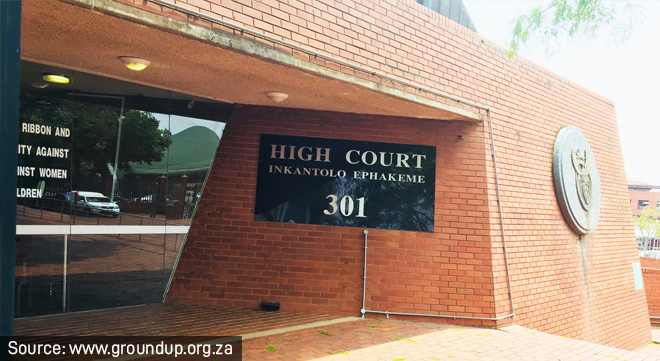
The High Court in Pietermaritzburg confirmed the provisional sequestration of the joint estate of Valukufa Jane Nduli and her husband, Sibusiso Christopher Nduli.
The application was brought by the Prudential Authority (PA), which has inherited relevant powers and pending matters from the former Registrar of Banks.
The judgment – delivered on 3 July 2026 – is the latest chapter in the long-running regulatory aftermath of TVI, which began operating in South Africa in 2009 and presented itself as an international direct-selling company offering travel benefits and opportunities to earn additional income.
According to the judgment, TVI promoted travel discounts and access to partner resorts and hotels. But its four income streams depended on participants introducing new participants.
Acting Judge Wyno Pietersen said the evidence showed that participants could earn money merely by bringing in others, without having to retail products or sell anything. People earned money by introducing new members on the promise that those members could, in turn, earn money by recruiting more people.
The Court said TVI therefore fell within the expanded definition of the business of a bank under the Banks Act and “essentially operated as a pyramid scheme”.
Mrs Nduli did not dispute that she had been involved in TVI. However, she said she did not know at the time that it was a pyramid scheme and described herself as a victim who had been “duped into purchasing vouchers”.
A process stretching back to 2011
The proceedings that culminated in the final sequestration order have their roots in an investigation launched more than a decade ago.
Johannes George Kruger was appointed in March 2011 to investigate the matter. In June 2013, he executed a search warrant at Mrs Nduli’s home, and the following month she was summoned to appear at the offices of law firm Bowman Gilfillan.
In November 2013, Kruger submitted his final inspection report to the Registrar of Banks, and a repayment directive was issued to Mrs Nduli.
The regulator was satisfied that she had obtained money by conducting the business of a bank without being registered or authorised to do so. Kruger was appointed to establish the amount obtained and to manage and control the repayment process.
Mrs Nduli was ultimately directed to repay R179 100, which Kruger determined she had obtained by conducting the business of a bank in contravention of the Banks Act. She did not repay the amount.
The chronology recorded in the judgment shows that Mrs Nduli became aware in December 2014 that sequestration proceedings might follow. In March 2015, Kruger obtained a rule nisi confirming his statutory duty and power to take possession of her assets.
The rule nisi and repayment directive were served on Mrs Nduli in July 2015. Kruger recommended sequestration of the joint estate in September that year and submitted a draft solvency report to the registrar in October.
But the sequestration application papers were issued only in July 2024.
The couple’s estate was provisionally sequestrated in August 2025. The latest proceedings concerned whether that order should be made final.
Why the Ndulis opposed final sequestration
The Ndulis resisted the final order on several grounds.
First, they argued there was no acceptable proof that Mrs Nduli had received the repayment directive. This was important because the PA relied on her failure to comply with the directive as one of the grounds for sequestration.
They also attacked aspects of the evidence as hearsay, arguing that Kruger had not provided a confirmatory affidavit.
The Court treated the receipt and hearsay complaints together, finding that both rested on the incorrect premise that Kruger had not filed a confirmatory affidavit.
Pietersen AJ said it was “simply incorrect” to claim that Kruger had not deposed to such an affidavit. His affidavit had been attached to the PA’s replying papers.
The Ndulis also relied on the lengthy delay before the sequestration proceedings were instituted.
Their counsel pointed out that Kruger had recommended sequestration in September 2015 and submitted a draft solvency report the following month, yet the application papers were issued only in July 2024.
Pietersen AJ described the period of almost nine years between the submission of the draft solvency report and the issue of the application as an “inordinate delay”.
But that did not dispose of the case. The Court found that the Ndulis had not presented evidence showing that the delay had prejudiced them. The delay was therefore insufficient reason to dismiss the application.
Challenge to the repayment investigation
The Ndulis further argued that Kruger had not properly complied with his obligations under the Banks Act.
They contended that his report did not establish the true amount of money unlawfully obtained by Mrs Nduli, pointing to references to “probable investor deposits” and “possible investor deposits”. They also argued that the identities of the people who deposited funds had not been specified.
The Court found that any non-compliance with these requirements was not fatal to the PA’s case.
Pietersen AJ relied on the Supreme Court of Appeal’s 2024 decision in another TVI-linked matter, Prudential Authority v Dlamini and Another.
The SCA held that where a person failed to comply with a repayment directive and did not challenge it by way of review, section 83 of the Banks Act provided a self-contained basis for sequestration. The PA did not have to rely on the section 84 solvency report to establish that ground.
Applying that reasoning, Pietersen AJ found that alleged shortcomings in Kruger’s work did not defeat the application against the Ndulis.
Would creditors benefit?
The final major dispute concerned whether sequestration would provide an advantage to creditors.
The Ndulis argued that their assets were insufficient, particularly once the costs of sequestration and administration were considered.
According to the Ndulis’ calculations recorded in the judgment, the R179 100 liability attracted interest at 9% a year from December 2014, taking the amount to R356 409 over 11 years.
They said Mrs Nduli’s personal debts amounted to about R1.65 million, putting total liabilities at just over R2m.
Against this, they pointed to evidence that the net value of their immovable property was R390 000. Their movable assets were said to be limited to a Mercedes-Benz E-Class vehicle obtained in 2010 and seized by the PA.
On this basis, they argued that any benefit to creditors would be negligible after the costs of sequestration and administration.
The Court disagreed.
Pietersen AJ found there was reason to believe sequestration would advantage creditors. The Court pointed to the immovable property and the possibility that an investigation and inquiry under insolvency proceedings could uncover additional assets.
The judge was also satisfied that the Ndulis’ assets were not so small that they would be insufficient to meet the costs of sequestration and administration.
The Court concluded that the requirements for final sequestration had been met and found no reason to exercise its discretion in the couple’s favour.
The provisional order issued in August 2025 was confirmed, placing the Ndulis’ joint estate under final sequestration. The costs of the application will be costs in the sequestration.
Click here to download the judgment.