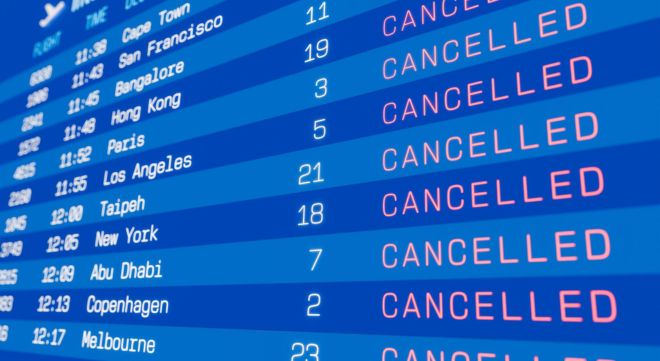
Travellers who commit significant upfront costs to flights, accommodation, and activities face a familiar risk: if plans change shortly before departure, much of that spend may be unrecoverable. According to Santam Travel Insurance, trip cancellation cover is intended to address that exposure, but only within defined parameters that policyholders need to understand.
Jason Veitch, the head of travel, accident, and health at Santam Travel Insurance, describes the benefit as “a financial safety net that protects your prepaid, non-refundable travel costs if you’re forced to cancel your trip because of unforeseen circumstances”. In practice, this typically includes non-refundable flight tickets, prepaid accommodation, tour packages, cruises, safaris, and pre-booked excursions, or event tickets.
The trigger for a valid claim is an “eligible, documented event” that prevents travel before departure and is both unforeseen and outside the traveller’s control. Veitch cites medical emergencies affecting the traveller or a companion, family bereavement, major travel disruptions such as severe weather or natural disasters, job loss, or theft of travel documents as common examples. Insurers will generally require supporting evidence, such as medical reports or confirmation from airlines or service providers, to substantiate the claim.
However, the cover is not open-ended. Veitch notes that trip cancellation insurance “doesn’t cover every reason for cancelling”, and exclusions are central to how the benefit operates. These typically include voluntary cancellations or a change of mind, failure to obtain required travel documents such as visas, financial constraints, pre-existing medical conditions, and events or restrictions that were already known at the time the policy was purchased. Losses linked to war or warlike operations are also generally excluded.
Importantly, cancellation before departure must be distinguished from disruption during travel. Veitch points out that “having to cancel or cut your travel short during the trip would require trip disruption insurance and wouldn’t typically be covered under trip cancellation insurance”, underscoring the need to assess cover across the full travel lifecycle.
The timing of purchase is another material consideration. Veitch says the cover should ideally be taken out “immediately after booking” to ensure eligibility for the full range of benefits and to avoid time-based limitations linked to known events. This is particularly relevant for higher-value trips or itineraries involving fixed dates, such as weddings, conferences, or group travel arrangements, where rescheduling may not be feasible.
For travellers seeking broader flexibility, insurers may offer optional extensions such as “Cancel for Any Reason” (CFAR) or unspecified event cover. Veitch describes this as “a worthwhile investment” in circumstances where plans are uncertain or upfront costs are substantial, but notes that such add-ons are typically subject to strict purchase windows –often within a few days of the initial booking or deposit – and may carry different reimbursement terms.
The underlying message, Veitch says, is straightforward: “If you can’t afford to lose what you’ve paid for your trip, you can’t afford to travel without trip cancellation insurance.”