
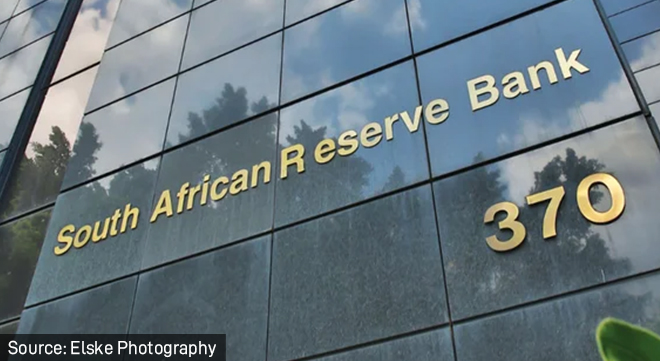
The South African Reserve Bank has partially retreated from its overhaul of exchange control rules, easing tax-clearance requirements for some non-resident income flows but leaving key restrictions on rental income and directors’ fees in place.
The revised position follows changes introduced by the Reserve Bank’s Financial Surveillance Department in October, which amended the exchange control manual to require South African Revenue Service tax-clearance approval for a range of income transfers to non-residents.
The amendments prompted criticism from market participants, investor groups, and tax specialists, who warned that the measures would disrupt routine income flows and undermine South Africa’s attractiveness to foreign and returning capital.
Read: SARB’s new exchange control rules draw criticism
Last week, the Financial Surveillance Department issued revised guidance that rolls back some of the most contentious elements of the October changes. According to the Institute for International Tax and Finance, which has been among the most vocal critics of the new regime, the revisions represent a partial but incomplete reversal.
Under the revised framework, non-resident entities will no longer be required to obtain an application for international transfer (AIT) tax compliance PIN from SARS to transfer income offshore. In addition, dividends from listed companies and interest earned from regulated financial institutions may now be transferred to non-resident individuals without the need for SARS tax clearance.
“This is a positive development that addresses some of the most egregious aspects of the October changes,” said Michael Kransdorff, director of the Institute for International Tax and Finance. “SARB deserves credit for recognising the legitimate concerns raised by the investment community and for taking corrective action.”
Certain other income streams were never subject to the AIT requirement and remain unaffected. These include salaries, fees for services rendered, pensions, and annuities. As a result, the immediate compliance burden for many non-resident investors and corporates has been reduced.
However, the revised guidance leaves significant elements of the October framework intact. Non-resident individuals are still required to obtain AIT approval from SARS, or in some cases, a manual letter of compliance, for several categories of income. These include rental income, directors’ fees, and members’ fees.
In addition, tax compliance status (TCS) certificates of good standing are now required from South African payers for certain payments, including dividends from unlisted companies, interest from unregulated entities and trust distributions.
The Institute for International Tax and Finance argues that the continued differentiation between income types is arbitrary and lacks a coherent policy rationale.
“The continued discrimination against rental income and directors’ fees is arbitrary, economically harmful, and administratively unjustifiable,” Kransdorff said. “Why should a non-resident earning rental income face weeks or months of bureaucratic delays in accessing funds, while a non-resident earning interest or consulting fees can remit income immediately? This distinction has no rational policy basis.”
The treatment of directors’ fees has drawn particular criticism. In most cases, pay-as-you-earn tax is already withheld at source by the South African company paying the fee, meaning that SARS has collected the tax before the funds are remitted offshore.
“SARS has already collected their taxes by withholding PAYE, yet non-resident directors must still endure the AIT process to access their net fees,” Kransdorff said. “There is no additional tax risk to mitigate once PAYE has been withheld at source. This is pure bureaucracy serving no revenue protection purpose.”
No threshold
Another key concern raised by the Institute is the absence of a de minimis threshold for non-residents. Although South African residents benefit from a R1-million annual single discretionary allowance (SDA) that allows them to remit funds abroad without obtaining SARS tax clearance, no equivalent allowance exists for non-resident individuals.
As a result, the compliance requirements apply regardless of the amount involved. A non-resident property investor earning R250 000 a year in rental income is subject to the same AIT process as someone earning R2.5m, including extensive supporting documentation, SARS processing times of up to 21 business days, and the associated professional costs.
“The absence of an annual allowance for non-residents is fundamentally unfair and creates a hostile investment environment for individuals who cease to be South African tax residents but retain legitimate investments in South Africa,” Kransdorff said. He added that few peer jurisdictions impose clearance requirements on small, routine income flows to non-residents.
The practical consequences of the retained restrictions are expected to be most acute for South Africans who have emigrated but kept property in the country. Many rely on rental income to support themselves abroad. Under the current framework, rental income must first be received into a South African bank account before an AIT application can be submitted, and the funds cannot be remitted until SARS approval has been granted.
“This creates a structurally impossible situation,” Kransdorff said. “An emigrant receiving monthly rental income cannot access those funds for weeks while SARS processes the AIT. If they rely on that income for overseas living expenses, they face recurring cash-flow crises. The inevitable result will be forced asset disposals – exactly the opposite of what the South African economy needs.”
The AIT process is documentation-heavy. Applicants must provide proof of non-residency status, detailed source-of-funds information, recent bank statements confirming the availability of funds, and statements of assets and liabilities covering the previous three years. Although SARS has up to 21 business days to process an application, industry participants say turnaround times are often longer in practice.
It is also important to distinguish between formally non-resident individuals and South Africans working or living abroad who have not yet ceased tax residency. The latter group is not subject to the new exchange control rules. Provided that their offshore transfers fall within the R1m SDA, no tax clearance is required. For amounts above that threshold, the existing foreign capital allowance of R10m applies, subject to SARS tax clearance and SARB approval.
In response to the revised guidance, the Institute has called on the Reserve Bank and National Treasury to complete the reform process by establishing parity between residents and non-residents. Among its proposals are the introduction of a R1m annual discretionary allowance for non-residents, the elimination of income-type discrimination, and a streamlined AIT process with shorter turnaround times and proportionate documentation requirements for larger transfers.
“The partial retreat shows that SARB recognises the damage caused by the October changes,” Kransdorff said. “But the job is only half done. Rental income and directors’ fees should be treated the same as other income streams. Non-residents deserve the same annual discretionary allowance as residents. South Africa deserves a rational, investor-friendly exchange control framework.”



Step in the right direction though non residents still have red tape to deal with.