

Africa’s newly launched credit rating agency has an opportunity to change how the continent’s sovereign risk is assessed, particularly the weight international agencies place on structural economic indicators.
An analysis published by the Finance for Development Lab on 27 October suggests that the Africa Credit Rating Agency (AfCRA) could produce more differentiated assessments of African countries by examining whether established rating methodologies give sufficient weight to fiscal performance, debt-servicing costs and external liquidity.
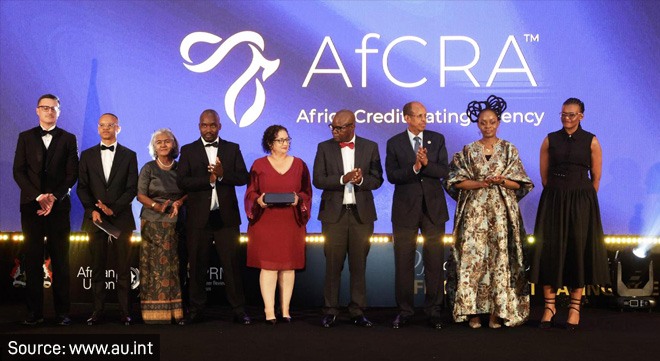
AfCRA was officially launched in Mauritius on 7 October. It will provide additional credit assessments of African governments, sub-national entities, companies and financial institutions, complementing those issued by Moody’s, S&P Global and Fitch.
The United Nations Economic Commission for Africa (UNECA) estimates that persistent risk premiums cost the continent approximately US$75 billion annually in excess interest payments. However, a new rating agency will not automatically reduce borrowing costs. Its assessments will have to gain the confidence of investors and financial institutions before they influence how African borrowers are priced.
AfCRA’s interim chief executive, Dr Sifiso Falala, is a South African ratings executive and the chief executive of Centurion-based Sovereign Africa Ratings. He also heads Plus94 Research. Sovereign Africa Ratings awarded South Africa an investment-grade BBB long-term rating with a stable outlook in September 2022, a more favourable assessment than those assigned by the major international agencies at the time.
AfCRA is targeting its first sovereign ratings in early 2027, according to Falala. The agency’s own frequently asked questions indicate that Mauritius is expected to be among the first countries assessed. Burundi and Kenya have also publicly indicated an intention to work with the agency. The timetable remains dependent on operational and regulatory milestones.
A different approach to assessing risk
In her analysis, economist Tatiana Lysenko identifies an opportunity for AfCRA to reconsider how sovereign creditworthiness is measured.
Established rating methodologies place considerable weight on structural indicators, particularly income levels and institutional quality. Lysenko’s research suggests these factors explain more than half the difference between median sovereign ratings in sub-Saharan Africa and advanced economies.
African countries, however, have widely differing fiscal and external positions, including their debt-servicing burdens and foreign currency liquidity. These indicators can respond more quickly to policy decisions, but their contribution to the rating gap may be smaller than that of slower-moving structural factors.
Lysenko argues that AfCRA could test whether the weight assigned to these indicators reflects their actual ability to predict sovereign defaults.
The agency’s published framework identifies five assessment pillars:
- Economic strength.
- Fiscal capacity and debt.
- External resilience.
- Institutions and governance.
- Monetary and financial stability.
It is also exploring indicators such as natural resources. The specific indicators and weightings within each pillar have yet to be published.
Lysenko argues that a different methodology would not necessarily result in higher ratings for African countries. Rather, it could produce greater differentiation between sovereigns by giving more weight to differences in their fiscal and external positions, and their ability to service debt.
Twenty African countries remain unrated
AfCRA also intends to address gaps in ratings coverage.
According to the Finance for Development Lab, only 26 of the African Union’s 55 member states are rated by at least two of the three major international agencies. Another nine are rated by one, while 20 have no rating from any of them.
AfCRA has indicated that sovereign ratings will account for approximately 70% of its business in the medium term, with commercial ratings expected to increase as the agency expands. Its intended coverage includes sovereigns, sub-national entities, corporates and financial institutions.
The APRM’s background brief also envisages ratings for local-currency debt instruments, municipal and state-owned enterprise bonds, green and sustainability-linked bonds, bank facilities and other debt instruments.
The development coincides with growth in African private credit markets. In their 27 October article for Webber Wentzel, Michael Denenga and Sabelo Ndlovu note that African private debt deal values grew 14% year on year, while local institutional investors are increasingly looking to finance businesses and infrastructure projects underserved by traditional banks.
They argue that AfCRA could support this market by improving credit information and helping investors distinguish between perceived and actual credit risk.
What does this mean for South African financial institutions?
AfCRA’s development is relevant to South African banks, insurers, asset managers, retirement funds and development finance institutions with exposure to African markets. Its assessments could provide another reference point when evaluating African sovereign debt, corporate bonds and infrastructure investments.
However, South African institutions will need to consider the regulatory status of AfCRA’s ratings before relying on them for regulatory purposes.
The Credit Rating Services Act 24 of 2012 provides for the registration and regulation of credit rating agencies. AfCRA’s establishment in Mauritius does not, in itself, establish that its ratings will qualify for regulatory use in South Africa. The applicable registration or recognition requirements will need to be clarified.
AfCRA’s position regarding regulatory recognition in South Africa has yet to be established.
Investors will have to trust its ratings
AfCRA was established following years of criticism from African governments about the methodologies and assessments of international rating agencies. It will nevertheless have to demonstrate that it can issue unfavourable ratings without political interference.
AfCRA describes itself as a privately owned, independent agency. Its ownership and governance arrangements, including the safeguards against shareholder, issuer or political influence, will be important to its credibility. The agency says some details of its final shareholder arrangements remain to be confirmed.
The credibility challenge was highlighted by Dennis Shen of the International School of Management in Berlin, in comments to Bloomberg reported by Moneyweb on 7 October: “The first hurdle will be inevitably credibility, because a new rating agency begins with a promise while investors ultimately require a track record.”
At the launch, UN Special Adviser on Africa Ahunna Eziakonwa said: “We cannot ask global capital to trust what African capital treats as optional.”