
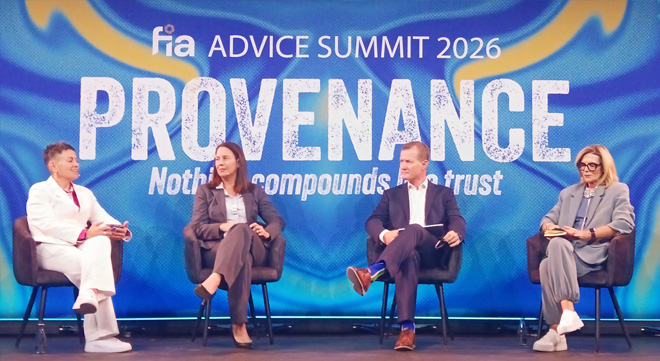

Existing financial institutions should not have to submit fresh licence applications when the Conduct of Financial Institutions (COFI) framework comes into effect, says Lezanne Botha, senior manager: Regulatory Framework Department at the Financial Sector Conduct Authority.
Financial institutions already licensed by the FSCA will be relicensed by the regulator under the proposed COFI framework, rather than having to submit new applications, Botha said at the FIA Advice Summit 2026 on 13 October.
Botha said the FSCA was working on the licensing arrangements needed to move to the new framework.
The COFI Bill contains a schedule setting out transitional arrangements for licensing. Although the latest version has not been made public, Botha said the version she had seen was clearer and more structured than previous drafts.
Her comments addressed a key concern for financial services providers: what will happen to their existing licences when the new framework takes effect?
“Everyone can take a deep breath,” she said, assuring existing licence holders that they would not have to queue at the FSCA’s offices to be relicensed.
“Existing entities will be relicensed by the FSCA. So, we will be responsible for that process. It’s not that you’re going to have to fill in a form and bring a new application.”
A phased approach to relicensing
Botha outlined the different groups of entities and activities that the transitional arrangements will cover. These include existing entities licensed by the FSCA, entities licensed by other regulators, payment and National Credit Regulator (NCR)-related activities, and activities that are not currently regulated as financial services.
She referred to the Prudential Authority (PA) and the NCR when explaining how activities currently falling under other regulatory arrangements could be affected as responsibilities shift under COFI.
Payment and NCR-related activities are being treated separately, she said, partly because of the number of entities involved.
The FSCA is planning for different types of entities and activities to follow arrangements suited to their circumstances.
Botha said the FSCA was required to publish its proposed relicensing approach at least six months before the relevant provision takes effect. She said the regulator would consult on the proposed approach before publishing it, giving the industry an opportunity to consider the arrangements ahead of the transition.
“This is not a big bang,” she said. “It is phased. It is structured, and we’re working very hard on keeping it structured so that we don’t disrupt the industry.”
She urged financial institutions to continue focusing on technology, staying relevant and meeting customers’ needs while the regulator prepares for the transition.
A new approach to licensing
The proposed relicensing arrangements form part of a broader change to how financial institutions will be licensed and supervised in South Africa.
The COFI Bill aims to establish a single framework for regulating the market conduct of financial institutions, replacing the fragmented system under which different types of institutions are regulated by different sectoral laws.
In an analysis published on 2 June 2026, Werksmans Attorneys explained that the proposed framework would introduce a single FSCA licence based on the activities an institution performs, the financial products involved and the categories of customers served.
Under this model, an institution could hold one licence with multiple activity authorisations. The emphasis would shift from the type of institution to the financial activities it carries out.
Werksmans said existing institutions would transition through a mapping process, aligning their current permissions with the new framework. New entrants, by contrast, would have to apply under the COFI regime once it takes effect.
The change could require institutions to reassess their activities and authorisations, including whether entities within their groups or certain outsourced service providers may need their own licences.
The practical implications will depend on the final legislation and the licensing requirements set by the FSCA.
The Bill has yet to be tabled in Parliament
Cabinet approved the COFI Bill for submission to Parliament in March 2026, but the legislation has yet to be formally tabled in the National Assembly.
A notice published in the Government Gazette on 17 April announced the Bill’s intended introduction and included an explanatory summary. The Notice was not accompanied by a copy of the Bill. National Treasury previously said the Bill was undergoing scrutiny by the Office of the Chief State Law Adviser before its introduction.
Read: UPDATED | Minister gives notice of COFI’s ‘introduction’ in National Assembly
Once the Bill is formally introduced, it will proceed through Parliament for consideration, including scrutiny by the relevant committee and opportunities for public input. The final legislation, followed by the FSCA’s proposed licensing approach, will determine how the transition is implemented.


