



Digital assets: three questions advisers need to be asking
Who can advise on digital assets, where can clients move them, and what can SARS see? A practical look at the questions advisers need to understand.
Who can advise on digital assets, where can clients move them, and what can SARS see? A practical look at the questions advisers need to understand.

The NCC’s draft guidelines include financial institutions and insurers, giving businesses five months to prepare for monthly database cleansing and enforcement.

The regulator is examining possible contraventions involving the provider, which operates the EZInvest and Financix trading platforms.

The separate actions follow findings of alleged contraventions at three providers and preliminary questions about the management and oversight of two others.

The 2025/26 Integrated Report records supervisory work on disclosure, customer consent, transactional fees, and customer treatment.

FSCA deputy commissioner Farzana Badat offers a glimpse into the regulator’s thinking on accountability, privacy, and human oversight.

Practical steps for FSPs and their clients to spot, verify, and prevent fraud before a compromised email becomes a costly payment.

COFI would require FSPs to have systems capable of producing reliable, regulator-ready information when the FSCA requires it.

From regulatory exams to qualifications, Class of Business training, and CPD, MBSE can support professionals through the broader Fit and Proper requirements.

Moonstone’s updated calculator enables FSPs to estimate their Schedule 2, Ombud Council, Tribunal, and FAIS Ombud levy components.
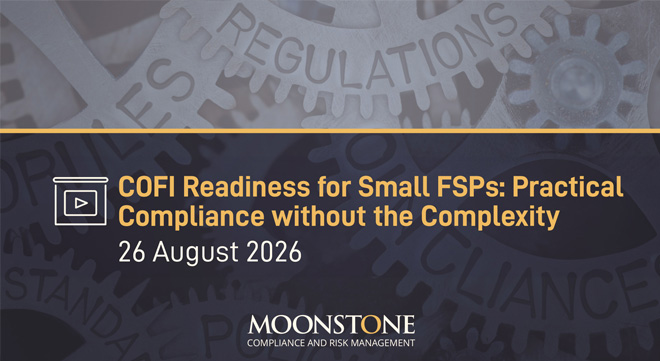
Moonstone Compliance will explore what the FSCA’s changing supervisory approach means for smaller practices and how they can respond proportionately.

The Bill re-organises existing asset-protection obligations into a fiduciary framework that places greater emphasis on governance, evidence, and customer protection.

Key judgments clarified the FSCA’s ability to investigate misconduct, resist procedural delays, and pursue cross-border enforcement.

The regulator is scrutinising how derivative positions, suspicious trading, and failures by gatekeepers can undermine market integrity.

The Regulatory Actions Report shows how the Authority is combining penalties, licence withdrawals, and debarments to tackle serious misconduct.

The regulator highlights how digital scams, referral models, and trading signals can pull consumers into unlicensed services.

The outcomes-based framework links product and service governance with customer expectations and the experience that follows.