By the time a claim reaches a claims professional, it may be the 49th case they have dealt with that day. To the person making the claim, it may be one of the worst days of their life.
The process may be the same. The experience is not.
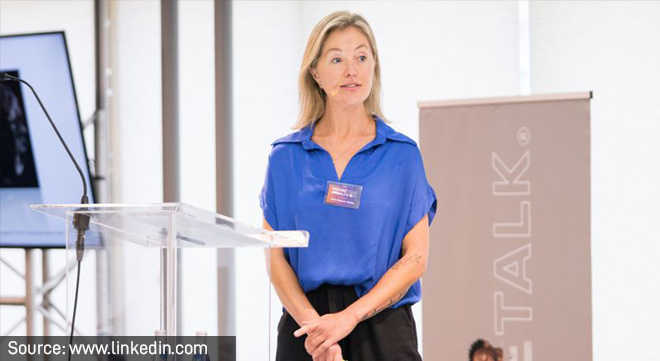
Kate Weaver-Gibbs (pictured) spent much of her presentation at the inaugural The Insurance Conference 2026, held at Plaisir Wine Estate in the Cape Winelands last week, looking at that space between the process and the person.
Her presentation was not about making insurance softer. Weaver-Gibbs, a mental well-being facilitator at Global Choices and CEO of R U OK, the mental health partner of the insurance industry, was interested in what happens when the people working inside that process recognise what may be happening on the other side of the conversation.
A claimant. A broker. An underwriter. A claims administrator. A manager. An employee.
The insurance chain may look mechanical on paper. Weaver-Gibbs described it as something else: a human chain.
The person behind the claim
For a policyholder dealing with an accident, a death, fire, or other loss, an insurance claim can arrive at a particularly difficult point in their lives.
The claims professional may have handled dozens of similar cases already.
“We’ve spent years paying premiums for something that we pray is never going to happen, and when it does, we discover whether that promise was real,” Weaver-Gibbs said. “For the person handling that claim, it is number 49 of the day. For the policyholder, it is the worst day of the year, possibly their lives.”
Weaver-Gibbs used a car accident to illustrate what that difference can look like.
The person making the call may be shaken, late for work, worried about their children, or making their first insurance claim. The person answering the phone needs information to get the process moving.
“I need your policy number” is a perfectly reasonable response.
But Weaver-Gibbs offered another possibility: “I’m sorry this has happened to you. Are you okay? Let’s take this a step at a time.”
The policy number still needs to be established. The claim must still follow the process. Nothing about the contractual obligation has changed.
The experience has.
It is also worth remembering what people are like when they are under pressure. Weaver-Gibbs noted that a distressed person may shout, send five emails, or become defensive. They may be difficult.
Her question was: “What is happening to this person that I can’t see?”
“We all need a bit of grace sometimes,” she said.
That does not mean ignoring difficult behaviour. It means allowing for the possibility that the behaviour is coming from somewhere the professional cannot see.
It is a human chain
The question becomes harder once the claimant is no longer the only person in the conversation.
Insurance can look like a mechanical process: a claim comes in, information is gathered, a decision is made, and the outcome is communicated.
“The insurance value chain is a human chain,” Weaver-Gibbs said. It includes the policyholder, broker, underwriter, insurer, claims assessor, administrator, manager, colleague, reinsurer, and partner.
The broker sits in an interesting position.
“The client wants an answer. The insurer needs information. The underwriter needs clarity. The broker needs to deliver,” she said.
A broker can find themselves carrying pressure from both directions. The client wants to know why something is taking so long. The insurer is waiting for information. The underwriter needs clarity. Meanwhile, the broker has other clients, renewals, compliance requirements, and a full inbox.
“The broker isn’t just moving information from point A to B. They’re managing relationships, expectations, anxiety, and trust,” Weaver-Gibbs said.
That can change how an interaction is handled. A broker who understands the pressure on the insurer can explain what information is needed and why. A broker who understands the client’s anxiety can manage expectations rather than simply passing the frustration along.
The same dynamic continues when the conversation reaches the underwriter.
When the answer is still no
An underwriter may have to decline a risk, impose conditions, or challenge information supplied by a broker. A claims administrator may have to explain why a claim cannot be paid.
Those decisions must still be made.
“You can be empathetic and commercially tough. You can negotiate and challenge someone,” Weaver-Gibbs said. “Empathy strengthens that position.”
For her, empathy does not mean agreeing with someone or giving them what they want. It means being able to communicate a difficult decision without losing sight of the person receiving it.
“You can be clear without being cold, professional without being robotic, and say no while making somebody feel respected,” she said.
That can mean acknowledging the person’s frustration, explaining the position clearly, and maintaining the boundary.
The underwriting decision remains the underwriting decision. The claim must still be assessed against the policy. The answer can be no without the person on the receiving end feeling that they have been dismissed.
The people handling other people’s problems
The chain does not end with the customer.
Someone must still answer the phone, assess the claim, negotiate with the broker, or explain why the answer is no. Those people bring their own pressures into the interaction.
Claims professionals may spend their working days dealing with accidents, deaths, fires, fraud, loss, complaints, and conflict. The next claim arrives before the previous one has necessarily left their thoughts.
“We can’t expect these people to continually absorb everybody else’s distress without creating space for their own,” Weaver-Gibbs said.
The same colleague who is expected to show patience with a distressed claimant may be dealing with their own pressures. A manager may see an employee who is distracted, unusually defensive, or making mistakes without knowing what is happening outside the workplace.
“What assumptions do you make about your colleagues?” Weaver-Gibbs asked. “What are you not seeing? What are you sensing, but you’re too busy to stop and enquire about?”
It does not mean ignoring performance problems.
It may mean asking a question before reaching a conclusion.
Making it possible to say ‘I need help’
Weaver-Gibbs also links empathy to what happens when employees make mistakes.
A workplace in which people are afraid to admit that they do not know something, need help, or have made an error can make it harder to deal with problems early.
“Great leadership is about creating safety for people to say, ‘I don’t know. I need help. I made a mistake. I’m struggling,’” she said.
That applies particularly in an industry where small errors can have consequences for clients, policies, and claims.
It also changes the role of the manager. Rather than immediately asking why something went wrong, there is room to establish what happened and what the employee needs to fix it.
The same attention can be turned towards the employee themselves.
Weaver-Gibbs pointed out that people are often much kinder to others than they are to themselves. Someone else makes a mistake and we say, “Don’t worry, you’re human.” We make a mistake and ask ourselves how we could have got it so wrong. Someone else is exhausted, and we tell them to take a break; when we are exhausted, we tell ourselves to push through.
“Empathy needs to include ourselves too,” Weaver-Gibbs said. “Self-empathy is not self-indulgence. It doesn’t make you less professional. It just makes you human.”
A question worth asking
Much of Weaver-Gibbs’ advice comes back to a simple pause in the interaction.
When another person is frustrating you, she suggests asking: “If I were in their position, what would I need from me?”
For a claimant, the answer might be patience or reassurance. For a broker, it might be clarity about what the insurer needs. For an underwriter, it might be the space to explain a difficult decision. For a colleague, it might simply be someone asking whether they are okay.
The role does not change. The rules do not change. The question changes what happens before the response.
A relationship business
The small moments in these interactions can have consequences beyond the conversation itself.
People who feel heard are more likely to trust. People who trust are more likely to communicate. Better communication can reduce misunderstanding, while feeling respected can influence whether people stay – as clients and as employees.
That leaves a practical question for an industry built around people, policies and processes: what happens when the person on the other side of the transaction is treated as part of the process rather than simply someone moving through it?
“Empathy isn’t a soft skill; it’s a relationship skill, and insurance is ultimately a relationship business,” she said.