
A legal challenge to the National Health Insurance (NHI) Act has put South Africa’s biggest health reform on pause – and shifted the focus from policy to process.
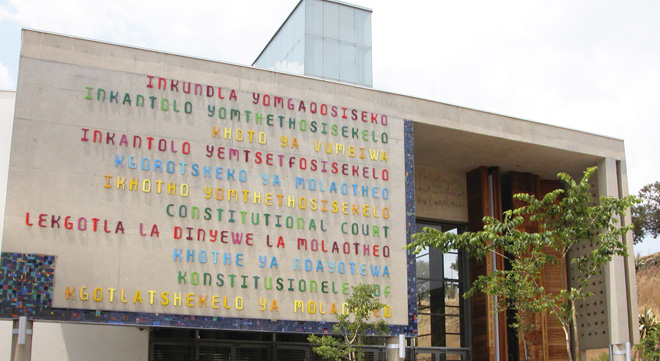
Over three days, from 5 to 7 May, the Constitutional Court heard arguments that could determine whether the Act stands, or whether Parliament must start again.
At the centre is a simple question: did Parliament allow the public to participate meaningfully when passing the law?
The Act establishes a single national fund that will purchase healthcare services from public and private providers – a structural shift that would reshape how healthcare is funded and delivered in South Africa.
What the case is about
Two cases are before the Court:
- The Board of Healthcare Funders (BHF)
- The Western Cape provincial government
Both challenge how the NHI Act was passed – not the goal of universal healthcare itself.
The BHF argues that Parliament did not provide enough information for the public to engage properly, especially on cost, benefits and how the system would work. It also contends that lawmakers were not open to persuasion.
The Western Cape focuses on the role of the National Council of Provinces (NCOP), arguing that provincial inputs were not properly considered.
Both are asking the court to declare the Act unconstitutional.
What came before – and what is on hold
The case sits within a wider legal battle over NHI.
The Act was signed into law by President Cyril Ramaphosa in May 2024, but it has not been brought into force.
Multiple legal challenges followed. Those have now been paused.
In February 2026, the President undertook not to implement any part of the Act until the court rules on these cases.
Read: Ramaphosa pauses NHI promulgation pending ConCourt ruling
That undertaking – backed by Health Minister Aaron Motsoaledi – was made an order of the High Court.
Read: High Court order stalls NHI roll-out until ConCourt decision
If the Court finds that Parliament failed to facilitate meaningful participation, the Act may be set aside and returned to the legislative process. If not, the suspended challenges are likely to resume, shifting the focus to the substance of the law.
Meaningful participation – or a ‘tick-box’ exercise?
There is no real dispute that consultation happened.
As Sasha Stevenson, executive director of public interest law centre Section27, put it in an interview with Newzroom Afrika, “no one could argue that there wasn’t consultation on the NHI Bill”. The question is whether the public had “sufficient information… to meaningfully engage”.
She framed the stakes more broadly in an opinion piece first published by Spotlight: “If there is no chance of having that influence, merely being able to speak is insufficient.”
Counsel for BHF told the Court the case is “explicitly and unequivocally about meaningful participation”.
The BHF argues that, despite extensive submissions, the Bill remained largely unchanged on key issues – suggesting that participation had limited impact.
Part of the critique is how participation worked in practice. Evidence before the Court suggests engagement often centred on whether people supported NHI, rather than the details. For example, Stevenson noted in her opinion piece that MPs engaged “to a limited extent with the substance of the submissions, focusing rather on whether we were ‘for’ or ‘against’ the NHI”.
According to BHF, participation became a yes-or-no exercise, rather than a way to shape the law.
Parliament rejects that.
Its counsel described the process as “extensive and intensive”, pointing to more than 330 000 submissions, public hearings across all provinces, and multiple rounds of engagement.
Counsel for Parliament argued that the constitutional standard is not whether public views are adopted, but whether they are heard:
“What public participation requires… is not that one’s views should prevail, but it is that the legislature is informed of the public’s views on the main issues.”
He said the complaint ultimately reflects disagreement with the outcome: “The challenge we submit… is about the outcome… and there is no breach when the outcome is not what they sought.”
Parliament also says the process resulted in amendments to the Bill.
Costing: what did Parliament know – and when?
One issue kept coming up: cost.
The BHF says Parliament passed the law without a clear picture of what NHI will cost.
Its counsel argued that Parliament relied on the Department of Health’s approach – including the decision not to produce a full cost estimate – rather than properly interrogating it.
On this version, that matters because it affects both oversight and public participation.
Without a clear view of the overall cost, how it will be funded, and what benefits will be provided, the BHF says neither lawmakers nor the public could properly test the policy.
Parliament disputes that.
Its counsel told the court that the model before Parliament was not one without costing, but one based on a phased rollout. Costs, it said, were tied to each stage of implementation, rather than fixed upfront.
Parliament said this reflects how large health reforms are handled internationally – by building and funding systems incrementally rather than attaching a single upfront price tag.
But the BHF’s answer is that this is exactly the problem.
It argues that a phased approach does not remove the need for a clear overall picture. Without it, the public cannot assess affordability, and Parliament cannot properly weigh the implications of the law.
Parliament’s counsel said long-term estimates are unreliable: “Both acknowledge that… when you’re using projections… those projections become unreliable.”
And: “It is unhelpful to try to cost a project… of that duration.”
The BHF’s position, however, is that uncertainty does not remove the obligation to provide a workable estimate – particularly for a reform of this scale.
The Armstrong research — how much would it cost?
To support its case, BHF relied on research by Dr Paula Armstrong, senior director at FTI Consulting.
The analysis was commissioned as part of industry submissions on the NHI and has been used in parliamentary processes and litigation challenging the Act.
Her analysis, based on figures presented by the Department of Health, points to a funding gap of about R200 billion – over and above existing public health spending.
She emphasised this is not the total cost of NHI, but the additional funding required.
She concludes that, in its current form and given South Africa’s fiscal position, NHI is not economically viable and that a single-payer system would be ill-suited to the local context.
For the BHF, this goes to the heart of the case.
It argues that without a clear picture of the financial implications, Parliament – and the public – could not properly assess or engage with the policy.
As its counsel put it: “We kept saying, but the emperor has no clothes… and yet you still go ahead, and you enact legislation that says the emperor does have clothes.”
Parliament pushed back.
It argued that this kind of analysis tries to construct a single total cost – something it says does not reflect how NHI is designed, given its phased rollout.
It also pointed to context.
The BHF represents medical schemes and administrators – groups that would be directly affected by NHI – suggesting the research reflects a particular perspective rather than a neutral one.
Jurisdiction and rationality – what kind of case is this?
A central dispute in the hearing was not about NHI itself, but about what kind of case the court is being asked to decide.
The Constitutional Court has exclusive jurisdiction in specific circumstances – including where it must decide whether Parliament has failed to fulfil a constitutional obligation, such as facilitating public participation.
That is how the BHF frames its case.
Parliament challenges that at the threshold.
It argues the BHF has not properly pleaded a public participation case at all. Instead, it says, the complaint is really about the content of the law – whether NHI is properly thought through, workable, or financially sound.
That, Parliament says, is a rationality challenge. And those challenges do not fall within the Court’s exclusive jurisdiction; they must start in a lower court.
If that view is accepted, the case may not proceed in the Constitutional Court at all – at least not in its current form.
Put differently, Parliament’s case is that the BHF is dissatisfied with the outcome and is trying to reframe that dissatisfaction as a procedural defect.
The BHF rejects that.
Its counsel told the court that Parliament was “cherry picking” references to rationality and reasonableness to recast the case.
On this version, rationality is not a separate claim, but part of the evidence.
“That cannot be rational… and what your rationality… indicates is your disregard of the meaningful public participation process.”
The Western Cape case – was the process rushed?
The Western Cape case focuses on what happened in the NCOP, and whether it met its constitutional duty to facilitate public participation.
The provincial government argues that it did not.
It raises five main concerns.
First, it says the process was rushed, driven by a push to finalise the Bill before the end of Parliament’s term, leaving little room for meaningful engagement.
Second, it argues that key provincial inputs – including reports from Gauteng – were not properly considered.
Third, it says the NCOP failed to consider all negotiating mandates together, particularly those from the Western Cape and Gauteng.
Fourth, it contends that the province was not given a real opportunity to influence the outcome.
And finally, it argues that even where concerns were acknowledged, the NCOP did not require meaningful changes to the Bill.
On that basis, the Western Cape is asking the Court to declare the Act unconstitutional and to send it back to Parliament to be re-enacted through a compliant process.
Parliament disputes this.
It argues that the process must be assessed as a whole – not by isolating individual steps – and that, viewed in that way, it was extensive, inclusive and reasonable.
It points to nationwide public hearings, hundreds of thousands of written submissions, and stakeholder engagements across both the National Assembly and NCOP.
Parliament maintains that the constitutional standard is one of reasonableness, not perfection, and that the public was given a meaningful opportunity to be heard.
It also rejects the claim that the process was rushed.
According to its submissions, the timetable was flexible and adjusted several times, and any delays were not caused by the NCOP, but by the Western Cape itself failing to act timeously.
The Minister of Health takes a similar approach, arguing that the Western Cape’s case isolates parts of the process instead of looking at it as a whole.
He points to about 60 provincial hearings and extended opportunities for written submissions as evidence of a genuine nationwide participation process, rather than a token exercise.
He also argues that:
- there is no requirement to consider all provincial mandates at the same time,
- the Western Cape’s inputs were considered, even when submitted late, and
- the complaint is ultimately about dissatisfaction with the outcome, not exclusion.
Even on remedy, the parties differ.
The Western Cape wants the entire Act set aside and sent back to Parliament.
Parliament and the Minister argue that, if there is a defect, it should be limited – and the Bill should be sent back only to the NCOP to fix the problem.
What happens next
Once arguments conclude, the Court will begin its deliberations. A judgment is unlikely soon.
For now, the NHI Act remains signed but not in force, implementation is paused, and Ramaphosa has undertaken not to act until the Court rules.
The outcome will shape what comes next.
If the Court finds the process was flawed, the Act could be set aside and remitted to Parliament – in whole or in part – to correct the defect.
If not, the wider legal battle over NHI will move to the next phase, focusing on the substance of the law.



It would be better if the Department of Health start to focus on improving the health system from all public clinics and hospitals, have enough qualified doctors [not those who passed Grade 12 by 30%],Health start from the clinics-all clinics are very dirty and understaffed. If a Minister doesn’t eat from his/her pot,who must eat?Minister of Health/Home Affairs is constitutional wrong, so does the State President. Make health system a number one and the President can consult/ medical check up.