
A recent judgment of the Western Cape High Court has addressed an unusual legal question with significant implications for road accident claims: can a passenger legally become the driver of a vehicle?
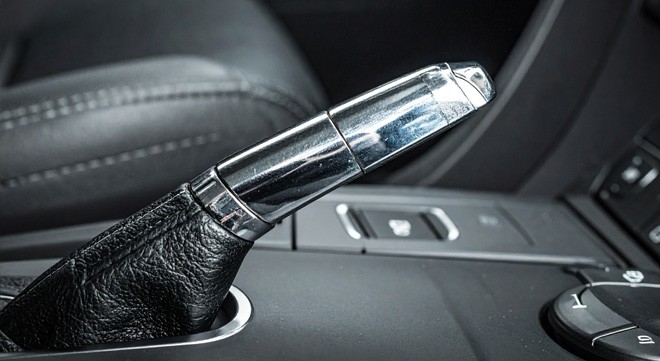
In a decision delivered on 27 February, Acting Judge AG Christians held that a passenger who pulled up a moving vehicle’s handbrake effectively took control of the vehicle and therefore became the “driver” for purposes of liability under the Road Accident Fund Act.
The ruling turned on an important principle: the law focuses on who controls the vehicle at the moment the collision-causing act occurs, not merely who sits behind the steering wheel.
For motorists, the judgment illustrates that interfering with a vehicle’s controls can carry serious legal consequences. For accident victims and lawyers, it clarifies that liability under the Road Accident Fund system may arise when a passenger seizes control of a vehicle and causes a crash.
Background to the case
The case was brought by Rondene Charnay Jantjies, who was injured in a crash near Malmesbury on 4 March 2019.
Jantjies had been driving along Old Kulbaskraal Road when she collected her boyfriend and colleague, Zalium George Keating, from his home. Keating sat in the front passenger seat next to her.
According to her testimony, Keating was frustrated because he feared he would be late for an examination. The weather was clear, the road quiet, and Jantjies was travelling at about 60km/h.
While complaining about being late, Keating suddenly pulled up the vehicle’s handbrake without warning. Jantjies remembered nothing further until she woke up in hospital.
The vehicle overturned. Jantjies sustained serious injuries to her legs, arm, spinal cord, and face. Keating died at the scene.
Jantjies subsequently lodged a claim against the RAF for compensation.
The dispute
The central legal question was whether the Fund could be held liable under section 17(1) of the RAF Act.
The RAF denied liability, arguing that Keating was merely a passenger and therefore could not be regarded as the driver of the vehicle.
Jantjies’ legal team contended that by pulling the handbrake and causing the vehicle to overturn, Keating had effectively taken control of the vehicle and should be regarded as the driver for purposes of the Act.
Evidence before the Court
Jantjies testified about the events leading up to the crash. By agreement between the parties, the accident report and police docket were also admitted as evidence.
The RAF presented no witnesses.
An eyewitness travelling behind the vehicle reported that the car suddenly left the road and overturned. The accident report confirmed that the driver had been seriously injured, and the passenger died at the scene.
Jantjies’ version of events was not challenged during cross-examination.
The Court’s reasoning
Acting Judge Christians first considered whether negligence had been established. On the uncontested evidence, the Court found that pulling the handbrake while the vehicle was travelling at speed was plainly unreasonable.
The judge concluded that the collision was caused solely by Keating’s negligence.
The Court then examined whether a passenger could be regarded as a “driver” under the RAF Act. The legislation itself offers little guidance, defining a driver simply by reference to section 17(1).
To interpret the concept, Christians AJ considered earlier case law on what constitutes “driving”. Courts have generally described driving as directing a vehicle’s course and manipulating its controls while it is in motion.
In the well-known decision of Wells and Another v Shield Insurance Co Ltd and Others (1965), the Court described driving as “the urging on, directing the course and general control of the vehicle while in motion and all other acts reasonably or necessarily incidental thereto”.
The Court also considered the Canadian case of Bélanger v The Queen, where a passenger who grabbed the steering wheel of a moving police vehicle was regarded as the driver for the brief period during which he had taken control of it.
Applying that reasoning, Christians AJ held that the decisive factor is who exercised control over the conduct that caused the collision.
Rejecting the RAF’s argument, the Court said it would be artificial to distinguish between different vehicle controls:
“It seems an artificial distinction to draw a line between a steering wheel and a handbrake when, in reality, a person who takes control of either of these mechanisms effectively seizes control of the vehicle itself.”
By pulling the handbrake and causing the vehicle to overturn, Keating had effectively taken control of the vehicle and therefore became the driver for purposes of the Act.
The order
The Court ruled in favour of Jantjies.
Judge Christians ordered that:
- The RAF was liable for 100% of Jantjies’ proven or agreed damages; and
- The RAF must pay her legal costs on Scale B.
The judgment clarifies that control of a vehicle’s operation – not merely physical position in the driver’s seat – can determine who is legally regarded as the driver.
Although the ruling does not mean every act of passenger interference will create liability, it establishes that a passenger who manipulates a vehicle’s controls and causes a collision may be treated as the driver for purposes of RAF claims.
Read the full judgment here.