
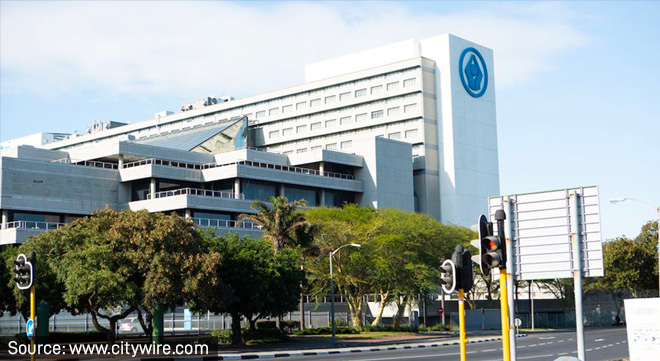
Sanlam Collective Investments (RF) (Pty) Ltd (SCI), one of South Africa’s largest collective investment managers, has been slapped with a R10.6 million administrative penalty by the Financial Sector Conduct Authority (FSCA) for failing to comply with key provisions of the Financial Intelligence Centre Act (FIC Act).
The sanctions include the financial penalty, a directive to address the identified contraventions, and a caution against future breaches. Of the total, R3.6 million has been suspended for two years, conditional on full remediation and sustained compliance with the FIC Act.
SCI is a heavyweight in South Africa’s financial landscape, managing nearly R1 trillion in assets across its retail and institutional businesses. As a registered manager of collective investment schemes under the Collective Investment Schemes Control Act, SCI offers a comprehensive suite of investment solutions, including unit trusts, retirement funds, and tax-free savings accounts. These products cater to a diverse clientele, ranging from individual investors to large institutions, reflecting SCI’s significant presence in the market.
“The FSCA views the breaches identified at SCI as serious, especially considering the size, complexity and risk exposure of SCI’s business and its position and impact in the South African market,” the Authority stated.
Inspection findings
The FSCA conducted an onsite inspection of SCI in March 2024, focusing on client due diligence processes including client screening, risk classification, enhanced due diligence (EDD), and recordkeeping. The authority also evaluated SCI’s Risk Management and Compliance Programme (RMCP) under Section 42 of the FIC Act.
The inspection revealed that SCI had not fully implemented its RMCP, particularly in respect of client risk ratings. The RMCP was also technically deficient and failed to adequately address:
- Enhanced due diligence on partnerships (section 42(2)(f))
- Examination of complex or unusually large transactions (section 42(2)(h))
- Termination of business relationships (section 42(2)(k))
- Identification and reporting of reportable transactions (sections 42(2)(o) and (p))
- Justification for inapplicable section 42(2) requirements
SCI also fell short of its obligations under sections 20A, 21, 21A, 21B, 21C, 21E and 21F–21H. According to the FSCA, the company had not adequately identified or verified some clients and their beneficial owners, nor conducted the required ongoing and enhanced due diligence on high-risk politically exposed persons.
The Authority noted that it had considered SCI’s previous regulatory breaches, including an enforceable undertaking under the Financial Sector Regulation Act and a past contravention of the Collective Investment Schemes Control Act (CISCA), in determining the penalty.
This included an enforceable undertaking entered into by SCI in terms of section 151 of the Financial Sector Regulation Act, No 9 of 2017 and a previous contravention of section 4(4)(a) of CISCA which resulted in a financial penalty issued against SCI.
SCI responds
SCI CEO Sylvester Kgatla said the company “acknowledges the outcome of the FSCA’s inspection last year, which resulted in administrative penalties for shortcomings related to the FIC Act.”
“SCI has fully cooperated with the FSCA and values its role in supporting the integrity of South Africa’s financial sector. Notably, no evidence of money laundering, terrorist financing or proliferation financing was identified,” Kgatla added.
He said SCI has taken proactive steps to address the findings and is implementing remedial actions to strengthen its compliance framework.
“Clients’ funds and investments are in no way affected. We remain fully committed to protecting your interests and upholding the highest standards of regulatory compliance and operational integrity,” Kgatla said.
Coming down hard on RMCPs
The SCI sanction is the latest in a series of high-profile penalties for RMCP and FIC Act lapses. In May, Ninety One Fund Managers was fined R3 million for similar breaches.
Read: FSCA imposes R3m fine on Ninety One for FICA lapses
The FSCA emphasised that an effective RMCP is crucial not only to protect institutions from financial crime but also to safeguard the integrity of South Africa’s financial system. Proper client due diligence is essential to prevent suspicious or criminal actors from infiltrating the financial system.
“Financial institutions operating within large, international financial services groups are expected to demonstrate a heightened level of vigilance in this regard. This sanction underscores that the FSCA will not tolerate non-compliance with the FIC Act,” the Authority said.
All accountable institutions are reminded to continually review and enhance anti-money laundering and counter-terrorism financing controls at the highest levels and to conduct thorough risk assessments on a regular basis.
“Failure to do so will result in firm regulatory action,” the FSCA warned.


I find it upsetting that when companies like SCI are heavily fined by the FSCA, it is fine, but when compliance is required by the FSCA, the service from the FSCA is non-existent. I have been trying for more than a year to cancel my FSP license after I retired, but it is one massive battle to get that done.
The same goes for FIC, SARS and the CIPC. I have repeatedly reported massive fraud and corruption to those regulators with no feedback from them and no accountability to protect the FICA Act, the Companies Act and the Income Tax Acts.
THE FINE IS TOO HARSH.
The should be warning and a suspended sentence.
Investors wll be losing at the end.
I agree with both of the above comments. This fine feels excessive — especially given that no actual instances of money laundering or suspicious transactions were found. It comes across as more of a showpiece to signal to FATF that South Africa is tightening compliance ahead of hopefully being removed from the grey list later this month.
Instead of repeatedly penalising established, well-regulated players like SCI for historical or technical shortcomings, the FSCA should focus on exposing and prosecuting real cases of money laundering and terrorist financing. That’s where public trust and system integrity will truly be strengthened.
Me think it is a funding process for the FSCA