
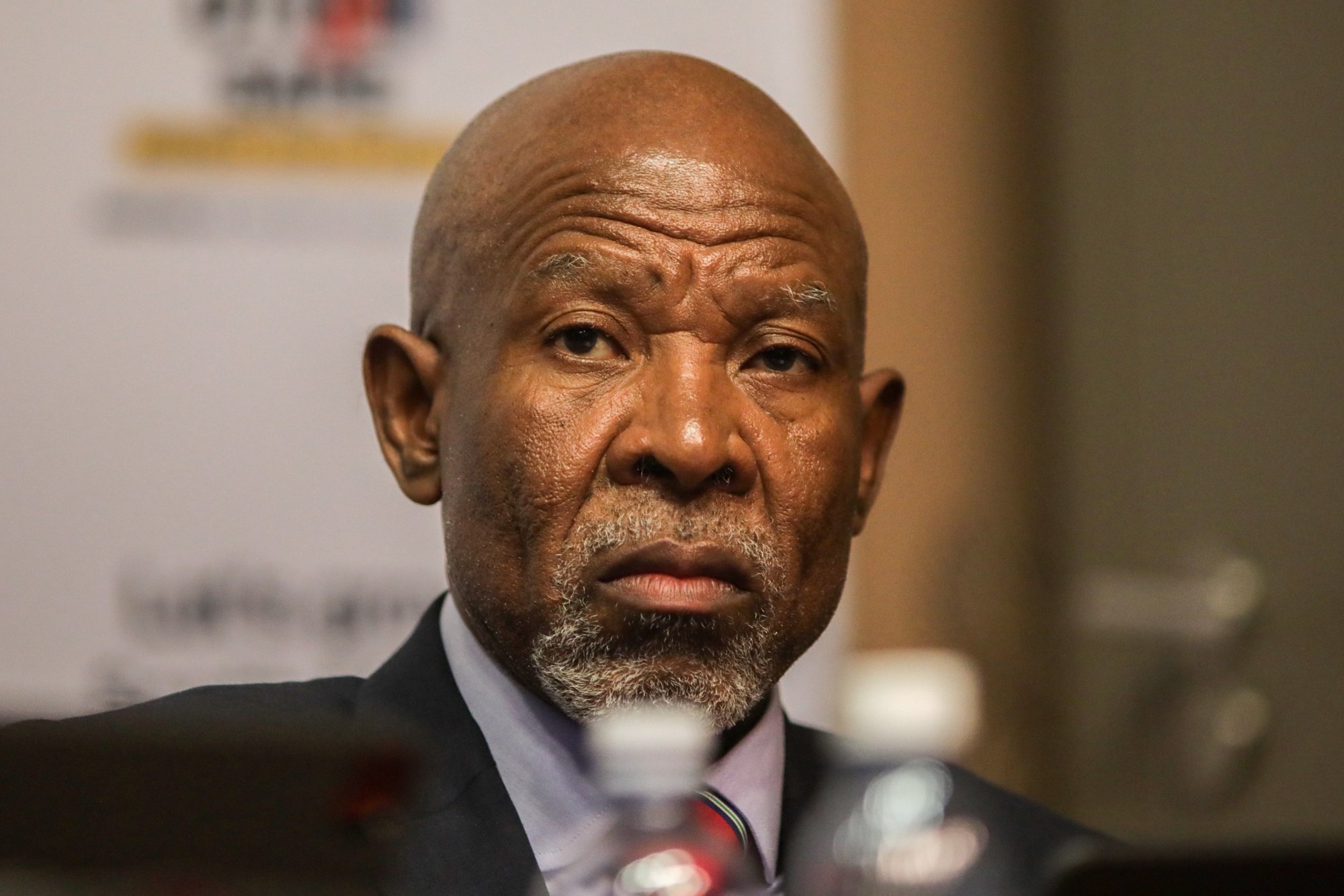
Inflation targeting has become a central focus for the South African Reserve Bank, with Governor Lesetja Kganyago (pictured) emphasising the importance of finalising reforms to lock in credibility around a lower inflation anchor.
The urgency reflects both the SARB’s and National Treasury’s determination to reinforce credibility around a lower inflation anchor. In a 1 September media release, Treasury noted that although the current macro-economic framework is “fit for purpose and flexible to changing conditions”, research has shown the long-term costs of relatively high inflation.
Treasury highlighted that inflation expectations have already moderated in line with softer outcomes, creating scope to consider lowering the target. Technical work is being finalised by the Macro-economic Standing Committee, which will draft recommendations to the Minister of Finance and the SARB Governor. Treasury confirmed that the minister will make a formal announcement “as soon as is practical” once agreement is reached – wording that has fuelled public interest in the timing of the policy shift.
Kganyago reinforced the case for reform in his Monetary Policy Committee (MPC) statement last week. He noted that underlying inflation remains contained, with core around 3%, while expectations “moderated further in the latest survey, which shows South Africans are getting used to lower inflation”. Headline inflation, however, is expected to rise in the coming months, peaking at around 4%.
“Our forecast now incorporates higher electricity price inflation of nearly 8% rather than 6%, given the recent pricing correction by NERSA. This is a reminder of the serious dysfunction in administered prices, which undermines purchasing power and weakens growth. The solution to this crisis is not a higher level of inflation, but rather sector-specific reforms to improve efficiency,” he said.
The SARB now expects headline inflation to average 3.4% this year and 3.6% next year, before reverting to 3% in 2027.
“We assess the risks to the inflation outlook as balanced,” Kganyago added.
He also said that the disinflation process is robust, even under more cautious assumptions about expectations.
“There are gains to be had from clear and credible communication. In this regard, it is desirable to finalise target reform. Accordingly, and in line with the recent joint statement from the SARB and the National Treasury, we look forward to agreeing a new target as soon as is practical, to better anchor inflation expectations.”
Repo rate decision: SARB holds, while peers cut
While target reform advances, the MPC decided to keep the repo rate unchanged at 7%. The decision was not unanimous, with four members voting to hold and two preferring a 25-basis point cut. Since September 2024, the SARB has reduced rates by a cumulative 125 basis points, and policymakers now want to see how those cuts filter through to the economy.
Kganyago acknowledged the favourable global backdrop: “Since our last meeting, policy rates have been cut in the United States and the United Kingdom, and the dollar has weakened. Various commodity prices have risen, although oil prices remain contained. These conditions are supportive for emerging markets like South Africa.”
He added, however, that cyclical positives mask deeper global challenges. Long-term interest rates in major economies are drifting higher, reflecting high debt levels and persistent inflation risks. This creates a more adverse structural environment for emerging markets over the medium term.
Turning to South Africa, a surprise GDP print for the second quarter lifted the growth forecast for 2025 from 0.9% to 1.2%, although the Governor cautioned against overconfidence.
“Although the strong GDP report was welcome, we do not want to overstate the importance of one good quarter. We continue to see modest output gains over the next few years, helped by structural reforms,” he said. Risks to growth are assessed as balanced, but export weakness because of higher tariffs is expected to weigh.
The MPC emphasised that stabilising inflation at 3% rather than 4.5% implies a lower long-term policy rate, but cuts will remain gradual and data dependent.
The international lens
Albert Botha, the head of fixed income at Ashburton Investments, noted ahead of the MPC meeting that South Africa’s monetary policy cannot be divorced from international developments. He pointed to political controversies at the US Federal Reserve, record revisions to jobs data, and 30-year bond yields in the UK and Japan at multi-decade highs, all of which complicate the global rate path.
“Whether in South Africa, where we weigh the merits of potential rate cuts alongside a possible shift in inflation policy against the backdrop of weak growth; in the United States, where a Federal Reserve governor has been referred to the Department of Justice; or in the United Kingdom, where 30-year bond yields have climbed to their highest levels since the late 1990s, the stakes are unusually high,” Botha said.
He argued that South Africa’s disciplined stewardship of inflation has stood out globally, with inflation at or below 3% for much of the past year, but he warned that persistent weak growth poses a difficult balancing act. Although the SARB does not have a dual mandate, its constitutional responsibility to support “balanced and sustainable economic growth” means that the growth outlook cannot be ignored.
Market and sector reaction: resilience with caution
Market commentators in the property sector were unsurprised by the SARB’s decision to pause rate cuts. Chris Tyson, the chief executive of Tyson Properties, noted that “statistics mask the daily grind, and despite indications of a slight uptick in retail activity, overall consumer demand remains low”.
He urged households to remain disciplined: “Try to keep your repayments on loans at current levels if you can. That will enable you to pay off your home loan faster and become less vulnerable to future rates hikes.”
He also advised investors to capitalise on a still-thriving rental market, which he expects to continue its upward trajectory while uncertainty persists.
Greg Dart, director at the High Street Auction Company, also struck a balanced tone.
“With GDP growth still lacklustre at 0.8% during the second quarter of this year, an expected spike in unemployment… and low consumer demand and business confidence, many companies continue to free up liquidity through the sale of non-core assets,” he said.
Dart added that location is now critical for property investment: “Key hubs such as the Western Cape and parts of KwaZulu-Natal [are] showing early signs of recovery and representing good options.”
He pointed out that the Federal Reserve’s recent rate cut and ongoing efforts to normalise trade with the US could offer a tailwind for logistics and industrial players in particular.

