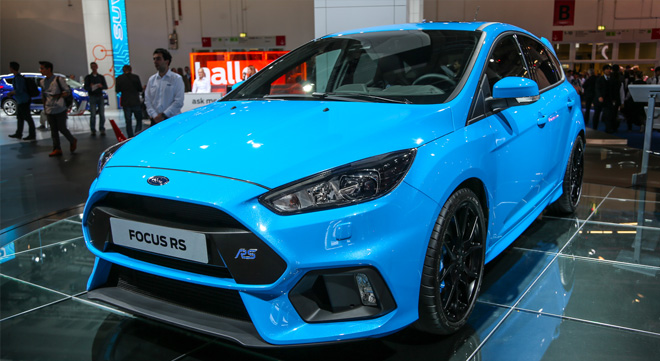
The High Court in Cape Town has confirmed an order by National Consumer Tribunal (NCT) that a used vehicle dealership must refund the purchase price of car and pay an administrative penalty of R50 000.
The judgment, delivered last month, upheld the Tribunal’s finding that Wingfield Motors (Pty) Ltd trading as Best Price for My Car had breached sections 55(2)(a) to (c) of the Consumer Protection Act (CPA).
The dispute originated from the sale of a 2017 Ford Focus RS 2.3 EcoBoost to Shad Maritz in January 2021. The vehicle was financed by Wesbank and was intended for Maritz’s son.
Maritz’s son test-drove the vehicle twice before the purchase.
Wingfield commissioned an assessment from Dekra, which involved a technician test-driving the vehicle but did not include a full diagnostic test. Dekra’s report noted no significant faults beyond the vehicle being dirty and having a scratch on the front bumper. At delivery, the odometer read 42 960km.
On 25 January, three days after delivery, Maritz reported a burning smell from the rear wheel and that the clutch “did not feel right”.
Wingfield advised taking the vehicle to Barloworld Ford for an assessment. Maritz did so on 2 March, the earliest available date according to the National Consumer Commission (NCC), after the vehicle had been driven an additional 2 346km.
Barloworld’s estimate identified a burnt clutch and flywheel, and excessive play in the clutch kit, with repair costs totalling about R62 218.19, which were not covered by the manufacturer’s warranty.
Maritz wanted Wingfield to cover the costs, but it refused, leading Maritz to offer to return the vehicle for a full refund of the purchase price.
Maritz complained to the Motor Industry Ombudsman of South Africa (MIOSA) in July 2021. MIOSA ruled against Maritz, stating that “clutches are wear and tear frictional items and that neither the manufacturer nor the dealership has control over the driving style of the said vehicle”, referencing burn marks on the pressure plate.
Despite this, Wingfield later indicated its willingness to accept the return but proposed deducting R32 595.60 for usage (calculated at R4.60 per kilometre) and an additional R27 149 for depreciation. Maritz accepted responsibility only for usage and complained to the NCC.
The NCC investigated and referred the matter to the NCT, alleging breaches of CPA sections 55(2)(a) to (b), 56(2)(a) to (b), and 13(1)(a) to (b).
In May 2024, the Tribunal found Wingfield in breach of section 55(2)(a) to (c), ordered a refund, and imposed a R50 000 penalty.
Wingfield contests the defects existed at purchase
The proceedings before the High Court constituted both an appeal and a review of the NCT’s decision. Wingfield sought to set aside the Tribunal’s ruling, relying on identical grounds for both the appeal and review, which included allegations of procedural unfairness, errors of law, arbitrary decision-making, and a lack of rational connection between the Tribunal’s reasons and its conclusions.
Wingfield’s core argument centred on the alleged failure of the NCC or Maritz to provide evidence satisfying section 55(2) of the CPA, which entitles consumers to goods that:
(a) are reasonably suitable for the purpose for which they are generally intended;
(b) are of good quality, in good working order and free of any defects;
(c) will be usable and durable for a reasonable period of time, having regard to the use to which they would normally be put and to all the surrounding circumstances at their supply.
Regarding section 55(2)(b), Wingfield criticised the Tribunal’s inference that the defects were present at purchase as unsupported, noting a “distinct lack of actual evidence that the defects (the faulty clutch and the burn marks on the flywheel) were indeed present when the vehicle was sold”.
The defects were identified six weeks post-sale after the vehicle had been driven for 2 346km. There were various explanations for the initial reports of a smell coming from the rear wheel and a clutch that did not feel right, including overheated brakes and/or an overheated clutch caused by hard driving.
At that stage, it was uncertain whether a defect existed, the extent of any defect, or whether the defect was present when the vehicle was purchased. These factors could be established only through expert evidence, which was not presented to the NCT.
The Barloworld estimate was dismissed as hearsay, unsworn, and contextualized only to post-sale defects. The Tribunal’s inferential reasoning was labelled as impermissible speculation because of a lack of technical expertise.
Regarding sections 55(2)(a) and (c), Wingfield emphasised qualifying phrases such as “reasonably suitable” and consideration of normal use and circumstances. Not all post-purchase defects breach these, particularly for used vehicles, where ongoing maintenance can be expected. The CPA also excludes damaged caused by the customer.
It said the Tribunal erred in assuming that damage within three days or 200km of use could not result from driver error.
Wingfield claimed the Tribunal disregarded its independent specialist’s evidence that a flywheel lasts 150 000km normally but fails quickly if the vehicle is driven as a sports car.
Factual disputes require oral evidence or cross-examination, and the Tribunal erred in not invoking its inquisitorial powers to obtain more expert input, particularly given the extensive mileage covered by the vehicle in a short period.
In its founding affidavit, Wingfield said the customer continued using the vehicle after the NCT’s decision. It also referenced two traffic fines issued on 9 December 2023 and 5 March 2024, where the driver was travelling at 90km/h to 94km/h and 100km/h to 104km/h, respectively, exceeding the speed limit of 80km/h. Furthermore, an inspection of the vehicle on 10 July 2024 ascertained that the odometer reading was about 67 000km, which meant the vehicle had been driven for about 24 000km since its purchase. The inference from the abovementioned was that the defects could not have been severe.
Dealer is obliged to pay for the repairs
Judge Lister Nuku and Acting Judge Stanley O’Brien found no merit in Wingfield’s grounds, dismissing the appeal and review application and affirming the Tribunal correctly applied sections 55 and 56 of the CPA.
Although Wingfield suggested that the Tribunal failed to interpret sections 55 and 56 of the CPA properly, the Court said it did not understand Wingfield was suggesting that a vehicle with a clutch and flywheel that required replacement was reasonably suitable for the purposes for which they are generally intended (as contemplated in section 55(2)(a)), or of good quality, in good working order, and free of any defects (section 55(2)(b)), or will be usable and durable for a reasonable period, having regard to the use to which they would normally be put and to all the surrounding circumstances of their supply (section 55(2)(c)).
Furthermore, Wingfield did not argue that a vehicle requiring the replacement of a faulty clutch and flywheel was free of defects. Instead, it questioned whether these defects existed when the vehicle was sold to Maritz.
The Court said this approach overlooked that Wingfield, under section 56(2)(a), was required to cover the costs of repairs.
“The provisions of section 56 are explicit; they apply to all goods without exception, and Wingfield’s attempt to argue that section 56 does not apply to used goods is misplaced.”
It was Wingfield’s intransigence that caused Maritz to tender the return of the vehicle, which was within the six months specified in section 56. Wingfield tried to penalise him by claiming it was entitled to charge for depreciation, alongside the statutorily permitted deduction for usage based on the mileage covered.
The Court said Wingfield failed to produce any evidence to support its claim that the defects were caused by how Maritz or his son drove the vehicle. Wingfield tried to suggest it was for the Tribunal to prove that the defects were not a result of driver behaviour.
“The approach taken by Wingfield is detrimental to the very purpose of the CPA and the [National Credit Act]. Wingfield could have easily settled this issue at the point when the customer merely asked Wingfield to pay for the repairs. Wingfield refused despite the obligations imposed by section 56(2)(a) of the CPA.
“When the customer resorted to tendering the return of the vehicle, as he is entitled to under section 56(2)(b) of the CPA, Wingfield would have none of that. But for the intervention of the NCC and the Tribunal, the customer would have been left out in the cold. And that would have completely undermined the provisions of the CPA,” the Court found.