Sanlam’s share price slipped modestly after the group released its 2025 annual results on 12 March, as investors focused on weaker headline metrics despite strong operational growth across the business.
The share closed at about R95.40 on 11 March, the day before the results were published. On results day, it fell by 3% to 4%, closing near R91.87 after trading between about R97 and R92 during the session. By 16 March, trading suggested the price had stabilised around the lower level.
The decline may not have come entirely as a surprise. Sanlam’s share price had already softened in the weeks leading up to the announcement, suggesting that some investors may have been anticipating weaker headline numbers.
Even so, the broader trend remains positive. Over the past year, the share has delivered solid gains, and over three years the increase has been significantly stronger. The current trading range around the low-R90 level therefore appears relatively modest in the context of the stock’s longer-term upward trajectory.
The market reaction reflects a tension within the results themselves. Sanlam reported record new business volumes, strong client inflows, and solid operating performance, yet several headline indicators weakened.
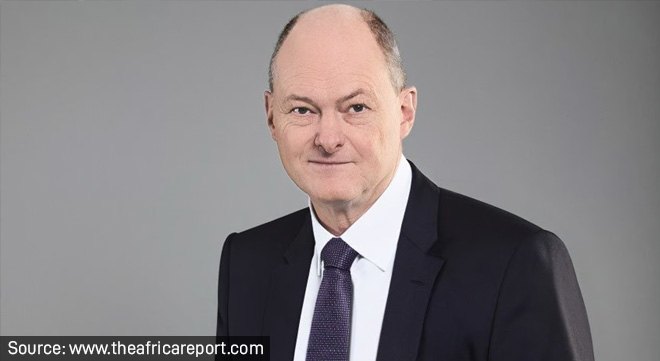
Group chief executive Paul Hanratty (pictured) said interpreting the results requires careful analysis because portfolio restructuring, currency movements, and strategic investment spending distorted some of the reported numbers.
“It takes some very careful analysis to see this,” he said, noting that portfolio changes and the strengthening of the rand had a significant impact on investment returns and reported earnings.
The question now is whether investors will shift their focus back to the group’s underlying growth trajectory – and whether the share price rebounds as the results are digested more fully.
Strong operating momentum
Despite the market’s reaction, several of the group’s core indicators point to strong underlying performance.
Sanlam wrote record new business volumes of R496 billion, up 22% year-on-year, while net client cash flows more than doubled to R127bn.
The group’s core earnings measure, net result from financial services (NRFFS), reached R15.9bn, representing roughly 20% growth on a normalised basis.
Much of this operational strength was driven by Sanlam’s South African businesses, which delivered stable earnings and strong client inflows across several divisions. The life insurance business benefited from favourable mortality experience and higher asset-based fee income, while Santam delivered strong underwriting performance supported by favourable claims experience.
Asset management operations also performed well, with higher assets under management and stronger fee income through Sanlam Investment Group and Glacier.
The integration of Assupol strengthened Sanlam’s retail mass-market presence, improving persistency and increasing agent productivity.
Hanratty said disciplined execution in South Africa helped to drive the group’s strong operational performance. Persistency improvements were also partly the result of management actions.
He said changes to commission structures in the retail mass market reduced policy churn, while the integration of the Assupol book eliminated competition between the two books. He estimated that 80% to 90% of the improvement in persistency came from management interventions, with the remainder attributable to improving macro-economic conditions.
Outside South Africa, India continued to deliver strong growth momentum, particularly in the credit and structuring business linked to the Shriram ecosystem.
Headline metrics weaken
Despite this operational momentum, several headline metrics deteriorated compared with 2024.
- Headline earnings fell 18%, reflecting structural changes and lower investment returns.
- Net investment returns dropped to R1.96bn from R3.54bn.
- Net operational earnings declined to R17.2bn from R18.5bn.
- Return on group equity value fell to 13.4% on an actual basis.
The value of new business also declined on a normalised basis, reflecting a change in the product mix in South Africa as interest rates declined and regulatory changes affecting the Indian market.
Several factors combined to produce the softer headline numbers – including currency movements, bond market effects, reinsurance losses, and increased investment spending.
Sanlam’s expanding presence in India, one of the group’s most important long-term growth markets, created short-term pressure on earnings as the company invested heavily in distribution and increased its stakes in the Shriram financial services ecosystem.
Currency movements also played a significant role. The strengthening of the rand reduced the value of Sanlam’s foreign assets when translated back into rands and produced accounting losses on hedging transactions linked to the Indian insurance deals.
At the same time, distortions in the South African government bond market created negative investment variances, while elevated claims and tax provisions weighed on the SanlamAllianz reinsurance business in Africa.
Management said these pressures were compounded by higher project costs linked to strategic transactions and platform investments across the group.
These dynamics are explored in more detail in this article: “Why Sanlam’s headline earnings fell despite strong business growth”.
Dividend maintained despite earnings pressure
Despite the pressures on headline earnings, Sanlam maintained dividend growth for the year. The board declared a dividend of 485 cents per share, up from 445 cents in 2024.
During the results Q&A session, executives explained that the dividend was supported by remittances from operating businesses as well as discretionary capital, even though the group’s remittance ratio declined during the year.
Cash remitted to the group represented 61% of earnings, down from 67% in the previous year, reflecting structural factors rather than weaker operating performance.
Hanratty said the formation of the SanlamAllianz joint venture had temporarily slowed dividend flows because profits must move through multiple holding company layers before reaching the listed parent company.
He likened the structure to “Russian dolls”, explaining that dividends accumulate within the structure before eventually flowing up to the group level.
Dividend flows from India have also been temporarily constrained by local corporate structures, which have historically trapped some capital within the operating companies. Management expects some of those constraints to ease as recent transactions in the Shriram ecosystem are completed.
To maintain a stable dividend profile during the transition, Sanlam supplemented the payout with funds from discretionary capital.
Chief financial officer Abigail Mukhuba said the group occasionally uses this approach when necessary, noting that the current payout ratio effectively reflects all the cash remitted to the group during the year.
However, she added that over the longer term, Sanlam has under-declared dividends relative to available cash, estimating that since 2021 the group has retained about R1bn more cash than it distributed to shareholders.
The dividend was also supported by the group’s strong capital position. Sanlam reported an economic solvency ratio of 183%, comfortably within its target range of 150% to 190%.
Management said the ratio is expected to decline modestly once the Indian insurance transactions are fully reflected in the balance sheet, but would remain around 176%, well within the group’s target range.
Chief actuary Mlondolozi Mahlangeni said the group’s solvency position remains resilient even under stress scenarios. A 1% drop in interest rates would reduce the solvency ratio by roughly three to four percentage points but still leave it comfortably within the target band.
Taken together, management said the combination of strong solvency, predictable cash flows, and retained capital buffers continues to support the sustainability of Sanlam’s dividend framework, even during periods of elevated investment spending and earnings volatility.
A transition year
Taken together, the results highlight the difference between Sanlam’s underlying operating performance and the headline figures reported to the market.
Management argues that much of the pressure on reported earnings reflects temporary factors – including currency movements, bond-market distortions, reinsurance losses, and increased investment spending – rather than deterioration in the core business.
Whether the market ultimately accepts that interpretation will likely determine how Sanlam’s share price performs in the days ahead.