
South Africa’s economic stagnation is not the result of its monetary policy framework but of years of institutional destruction that hollowed out the state’s capacity, weakened business confidence, and left the country reluctant to embrace the reforms needed for growth.
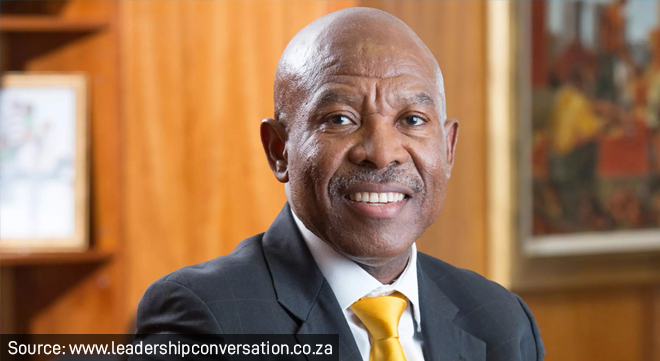
At a public lecture at the University of South Africa on 4 August 2026, South African Reserve Bank Governor Lesetja Kganyago (pictured) argued that although South Africa has built one of the more resilient macro-economic frameworks among emerging markets, it has failed to translate that resilience into prosperity because of state capture, weak institutions, and slow reform.
His remarks challenged the government, business, and society to confront a broader question: whether economic growth is truly the country’s overriding priority.
Kganyago rejected suggestions that South Africa’s weak growth should be blamed on its macro-economic policy framework.
“It is wrong and dangerous to argue that our growth stagnation is due to macro-policy,” he said. “It is wrong because, as we’ve seen, many emerging markets adopted similar macro-frameworks, and almost everyone has grown faster than us. It is dangerous because it takes one of the few areas where we got things right and makes that the scapegoat for failures elsewhere.”
Instead, he identified what he described as South Africa’s “real problem”.
“Our real problem was institutional destruction – a process often called ‘state capture’. It devastated capacity in national government; it just about broke the state-owned enterprises; and it persists in the municipal failures we see around us today.”
Kganyago described state capture as a process in which institutions stop serving the public interest and instead become vehicles for private enrichment.
“The essence of state capture is that institutions are no longer run for public benefit. Instead, they are taken over and used to extract resources for private gain. For instance, the maintenance budget pays for a big tender which ends up buying someone three Ferraris, but there are still holes in the road.”
A private sector in survival mode
Kganyago argued that the consequences of institutional failure extend well beyond the government.
“In this context, the private sector cannot flourish,” he said.
Although South Africa still has “a large and sophisticated private sector” – one reason the country remains wealthier than many of its neighbours despite years of weak growth – businesses have spent years focused on survival rather than expansion.
“Investment has stalled. Firms are not pouring their energies into growing their South African business; the ones that are here are treading water, and the others are in places where things work, like Australia or Canada or Dubai.”
Resilient, but not flourishing
His lecture traced how many emerging market economies transformed themselves after the financial crises of the 1990s by strengthening central bank independence, adopting inflation targeting, allowing exchange rates to float, building foreign exchange reserves, and improving financial supervision.
South Africa, he said, followed that path. Inflation has become more stable; the Reserve Bank has accumulated about US$74 billion in foreign exchange reserves; and the country’s financial system has remained resilient through successive global crises.
Those reforms have made South Africa more resilient, but not more prosperous.
“We didn’t have a macro-economic collapse; we didn’t lose a war. But living standards are lower now than they were in the early 2010s.
“The population has grown faster than the economy for a long time – something very rarely seen without a crisis.”
The challenge is implementation
Kganyago argued that South Africa no longer lacks an understanding of what needs to change.
“The diagnosis is clear and well understood,” he said.
He pointed to the government’s Operation Vulindlela reforms, saying they target the right areas, including energy, ports, and municipal governance.
“The reform effort, spearheaded by the government’s Operation Vulindlela, tackles all the right areas… But progress is slow.”
Kganyago’s assessment mirrors Operation Vulindlela’s own view of the reform challenge.
The May 2026 report, Opening the Road, Driving Change, explains that Operation Vulindlela was established as a joint Presidency-National Treasury delivery mechanism to accelerate the implementation of structural reforms in a context marked by “weak state institutions” and “opposition from vested interests”, rather than to develop new policy.
Its latest quarterly report, Operation Vulindlela Phase II Progress Report: Q1 2026/27, describes continued advances in areas including electricity, freight logistics, water, visas, and local government, while acknowledging that progress has been uneven and that some reforms have taken longer than anticipated because of the complexity of institutional reforms and the need to align multiple stakeholders. It says the focus is increasingly shifting towards accelerating delivery and resolving the remaining bottlenecks.
Kganyago’s lecture suggested that the challenge is no longer identifying the reforms needed to revive growth but implementing them.
Do we truly want to grow?
Kganyago then broadened the discussion beyond economics.
“The fundamental question we need to ask ourselves, as country, is: do we truly want to grow?”
Drawing on economist Lant Pritchett’s work, he argued that economic growth should not be treated as just another policy objective.
“If we really want to grow, then it can’t just be one goal halfway down the wish list.”
He also questioned whether South Africa has become too reluctant to embrace the reforms needed to unlock stronger growth.
Referring to Oxford economist Stefan Dercon’s book Gambling on Development: Why Some Countries Win and Others Lose, Kganyago argued that growth requires a willingness to take calculated risks and challenge entrenched interests.
“South Africans love to gamble, but when it comes to growth, it turns out we are risk-shy.
“We like protecting incumbents. We like detailed rules, regulations, and controls. We are reluctant about shaking things up to make them more efficient.”
He returned repeatedly to the idea that South Africa already understands both the causes of its weak growth and the reforms needed to address them. The question, Kganyago suggested, is whether the country has the urgency and political will to act.
“We would be much better off if we could stop betting on sports and start betting on growth instead.”