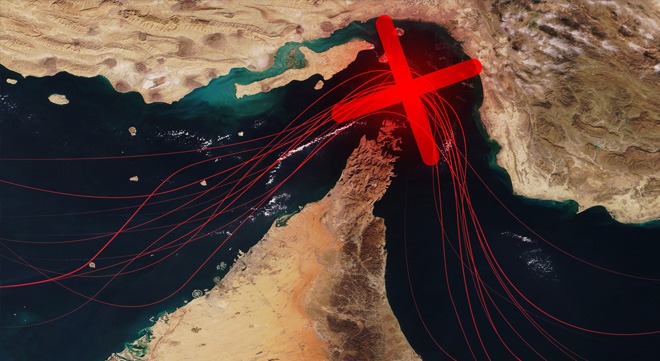
South African investors were riding a wave of superior returns in the first quarter of the year … until they encountered an unexpected trough. The United States-Israeli attack on Iran on 28 February and Iran’s effective closure of the Strait of Hormuz, through which a fifth of the world’s oil supply passes, rattled stock markets globally, with Asian markets and South Africa’s JSE among the worst affected.
The FTSE/JSE All Share Index (ALSI) fell 14.3%, from a record 128 455 points on 27 February to 110 070 points three weeks later, before clawing back some of its losses by 31 March, to end the quarter at 114 067 points.
Zooming out, the quarterly picture is more reassuring, and for the 12-month period to the end of March, returns from the local equity market remain significant. The ALSI dropped only 1.5% in the first quarter, resulting in a net gain of 28.7% for the 12 months (from 88 637 points to 114 067 points).
The Corion Report for March 2026, which uses Morningstar data, tracks the Total Return version of the ALSI (where distributions are reinvested). Over the quarter, the All-Share TRI was down only 0.6%, while over 12 months it was up 33.6%, which means the additional gain of almost 5% came from dividends.
Breaking down performance into sectors, the Corion Report shows resources shares up 7.2% over the quarter and up an astonishing 95.6% over the 12 months; financials down 0.3% over the quarter but up 29.0% over the 12 months; and listed property down 4.9% over the quarter but ending the 12-month period up by 28.6%. The one underperforming sector, over both periods, was industrials, down 8.7% over the quarter and up only 4.4% for the year to the end of March.
The resources boom was driven by gold and the platinum group metal prices, which surged to record levels at the beginning of the year. Gold briefly rose above US$5 400/oz in January, fell back to around $5 000 by the end of February, and surprised many commentators by falling on the outbreak of the Iran war. According to a Euronews report, this was because the dollar had strengthened and investors were seeing better value in US bonds than in holding gold. Nonetheless, on 31 March, gold closed at $4 674, up roughly 50% from $3 123 a year previously.
The rand, which had strengthened appreciably against major currencies in 2025, teetered on the news of war. From a low of almost R19 to the US dollar in April 2025, the rand strengthened to about R16/$ in February this year but ended the quarter at about R17/$.
The rand’s net gain over the 12 months – of about 10% to 31 March – translated into weaker returns in rands for offshore investors. According to the Corion Report, global equities, as measured by the MSCI World Index denominated in rands, were up 11.1% over the 12 months and roughly level over the quarter (–0.3%).
In its Quarterly Bulletin, the South African Reserve Bank says domestic inflationary pressures eased in 2025, with annual average consumer price inflation slowing to 3.2% by the end of the year. Headline consumer price inflation rose to 3.5% in January 2026, then decelerated to the revised 3% inflation target in February.
“However, the price of Brent crude oil surged to above US$100 per barrel in mid-March following the outbreak of the war in the Middle East, which is expected to exert significant upside pressure on domestic fuel prices in the coming months,” the SARB says.
The war also put a dampener on expectations of lower interest rates. According to Anchor Capital’s Peter Little, in his March Local Commentary, the SARB meeting in late March “ended in a decision to keep rates on hold at 6.75%, as expected”. Little adds: “The meeting was held … before the impact of the recent energy price spike had filtered through into the data, and with still meaningful uncertainty about the longevity of the higher energy prices.”
As with equities, the trouble in the Middle East upended the bond market, which saw yields turn sharply upwards. The rate on the government’s 10-year bond rose from a low of 7.959% on 25 February to 9.304% on 31 March, according to rbond.co.za.
Returns from bonds, which exceeded expectations last year, fell by 3.4% over the first quarter, according to the BEASSA All-Bond Index, yet still delivered an exceptional 19.2% over 12 months.
12-month unit trust performance
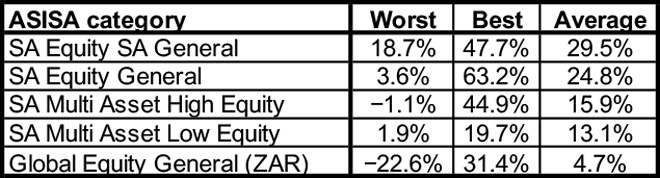
According to the Corion Report (quoting Morningstar data), unit trust performance over 12 months to the end of March in the most popular Association for Savings and Investment South Africa categories was as follows:
Martin Hesse is a specialist personal finance writer and copy editor.