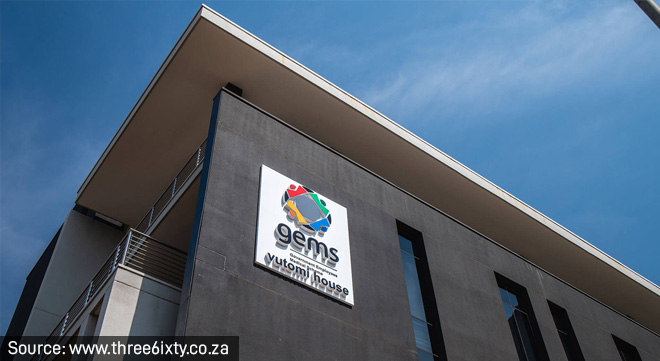

The Government Employees Medical Scheme (GEMS) went into last week’s parliamentary briefing with questions coming from two directions.
Trade unions have been demanding answers over contribution increases, governance, spending, and leadership. Parliament has been pressing GEMS on fraud and waste, financial sustainability, and the way the scheme is run.
Then, on 25 August, the day before GEMS appeared before the Portfolio Committee on Public Service and Administration, the scheme placed principal officer Dr Stan Moloabi on precautionary suspension.
GEMS said the suspension was unrelated to its financial position, reserves, or solvency and was not connected to stakeholder or union demands.
Read: GEMS suspension puts governance under scrutiny
The committee then heard GEMS’s first-half 2026 performance and fraud, waste, and abuse (FWA) briefing.
But members felt the presentation had come up short.
They questioned the payment of public servants serving as trustees, including whether the necessary approvals were in place for remunerated work outside the public service and whether this could amount to double-dipping. They also examined contribution increases, hospital-centred benefit design, and claims management, emphasising that cost containment should not become a barrier to necessary healthcare.
The committee supported a proposal from Pinky Kekana, Deputy Minister of Public Service and Administration, for a joint meeting of the Portfolio Committees on Public Service and Administration and Health and the Standing Committee on Finance to further interrogate GEMS governance. Organised labour and the Council for Medical Schemes (CMS) will also be invited.
Moonstone reviewed GEMS’s 2025 annual reports, financial statements, and parliamentary presentation to see which questions raised by unions and Parliament are answered in the public record – and which remain open.
R257 million recovered – and a growing FWA operation
GEMS detected 3 062 FWA instances during 2025, with remediation and recoveries of R257 million. A further R84.5m was recovered or remediated in the first quarter of 2026; the second-quarter figure was pending.
The scheme put the identified value of FWA at about R268m between January 2023 and January 2026, excluding hospital fraud.
Its five priority areas are claims for services not rendered, provider-member collusion, syndicated fraud networks, upcoding and procedure manipulation, and poor billing oversight.
The presentation cited what GEMS calls “PMB 300% billing abuse”: an EEG billed at R15 000, dietician services at R4 000, occupational therapy at R3 000 an hour, and GP-performed ultrasounds at R16 000. It also flagged wellness-day exploitation, provider fronting, and practice and identity hijacking.
The response spans prevention, detection, and remediation and recovery. Prevention includes member and provider engagement, education and awareness. Detection uses digital analytics, a whistle-blower hotline, forensic investigations and AI tools, alongside peer-group benchmarking, longitudinal profiling, and anomaly detection.
Recovery measures include changing provider claiming behaviour, settlements and admissions of debt, civil proceedings and court judgments. GEMS is also working to shorten recovery turnaround times.
The 2025 financials show R49.9m spent on forensic investigations and recoveries through accredited administration services. The annual integrated report records R257m in FWA savings, compared with R350m in 2024.
On enforcement, GEMS reported four court judgments and eight acknowledgements of debt approved, with another six in progress, and R3.21m recovered through court judgments year to date in 2026. Civil and criminal action is pursued where the evidence threshold is met, with established misconduct referred to the Health Professions Council of South Africa or other professional councils.
In March, Parliament was told that 418 criminal cases had been opened over five years and called for faster prosecutions and stronger enforcement. Last week’s presentation did not provide an updated figure for criminal cases, arrests, prosecutions, or convictions.
The cost of running the scheme
At 30 June, GEMS had 897 031 principal members and 2 405 956 beneficiaries.
In 2025, administration fees were R2.029 billion and accredited managed healthcare fees R1.478bn, up from R1.649bn and R1.291bn respectively in 2024. Administration fees went to Medscheme Holdings and Metropolitan Health Corporate; managed-care fees went to Medscheme Holdings. Both are calculated according to the number of members in good standing each month.
Other operating expenditure was R1.225bn. This included R570.2m in employee costs, R285.7m in consulting fees, R75.6m in advertising, R66.6m in actuarial fees, R54.4m in regulatory levies, and R12.9m in board and independent committee fees.
The full financial statements also include R21.9m in depreciation and amortisation, R20.1m in legal expenses, R31.3m in local travel, and R15.9m in conferences and workshops.
For the first six months of 2026, GEMS reported R703m in non-healthcare costs: R319.1m in staff costs, R118.4m in professional fees, and R265.5m in other costs. The presentation gives the 2026 non-healthcare cost ratio as 5.01%; its 2025 comparison is 6.32%, while the 2025 annual integrated report separately reports 5.26%.
The scheme also reported R1.9bn in service provider network costs for the six months: R974.1m in administration, R800.6m in managed care, R89.6m in benefits management, and R36.2m in health and wellness services.
A significant part of this operating infrastructure is outsourced. In 2025, Metropolitan Health Corporate provided administration for members, claims, correspondence, and enquiries, while Medscheme Holdings handled contribution and debt collection and general managed-care services. Other contracted functions included pharmaceutical benefit management, pharmacy network management, strategic clinical advice, optical and dental management, and emergency medical evacuation.
The financial statements do not provide the underlying contract values, contract terms, or a detailed breakdown of the outsourced services sought by organised labour.
Organised labour has called for accelerated insourcing of administrative services. GEMS’s board reassessed its insourcing programme and approved a revised programme aligned with possible National Health Insurance scenarios. Progress was under way in actuarial and wellness and rewards streams, while a target operating model was intended to reduce fragmentation among outsourced services.
The latest presentation does not provide a new breakdown of the underlying outsourcing contracts or say how much of the 2026 claims-management machinery is being brought in-house.
What GEMS pays for: hospitals, healthcare, and the cost of care
GEMS incurred R65.59bn in claims in 2025, within total insurance service expenses of R69.46bn. Claims growth was driven by rising hospital admission rates, higher Prescribed Minimum Benefit (PMB) expenditure, and increasing allied healthcare costs. In-hospital professional fees recorded the greatest growth among claims categories, largely because of higher admission rates.
PMBs accounted for 66% of claims incurred in 2025, down from 77% in 2024. Hospital-related services were the main driver of PMB expenditure, with private hospitals and pharmacies accounting for much of the spend. GEMS also paid R3.3bn for PMB claims above members’ benefit limits.
The pressure is not simply a question of how many people use healthcare. GEMS’s 2025 data shows rising costs per visit across pathology, radiology, and specialist services, while utilisation per 1 000 beneficiaries remained stable or declined. The scheme attributes the increase primarily to higher unit costs, service intensity, complexity, and tariff pressures.
In the first half of 2026, the overall hospital admission rate fell 5.6% year on year. Tanzanite One saw the biggest change after admissions were limited to PMB cases.
Claims experience also fell year on year: from R17.3bn to R16.9bn in the first quarter, and from R17bn to R15.8bn in the second quarter. The downward trend was narrowing through June.
Benefit design takes account of utilisation, tariffs, healthcare inflation, financial sustainability, and members’ demographic and health profile. Measures include disease management, price negotiations, provider engagement, hospital case management, value-based care, and alternative reimbursement mechanisms.
Tanzanite One and Emerald Value require designated hospital networks and care co-ordination, while Emerald Value offers reduced contributions to members who comply with care-co-ordination requirements and use the designated network.
These measures also affect what members may have to pay themselves. Co-payments can arise when members exceed limits, use non-network providers or receive services above the scheme tariff. In 2025, they represented 4.4% of in-hospital claims and 7.5% of out-of-hospital claims.
What are the trustees paid?
GEMS has a 12-member board of trustees: six elected by members and six appointed by the Minister for Public Service and Administration. Trustees oversee governance, strategy, risk management, and contracted service providers. They are not GEMS employees.
The 2025 AFS records total trustee remuneration of R15.5m: R14.9m in meeting fees, reimbursements and allowances and R0.5m in travel, accommodation, and training. The fixed daily meeting fee was R21 486.38 for ordinary trustees and R32 289.46 for chairpersons.
The remuneration disclosure covers 16 people because there was turnover among the member-elected trustees during 2025. Three terms ended during the year; two trustees were re-elected and Patrick Makhafane was elected for a new six-year term from October. Dr Hendrik Punt, who had been serving to fill an unscheduled vacancy, also left the board.
The AFS disclose 2025 remuneration for each person who served during the year.
- Dr Nomzamo Tutu received R1.954m;
- Conny Ntshane, R1.511m;
- Lebohang Khumalo, R1.443m;
- Johannes Frederick Smit, R1.398m;
- Alvin Rapea, R1.362m;
- Sibongile Sigodi, R1.220m;
- Neville Ndumo, R1.200m;
- Siyabulela Tsengiwe, R1.174m;
- D de Villiers, R1.167m;
- Mpho Rabada, R1.143m;
- Hendrik Punt, R1.124m;
- Dr IJ van Zyl, R1.094m;
- Dr SM Hlatshwayo, R262 705;
- RA Manoko, R242 613;
- Patrick Makhafane, R50 515; and
- Marthinus Brand, R1 980.
The AFS also record R60 000 in healthcare-provider fees paid to Khumalo for services rendered as a healthcare practitioner, on the same basis as third parties.
The public records do not say whether the necessary approvals were in place for public servants serving as trustees to receive remuneration, or whether any double-dipping was taking place.
The CMS opened a section 43 enquiry in November 2025 into allegations concerning the suitability of GEMS board members, including their employment as public servants and questions about the number of meetings they attended in 2024, and the time required of them. GEMS said in its 2025 report that it was awaiting feedback.
What does GEMS pay its executives?
GEMS had 505 employees in 2025, excluding service provider network and other contractors. Employee costs were R570.2m, while compensation for key management personnel was R46.733m – about 8.2% of total employee costs.
That R46.733m was down from R51.176m in 2024 and comprised R38.910m in short-term benefits, R983 000 in post-employment benefits and R6.840m in bonuses. The bonus component was also down from R10.364m in 2024.
The disclosed individual totals were:
- Principal officer Dr Stan Moloabi, R7.104m;
- Chief financial officer, R5.291m;
- Chief operations Officer, R5.626m;
- Company secretary and legal counsel, R4.177m;
- Chief governance and compliance officer, R3.944m;
- Chief audit executive, R3.973m;
- Chief strategy officer, R3.960m;
- Chief research officer, R3.690m;
- Chief information, communication and technology officer, R3.641m;
- Chief admin and transaction services, R3.508m;
- Chief healthcare officer, R1.411m;
- Chief corporate services officer, R992 000; and
- Chief marketing officer, R630 000.
The R6.840m confirms that bonuses were paid to key management personnel in 2025, but the AFS do not allocate the amount to individual executives. The disclosed individual figures are total compensation, not annual salaries, and some include acting allowances.
The integrated report says GEMS uses independent remuneration consultants to benchmark its remuneration policy, salary scales, and performance-management bonus framework against the market. The 2025 benchmarking covered the healthcare, financial, and national industries and informed decisions on guaranteed-pay increases for 2026.
Performance bonuses and short-term incentives are determined under GEMS’s performance management policy, using a balanced scorecard covering internal business processes, financial performance, customer outcomes, and learning and growth. GEMS says the remuneration framework allows employees to earn variable pay in addition to guaranteed pay, with maximum remuneration extending to the 75th percentile of the guaranteed package.
The reserve problem sits behind the contribution fight
At the end of June, GEMS’s reserve ratio was 22.79%, down from 24.72% at the end of 2025 and below the 25% statutory requirement. The detailed second-quarter performance table records the June ratio at 22.79%.
The ratio was 42.4% at the end of 2023 and 32.34% at the end of 2024. GEMS says contribution increases were kept below claims-cost growth during 2022 and 2023 to support members during the Covid-19 pandemic, with about R10bn in reserves used to support members.
GEMS initially approved a weighted average 2026 increase of 13.4%, which was reduced to 9.8% from January and 9.5% from February following engagement with organised labour.
It later applied to the CMS to reduce the increase to 7.5% from July, arguing that claims-management and other cost-containment measures were expected to generate about R1.7bn in savings during 2026.
The CMS rejected the application, saying a 7.5% increase could defer financial pressure, increase reliance on reserves and make it harder for GEMS to restore its statutory reserve position. It was also not persuaded that projected savings, before being reflected in established claims experience, justified the lower increase.
GEMS accepted the decision. Its position was that projected savings from its interventions were sufficiently robust to support the lower increase, while the regulator placed greater weight on established actuarial trends and claims experience.
Read: GEMS targets future contribution relief after CMS setback
At last week’s meeting, GEMS forecast a return to the statutory 25% reserve requirement by 2030. Its plan includes continued claims-management and cost-containment interventions, benefit-design changes, and other savings to support reserve recovery, while the board is evaluating enhanced capital-management strategies, including risk-based capital principles.
The date for the proposed joint meeting of the Portfolio Committees on Public Service and Administration and Health and the Standing Committee on Finance, with organised labour and the CMS also invited, has not yet been announced.
With questions still hanging in the air – including the reasons for the precautionary suspension of GEMS’s principal officer – there is likely to be considerable interest in what comes next.