
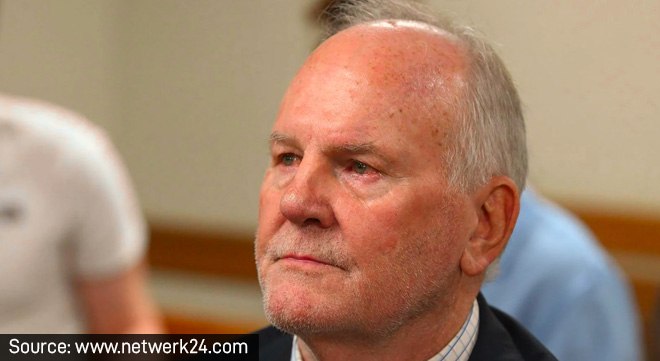
The Financial Sector Conduct Authority has imposed an administrative penalty of R358.75 million on Stephanus Johannes (Stéhan) Grobler (pictured) for contraventions of the Financial Markets Act (FMA) arising from Steinhoff International Holdings NV’s financial statements for the 2014, 2015, and 2016 financial years and the 2017 half-year.
In a statement released today (2 March), the regulator said its investigation found that Grobler had contravened sections 81(1)(a) and 81(1)(b) of the FMA. These provisions prohibit the direct or indirect making or publication of statements that are false, misleading, or deceptive.
According to the FSCA, the financial statements issued by Steinhoff during the relevant period were “false, misleading, or deceptive in respect of material facts that were either misstated or omitted”. The Authority said its assessment was made “with reference to the information available at the time and the circumstances under which the statements were presented to the market”.
During the period under investigation, Grobler held multiple senior positions within the Steinhoff group. He served as company secretary, head of treasury, and in-house legal counsel, and was also a director of several Steinhoff subsidiary companies.
Public records indicate that Grobler joined Steinhoff in December 1999 as company secretary, a role he held until 2011. Over time, his responsibilities expanded to include oversight of the group’s legal function and treasury operations. At one stage, he also acted as managing director of Steinhoff Europe AG.
Companies House records in the United Kingdom reflect that Grobler held directorships in several UK-registered Steinhoff-related entities between 2001 and 2017.
Steinhoff, founded in 1964 as a furniture sourcing operation in Germany, had by the mid-2010s grown into a multinational retail group with operations across Europe, Africa, and Australasia.
The R358.75m penalty places Grobler among the most heavily fined individuals in the regulatory response to the Steinhoff accounting scandal.
In March 2024, the FSCA imposed an administrative penalty of R475m on former Steinhoff chief executive Markus Jooste for contraventions of the same provisions of the FMA in relation to Steinhoff’s financial statements covering overlapping financial periods.
Parallel criminal proceedings
The FSCA’s regulatory action runs parallel to ongoing criminal proceedings.
In March 2024, Grobler appeared in the Pretoria Specialised Commercial Crimes Court after being charged in connection with the Steinhoff accounting irregularities. According to court reporting and statements issued by the National Prosecuting Authority, the charges include racketeering, multiple counts of fraud involving amounts running into billions of rand, manipulation of financial statements, and failure to report fraudulent activities.
At his initial appearance, Grobler was granted bail of R150 000.
Subsequent court proceedings have involved case management and pre-trial processes. Public reporting indicates that the matter has progressed towards High Court adjudication, with further procedural steps taking place during 2025.
As with all accused persons, Grobler is presumed innocent until proved guilty in a court of law.
Details of the allegations against Grobler are set out in an indictment finalised in 2024.
According to reporting on the indictment, prosecutors allege that between 2014 and 2016 certain transactions were structured in a manner that misrepresented Steinhoff’s financial position.
The transactions referenced include:
- TG Group-related transactions: Prosecutors allege that entities associated with the TG Group were used to create the appearance of profits through agreements that lacked underlying commercial substance. Court reporting states that Grobler is alleged to have drafted or facilitated contractual documentation in connection with these transactions under the direction of senior executives.
- BNP Paribas-related commission arrangements: The indictment reportedly alleges that certain funding transactions generated commission payments that prosecutors contend did not reflect genuine economic activity.
In a related matter, former Steinhoff chief financial officer Ben la Grange pleaded guilty in October 2024 to fraud linked to a R376m fictitious invoice recorded in the 2016 financial statements. Court reporting of the plea agreement states that La Grange’s plea referred to interactions involving Grobler in relation to documentation connected to that transaction. La Grange was subsequently sentenced by the court.
Asset attachment and civil proceedings
Separate from the criminal prosecution and the FSCA’s administrative enforcement, additional legal proceedings have taken place.
In October 2024, the South African Reserve Bank, acting under the Exchange Control Regulations, published notices attaching and declaring forfeited assets linked to Grobler. The amounts involved exceeded R67m and included loan accounts, shares, and funds associated with a trust bearing his name.
Read: SARB seizes over R67 million from former Steinhoff executive
Civil proceedings have also been instituted by Steinhoff entities seeking to recover remuneration, bonuses, and share incentives paid to former executives during the period when the company’s financial statements were later restated.
Court records reflect that legal action was initiated in 2023 seeking recovery of payments made to Grobler. He is facing a demand of R238m from Steinhoff Africa Holdings, €1.3m from Steinhoff Europe Group Services, and €315,000 from Steinhoff Europe.
Steinhoff International Holdings N.V. was liquidated in October 2023 as part of a broader restructuring of the group’s remaining assets.
The Steinhoff accounting scandal became public in December 2017 when the company announced it had identified accounting irregularities requiring investigation. Jooste resigned shortly thereafter.
A subsequent forensic investigation conducted by PwC reported in 2019 that it had identified approximately €6.5bn in irregular transactions across multiple years. Following the disclosure, Steinhoff’s share price declined by more than 95%, with media estimates at the time placing shareholder losses in the hundreds of billions of rand.
Regulatory, criminal, and civil proceedings arising from those events have continued for several years across multiple jurisdictions.




This is absolutely amazing, however he will not be able to pay such a fine. Wonderful that he is held accountable by Regulators. Pity he was never held accountable by the Board Members. When will they be held accountable since we have not seen that Non-Executive Directors “face any music” and they are paid to fulfill a very specific duty. Have they note failed the nation?
White collar crime doesn’t have color. Wish all the entities published this ,so that South Africans of all races know that crime doesn’t have a colour.
What happened to Markus Jooste? Acking for a friend.
Committed suicide
And what happened to investor’s money…will never be paid ???
So when does the Fsca go after NTC , Thabo leaps, Marius Center and Sakiele and all the agents for the 500 million stolen from investors.
Perhaps I missed it – if he cannot pay the fine will he be sent to jail?
So basically… if Steinhoff was a group project, the whole class failed, the school burned down, and now ten years later the teacher finally starts handing out detention slips worth R358 million.
At this rate, the interest on the scandal is probably earning more than my savings account.
Corporate lesson of the decade: when the numbers don’t add up, eventually they will — just with a few extra zeros attached to your fine.
The R358.75 million fine against Stéhan Grobler highlights the scale of accountability that regulators are now attempting to impose in the wake of the Steinhoff collapse. However, it also raises difficult questions about timing and impact. The misconduct dates back nearly a decade, yet meaningful regulatory penalties are only materialising years after investors lost billions and the company was liquidated.
While the FSCA’s action sends a strong message about personal liability for misleading financial statements, one must ask whether these penalties are truly deterrent or largely symbolic — particularly when recovery of funds may prove complex and protracted. The parallel criminal and civil proceedings further underline how fragmented and slow justice can be in large corporate fraud cases.
Ultimately, the Steinhoff saga continues to expose weaknesses not only in corporate governance, but also in oversight, auditing, and regulatory response speed. Accountability is welcome — but it has arrived painfully late for shareholders and pension funds who bore the real cost.
When will they start holding the monetary failures and mismanagement in government accountable as per the PFMA???
In corporate governance the first line of defense is the internal controls ( risk management, internal audit, operational effeciences and sound strategy etc). The second line of defense is external audit and the last line of defense is regulatory oversight. The first line of defense is the weakest because a manipulative CEO working to please greed shareholders can frustrate proper risk management protocols. So in essence we should focus on second line of defense which is the external auditor. This guy certified the financial statements as true reflection of the financial position of Steinhoff. Surely someone somewhere should seek accountability and reparations (for lack of better word) from gross delict of duty causing irreparable damage not only to genuine investors but also to society at large.
When will the main Steinhoff criminals such as Claas Daun, Bruno and Norbert Steinhoff, who robbed me of my entire fortune, be charged.
My name is Peter Feddersen, I would like to introduce my COS in South Africa.
It needs only one furniture factory that works with me together and I will proof that the south african furniture manufacturer can compete in the world.
COS can be used from my office in Germany. I will guide personally the technical / production team to improve substantially the production free of charge.
I’m would like to build up an additional consulting business in South Africa for my sons with my experience and knowledge (COS).
Markus Jooste, Claas Daun and Steinhoff’s have done a great deal of damage in South Africa.
Not only did they drive Steinhoff into the ground, but they were also responsible for the closures of many furniture factories.
Steinhoff Export (MF Woodcraft (Pty) Ltd and two other factories in Babelegi) were closed 1 year after I was fired from my own Place MF Woodcraft (Pty) Ltd.
Gommagomma Garankuwa, Bakker & Steiger, Unita, Victoria Lewis, Highpoint and Pat Cornick factories were part in the deal with Bravo in 2007 and are now closed, due to the incompetent Steinhoff and Bravo directors.
The remaining factories (Lounge Furniture and Bedding) are surviving because there is not (other than Motani Lounge) a serious competitor in South Africa.
It will not take long, and the Chinese will take that market as well.
Under my leadership as a technical manager the factories would have been successful.
If there is interest in my offer, I need an e-mail address capable receiving 28 MB to send a report to understand COS and the dreadful performance of Markus Jooste, Claas Daun, Norbert Steinhoff, Stehan Grobler and Frikki Nel.
Best regards
Peter Feddersen