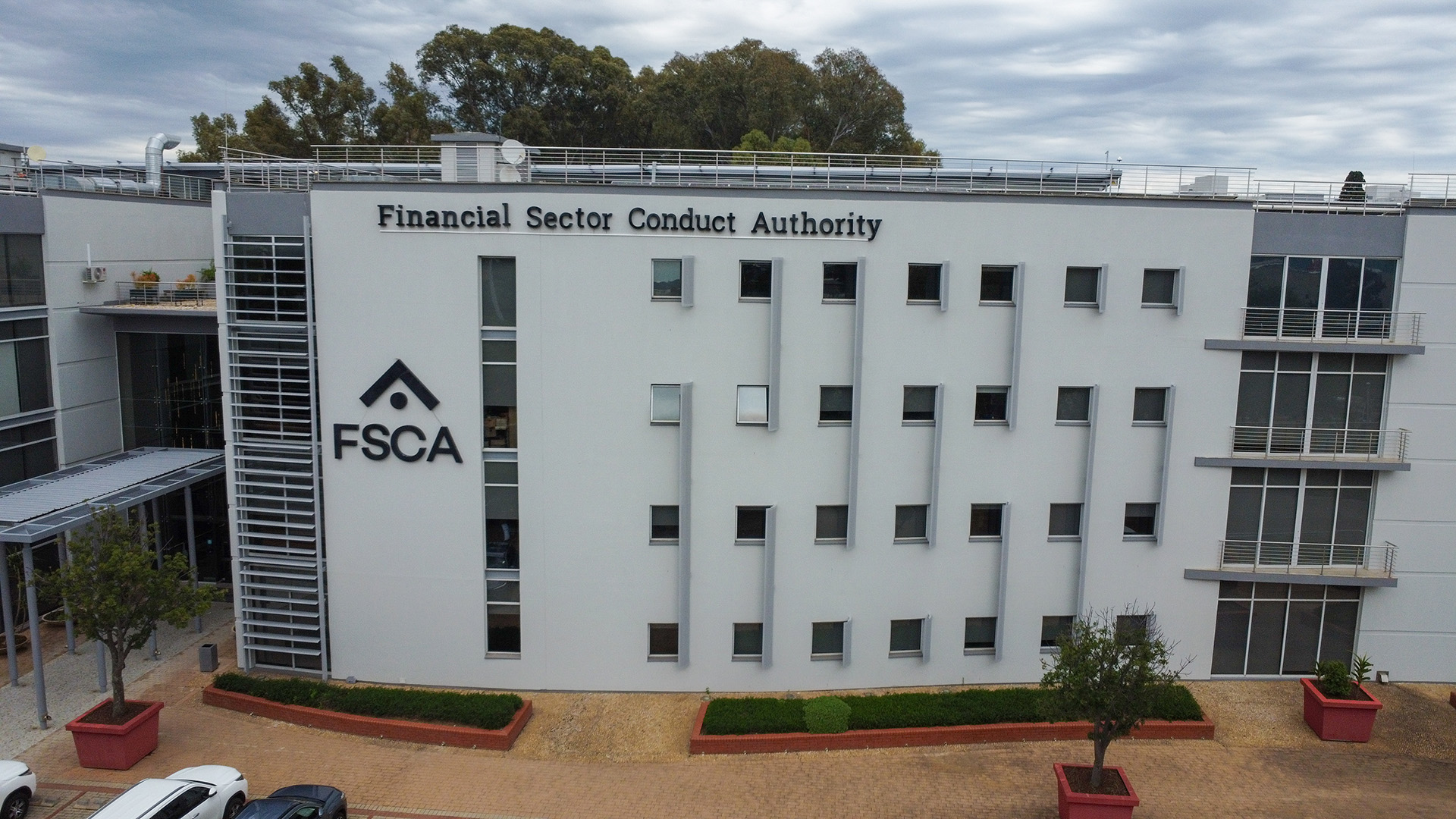
The long tail of the BHI Trust scandal continues to unwind – and the Financial Sector Conduct Authority is still not done.
In its latest enforcement action, the regulator has imposed a R1.5-million administrative penalty on Ian Roscoe and barred him from the financial services industry for 20 years.
The sanction follows an FSCA investigation, which found that Roscoe rendered intermediary services that led clients to invest in the BHI Trust scheme – a Ponzi scheme run by Craig Warriner.
At the time, Roscoe was not authorised as a financial services provider, placing him in contravention of section 7(1) of the Financial Advisory and Intermediary Services Act, the FSCA said in a statement on 9 April.
The contravention mirrors the core regulatory breach at the heart of the BHI Trust case, where Warriner and the trust were found to have unlawfully acted as discretionary financial services providers by exercising control over client investments without authorisation.
The action reflects the FSCA’s continued focus on the network of intermediaries – both authorised and unauthorised – who enabled the scheme.
A scheme built on illusion
At the centre of the BHI Trust collapse was Warriner, who surrendered to authorities in early October 2023 and, in an affidavit, admitted to misusing investor funds over more than two decades.
The trust, which had operated since 2002, was presented as a share-trading investment scheme. Investors were required to commit a minimum of R50 000, with returns purportedly generated through trading in a handful of JSE-listed shares. A more aggressive offering branded “BHI Plus”, promised even higher returns.
But the underlying reality diverged sharply from the narrative sold to investors.
Court records show that of nearly R3 billion received between 1 January 2020 and 30 November 2023, less than 20% – about R584m – was deployed into securities trading. The bulk of the funds sat in an interest-bearing money market account, generating income for Warriner rather than returns for clients.
Investors, meanwhile, received monthly statements reflecting entirely fictitious performance.
As the State established, new investor funds were used to pay existing beneficiaries – a classic Ponzi structure that ultimately became unsustainable. By late 2023, the scheme collapsed under its own weight.
Guilty plea and sentencing
Warriner’s confession triggered a rapid sequence of legal consequences.
- The BHI Trust was provisionally sequestrated on 25 October 2023.
- Final sequestration followed on 7 February 2024.
- Warriner faced 206 counts of fraud, alongside a charge of contravening section 7(1) of the FAIS Act.
On 27 May 2024, in the Palm Ridge Commercial Crimes Court, he entered into a plea agreement with the State and was sentenced to 25 years’ imprisonment.
The case affected at least 206 investors, with significant financial losses.
The FSCA widens its net
Regulatory scrutiny began almost immediately after Warriner’s surrender.
In November 2023, the FSCA confirmed it was investigating whether BHI Trust had been operating as an unauthorised financial services provider and an unregistered collective investment scheme. At that stage, it made clear that none of the entities involved were licensed to provide such services.
By early December 2023, the scope of the investigation had expanded to include authorised FSPs who may have advised clients to invest in BHI Trust. The focus was on whether these advisers had exercised the required levels of due care, diligence, and suitability assessment.
The FSCA also called on investors to submit information about advisers who facilitated their investments, as part of an effort to compile a full picture of the advisory chain linked to the scheme.
The question was simple – and uncomfortable: how did a scheme with no licence, no regulatory standing, and clear structural red flags make its way into client portfolios?
The ‘enablers’ – and a case that faltered
The investigation soon translated into criminal and regulatory action against alleged facilitators.
In June 2024, Michael Haldane and Sona Pillay were arrested on charges of fraud and money laundering in connection with the BHI Trust scheme.
Haldane was linked to Global & Local Investment Advisors (GLAI) — one of the FSPs that placed client funds with BHI Trust — while Pillay, through Rubicon Administration Services, was involved in administering the scheme, including processing deposits, issuing statements, and facilitating withdrawals.
Both were granted bail of R100 000 following their court appearance on 10 June 2024.
Regulatory enforcement followed.
In September 2024, the FSCA imposed 30-year debarments on Haldane and his associate Mauro Forlin, citing failures to assess the suitability of BHI Trust for clients and their involvement in rendering financial services through an unlicensed structure.
However, the criminal case did not proceed as expected.
In March 2025, charges against Haldane and Pillay were provisionally withdrawn.
According to the National Prosecuting Authority (NPA), there was insufficient evidence at that stage to prove fraud, theft, or money laundering. The matter was removed from the court roll to allow for further investigation, with the possibility of being re-enrolled later.
No timeline has been provided for when – or if – that may occur.
The slow grind of recovery
Parallel to the regulatory and criminal processes, the liquidation of the BHI Trust has been unfolding since late 2023.
By January 2025, more than 800 creditor claims – totalling over R1.5bn – had been proved against the estate, while only R12.4m had been recovered.
Recovery efforts have focused on:
- Section 29 claims targeting payments made in the six months before sequestration.
- Section 152 enquiries to trace the flow of funds.
- Forensic analysis based on bank records dating back to 2008.
By April 2025, trustees reported that recovery processes were ongoing, including the issuing of summonses and efforts to realise assets, including those held offshore.
The most recent update, contained in the ninth circular to creditors dated 28 August 2025, confirmed that the process remained active but incomplete:
- The section 152 enquiry was ongoing, with further hearings scheduled for October 2025.
- A forensic report into the trust’s affairs was still in progress.
- Section 29 recovery actions had intensified, with multiple summonses issued.
- Section 26 recovery processes were being initiated.
- Additional assets had been identified in foreign jurisdictions, including Mauritius and Hong Kong.
- Further recoveries had been made, although not quantified.
The trustees were also granted an extension to lodge the first liquidation and distribution account by 22 January this year.
More than two years after Warriner’s confession in October 2023, the BHI Trust saga remains unresolved.
The FSCA’s latest action signals that accountability now extends beyond the mastermind to advisers, intermediaries, and administrators.
But for investors, the distinction matters less than the outcome. The system may still be working through the fallout – but the losses are already locked in. And the question remains: how much of what was lost will ultimately be recovered – and how long it will take.