A month after South Africa’s draft National Artificial Intelligence Policy was pulled over fictitious references, the Department of Communications and Digital Technologies (DCDT) says it has traced where the problem may have entered the policy process, suspended two officials, and set in motion a plan it hopes will salvage the process.
The department’s reset plan includes the appointment of an external expert panel, new internal AI controls, and a revised timeline that pushes public consultation into next year.
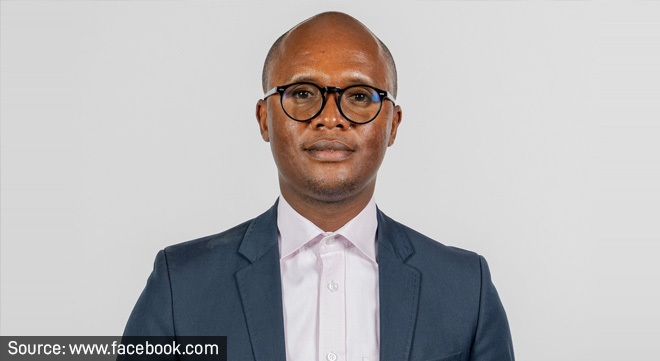
Appearing before Parliament’s Portfolio Committee on Communications and Digital Technologies on 26 May, Communications and Digital Technologies Minister Solly Malatsi (pictured), Director-General Nonkqubela Jordan-Dyani, and acting chief director: emerging technologies and digital innovations Jeanette Morwane were asked to explain not only how the policy ended up containing fictitious references, but how the government intends to stop the same thing happening again.
The draft policy was published for public comment on 10 April before being withdrawn on 26 April after concerns emerged about fabricated references and likely AI-generated citations around two weeks later.
MyBroadband reported that an organisation called Article One wrote to Malatsi on 24 April raising problems with the draft. The following day, News24 reported that the draft contained fictitious references, and cited experts who suggested the entries were likely AI-generated “hallucinations”. It said the 86-page document had 67 references, and at least six sources were identified as fictitious.
The committee wanted to know how a document containing fictitious references made it through drafting, internal review, and publication.
From a Chile document to a national policy
Officials pointed to a combination of undeclared AI use, weak verification processes, and internal capability gaps. But when asked what the department now believes was the root of the breach, Jordan-Dyani pointed to a document from Chile.
According to her, the document had been translated from Spanish into English and used as contextual material during development of the draft policy.
“There’s an actual document that was shared with the officials… from Chile, and they had to translate it as well from Spanish into English, and that is the source at which the information emanates in terms of those references,” she said.
When committee chairperson Khusela Sangoni pressed for clarity on whether this meant fictitious references had effectively travelled from the Chile document into South Africa’s national policy, Jordan-Dyani stopped short of confirming that conclusion and noted that the matter still forms part of the ongoing investigation.
The bigger issue was that nobody said AI had been used
If the Chile document explained where the problematic references may have entered the process, it did not explain why they were not identified before publication in the Government Gazette.
Malatsi said one of the department’s biggest concerns was not simply that fictitious references appeared in the document. It was that there had been no disclosure that AI tools had been used during parts of the drafting process, and no indication that some references could not be verified.
He said that only became clear after News24’s reporting triggered internal checks.
Until then, the department’s own processes had not flagged concerns with either the references themselves or how they had entered the document.
Jordan-Dyani said the two suspended officials later acknowledged that ChatGPT had been used during editing of the document, but this had not been disclosed during the drafting process.
Malatsi suggested that it was this omission – rather than the use of AI itself – that turned a drafting mistake into a credibility problem.
Committee members questioned whether the explanation could end with two officials when the document had moved through multiple stages of drafting, review, and approval before publication. They repeatedly returned to whether a failure of that scale pointed to weaknesses in systems and oversight rather than individual conduct alone.
Malatsi accepted that the failure went beyond individuals.
“I think an honest reflection of the events… would reveal that we have both a systems challenge and equally a people challenge,” he said.
He said there is nothing inherently wrong with using AI.
The issue, he argued, is what happens when institutions rely on people to disclose AI use instead of building systems capable of checking what is submitted.
However, both officials emphasised that the department is not treating AI use itself as misconduct.
The concern, they said, was the use of AI without disclosure, combined with the failure to verify sources before publication.
The department said that, going forward, it would formalise expectations around disclosure, validation, and accountability whenever AI tools are used in official work.
The department’s answer is more process
Jordan-Dyani said one of the lessons from the episode is that the government cannot treat AI as an informal drafting tool and rely on people to disclose when they have used it.
Her view was that the response should not be to avoid AI, but to create clearer rules around how it is used. That includes disclosure requirements, validation processes, and clearer accountability for anyone incorporating AI-generated outputs into official work.
She suggested the department also wants to move beyond self-disclosure and introduce stronger verification and authentication mechanisms where AI tools are used.
Jordan-Dyani said the department has already begun developing an internal responsible AI use framework and is working with the National School of Government on a broader approach that could support capability-building and guidance across government institutions.
She said the intention is not only to establish rules for AI use, but also to build a more consistent understanding of when AI can be used, what checks should apply, and where responsibility ultimately sits when outputs are incorporated into official work.
She noted that the withdrawn national AI policy had originally been intended to provide the umbrella framework for many of those conversations.
Instead, the policy process itself has become an early test of how the government governs its own use of AI.
Two officials suspended as investigation nears completion
The department confirmed that two officials have been placed on precautionary suspension while investigative and disciplinary processes continue.
Their identities have not been released.
Jordan-Dyani told the committee the department was limiting what it disclosed publicly because the matter remains subject to internal processes governed by public service rules and labour law requirements. She said the department also wanted to ensure procedural fairness while investigations and disciplinary steps are underway.
She said the investigation is now in its final stages and the department intends concluding the process within 60 days in line with public service requirements.
According to Jordan-Dyani, an investigating officer and disciplinary chairpersons have been appointed, and hearings are expected to begin within weeks.
At the same time, she pushed back against suggestions that the process was intended to find scapegoats.
“We do not want to make it a punitive process, or see it as a scapegoating,” she said. “The most important thing for us is really instilling the issues of accountability.”
She emphasised that precautionary suspension should not be interpreted as a finding of guilt and said the committee would receive updates once processes had concluded.
Government’s answer: bring in outside eyes
Alongside consequence management, the department used the meeting to explain how it plans to restart the policy process.
Morwane introduced what she described as the department’s intervention plan for reviewing the draft and restoring credibility to the policy process.
The DCDT confirmed that the minister has appointed a seven-member National AI Expert Review Panel chaired by Professor Benjamin Rosman of the Wits Machine Intelligence and Neural Discovery Institute.
The members are Professor Vukosi Marivate, Professor Alison Gillwald, Heather Irvine, Dr Tshepo Feela, Dr Jabu Mtsweni, and Advocate Lufuno Tshikalange.
Morwane emphasised that the panel will not write the policy. Its role is advisory.
She said the panel will review and challenge policy positions, assess supporting evidence and references, identify areas requiring revision, consider international approaches, and provide written recommendations throughout the process.
Drafting responsibility will remain with the department.
Morwane also said the expert review process is not intended to replace stakeholder participation.
According to the department’s plan, broader stakeholder engagement and public consultation will still take place outside the panel process before the revised draft returns for comment.
She said the panel is intended to support and strengthen the process rather than take ownership of it.
But the discussion quickly turned to whether bringing in outside expertise was also an acknowledgement that the government lacks the capability to lead policy development in an area evolving as quickly as AI.
“The truth of the matter is we don’t,” Malatsi said.
He said one of the department’s objectives is to use the review process not only to produce a policy that can withstand scrutiny, but also to strengthen internal capability through skills transfer and closer engagement with experts during the process.
Questions were also raised about cost.
Malatsi said panel members will serve on a pro bono basis and will not receive remuneration. Department spending will be limited to logistics and operational support.
The department also said panel members had been required to submit conflict-of-interest declarations.
Public consultation now shifts to 2027
Morwane also unpacked the revised project plan for the review process.
Advisory review work is expected to take place through July and August, drafting will occur between August and September, and Cabinet processes are scheduled for November and December 2026.
The revised draft policy is now targeted for publication for public comment in January 2027.
For now, the department’s immediate task is less about regulating AI than rebuilding confidence in its own policy process.
What began as an attempt to establish South Africa’s approach to AI governance has become a test of whether the government can build the systems, disclosure rules, and verification practices needed to govern its own use of the technology first.