
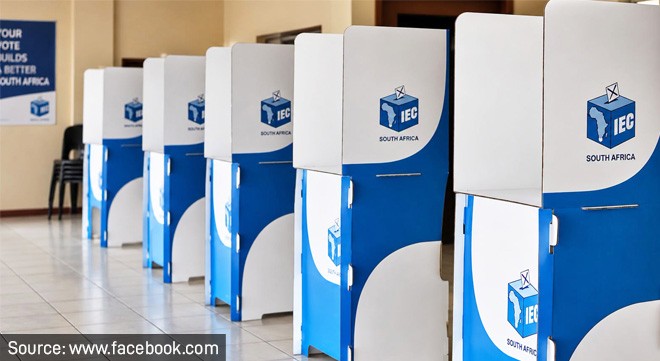

South Africans head to the polls on 4 November to elect the councils that will govern their municipalities for the next five years. But the financial consequences of those choices will extend well beyond election day.
Households are spending money on backup electricity, water and security. Small businesses are struggling with operating costs and access to finance. And investors face the prospect of municipal instability adding to an already unsettled economic environment.
The latest SME Confidence Index from Business Partners Limited found that 83% of small and medium enterprises (SMEs) were confident their businesses would grow over the next 12 months. Yet confidence that access to business finance would improve fell to 62%, down five percentage points year-on-year.
Business Partners managing director Jeremy Lang says SMEs remain confident in their own ability to grow, but are more cautious about the broader economic environment and access to finance.
The election will test whether municipal administrations can provide the conditions businesses say they need to turn those growth ambitions into reality.
The cost of unreliable services
Municipal failures can create costs that do not appear on a rates account.
When water or electricity supply is unreliable, households may have to pay for water tanks, inverters, generators or bottled water. Poor roads increase vehicle maintenance costs, while safety concerns can mean additional spending on private security and insurance.
Sharon Hamman, senior legal adviser at Momentum, says these expenses compete with money that could otherwise go towards savings, debt repayment or retirement planning.
“The roads we drive on, the reliability of our water and electricity supply, the safety of our neighbourhoods and the health of the local businesses that employ us all shape what we spend, what we earn and how confidently we can plan for the future,” she says.
Municipal infrastructure also affects property values, while rates, tariffs and service charges remain significant expenses for many households.
The costs extend to businesses. Reliable services and infrastructure are essential to daily operations, while regulatory enforcement affects whether compliant businesses can compete on a level playing field.
The Business Partners survey found that 78.7% of respondents agreed that insufficient enforcement of immigration and labour laws was creating unfair competition for South African SMEs.
Lang says business owners are concerned when businesses that do not comply with regulatory requirements appear to have an advantage over those that do.
Coalition politics could add to the uncertainty
The election could reshape the political balance in Gauteng’s three metros: Johannesburg, Tshwane and Ekurhuleni.
Speaking at a recent PSG Financial Services Think Big webinar, political analyst Gareth van Onselen described Gauteng as “the most populous province, it’s the most diverse, it’s where you see change first”.
But votes spread across more parties can make coalition negotiations harder, leaving smaller parties in a position to determine who governs.
Political commentator Justice Malala warned that personal and political differences between parties can obstruct cooperation. He pointed to tensions between DA leader Helen Zille and ActionSA leader Herman Mashaba as an example.
“Quite frankly, I think many, many voters will look at it and say, ‘This is juvenile,’ ” he said.
Van Onselen suggested that coalition fatigue could contribute to voter apathy, with turnout potentially falling as low as 40%.
The challenge for municipalities is not simply forming a coalition, but maintaining an administration capable of delivering services and implementing plans.
Malala pointed to Johannesburg’s potholes, which were repaired ahead of the G20 summit but reappeared afterwards, as an example of the limitations of short-term fixes.
Businesses may be willing to help municipalities improve services, he said, but progress requires leadership capable of sustaining it.
Van Onselen believes a coordinated approach across Gauteng’s three metros could make a difference.
“You have a stable set of three governments. And I think that would be a massive economic incentive.”
The consequences for business and investment
Municipal instability can affect the broader economy by diverting money and resources into compensating for service delivery shortfalls.
Hugh Hacking, executive head of structured investments and annuities at Momentum Corporate, says poor municipal performance creates an overall drag on the economy.
“This makes it more difficult for companies to generate profitable growth,” he says.
The consequences can extend to investment decisions and employment, particularly in major urban centres.
Local elections typically carry less weight for financial markets than national elections. But Hacking says difficulties in forming governing coalitions in major metros could dampen confidence in the future, putting downward pressure on equity markets and upward pressure on bond yields.
He cautions, however, that election-related volatility should not be confused with a change in the underlying economic outlook.
Global events, including conflict in the Middle East, higher fuel prices, and interest rate increases, are already contributing to market uncertainty.
“Elections cause uncertainty in the market, so you often see volatility associated with them. And then we see people with retirement savings and other important savings making rash decisions,” Hacking says.
The 2024 national election provides a reminder of how quickly market sentiment can change. After the ANC lost its outright majority, markets were initially cautious. The formation of the Government of National Unity was followed by a rally in the rand, bonds and equities.
Hacking says investors who reacted to the initial uncertainty may have missed the recovery.
“Quick reactions to events are seldom a good idea when it comes to long-term investments,” he says.
Switching investments in response to election headlines could turn a temporary market decline into a permanent loss for retirement fund members.
The ability of municipalities to deliver reliable services and sound management will remain a factor in household finances, business confidence and investment decisions long after the votes have been counted.
Van Onselen believes a coordinated approach across Gauteng’s three metros could make a real difference.
“You have a stable set of three governments. And I think that would be a massive economic incentive.”