

A South African client can be a South African national, live in Portugal, hold investments in South Africa, and have digital assets with an offshore custodian, while considering another jurisdiction for the next stage of their life.
For wealth advisers, that can mean a client whose financial affairs span several jurisdictions.
New data from Henley & Partners, a global firm specialising in residence and citizenship planning, provides a window into just how international the South African client base has become.
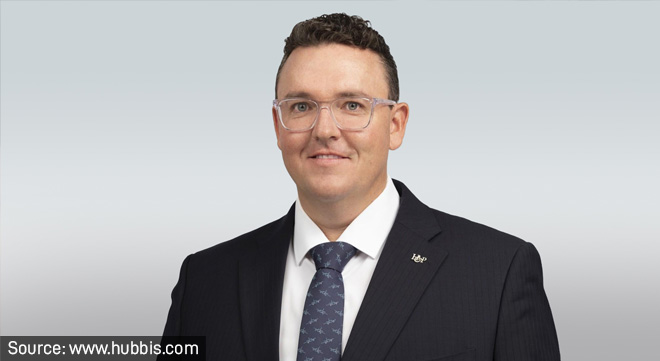
Dominic Volek (pictured), Henley & Partners’ group head of private clients, says the firm continues to see meaningful demand from South African nationals for international residence and citizenship planning. South Africa remains among its top 25 source countries globally for applications and in its top 10 for enquiries.
“To contextualise: year-to-date we have assisted clients from over 100 different nationalities across more than 40 programme options,” says Volek.
Applications from South African nationals increased by 27% in 2025 compared with 2024. In 2026, the leading routes have been St Kitts & Nevis citizenship, Portugal residence, Grenada citizenship, and Greece residence.
“On the enquiry side, interest is spread across a broader range of countries, including Portugal, Italy, Argentina, Australia, St Kitts & Nevis, Greece, Austria, Antigua and Barbuda, Mauritius, and Grenada.”
Only about 25% of South African nationals applying through Henley & Partners in 2026 have a South African address. The majority are already living internationally.
Volek cautions against reading the figure as evidence that these clients have recently left South Africa. Instead, he says, it reflects a broader trend in which residence and citizenship planning is increasingly being undertaken by people who are internationally mobile and looking to build greater jurisdictional diversification and optionality into their long-term planning.
“To contextualise: 36% of our clients this year are not currently living in their country of origin.”
Nationality, residence and the location of a client’s wealth can be three different things. Digital assets add another variable.
A different relationship between wealth and geography
Henley & Partners’ Crypto Wealth Report 2026 estimates that 135 694 individuals worldwide hold at least US$1 million in crypto assets. Of these, 92 272 are Bitcoin millionaires.
There are also an estimated 290 crypto centi-millionaires, with holdings of more than US$100m, and 23 crypto billionaires. The total cryptocurrency market was worth about US$2.6 trillion at the end of August 2026.
The report uses a new methodology, so these wealth figures are not directly comparable with previous editions.
For Volek, the more interesting change is not simply the size of the crypto market but what digital assets have done to the traditional relationship between wealth and place.
Traditional wealth generally moved through banks, investment institutions, and other intermediaries. A self-custodied digital asset can move with its owner. This means countries that once competed to attract capital are increasingly competing to attract the people who control it.
Volek says crypto-wealth holders are considering where to establish themselves in much the same way that other internationally mobile investors consider residence and jurisdiction, but with an asset that is unusually portable.
The considerations extend beyond tax. Volek points to regulatory clarity, dependable courts, personal security, access to financial services, and the quality of life a family wants.
Henley Crypto Adoption Index 2026 reflects that broader competition. Singapore ranks first in the 2026 index, followed by the United Arab Emirates, Hong Kong, the United States, and Switzerland.
But the South African data should not be read as evidence that crypto is driving South Africans towards these jurisdictions. Henley says it has no evidence to establish a direct connection between digital-asset wealth and the residence and citizenship trends among its South African clients.
The overlap lies elsewhere: both trends point to clients whose financial lives are becoming less tied to one jurisdiction.
Residence becomes part of the wealth conversation
Volek notes that digital-asset wealth is becoming a more established part of the global private-wealth landscape, but its portability can create the impression that it sits outside traditional questions of residence, regulation and succession. In reality, those questions remain.
“For internationally mobile clients, the fact that a digital asset can be transferred across borders relatively easily does not mean that the associated tax, reporting, regulatory, or legal obligations move with it.”
He says advisers need to look at digital assets as part of the client’s overall cross-border position: where they are resident, where assets are held or custodied, how those assets are classified in the relevant jurisdictions, what reporting obligations may apply, and what happens if the client subsequently changes residence.
“This is one reason residence and citizenship planning is increasingly being considered as part of a broader wealth-planning strategy rather than simply as a question of relocation. For many wealthy families, the objective is to build greater geographic and jurisdictional diversification around their lives, businesses, and assets.”
Digital wealth adds another dimension to that planning, but it does not remove the need for careful structuring and specialist legal and tax advice.
Custody and succession
Digital assets can also introduce particular estate- and succession-planning challenges. With traditional financial assets, executors, and beneficiaries generally have established mechanisms through which assets can be identified and transferred.
“Digital assets – particularly those held through self-custody – may depend on access to wallets, private keys and other credentials that can be permanently lost.”
The question is not simply whether a client owns digital assets, but whether there is a robust and legally appropriate plan for how those assets can be identified, accessed, and transferred in the event of incapacity or death.
“This needs to be considered alongside security: creating access for future beneficiaries without inadvertently compromising the assets during the owner’s lifetime.”
For an internationally mobile client, that succession planning may need to work across more than one legal jurisdiction.
What advisers should be watching
Regulation and reporting will be particularly important over the next few years. Volek notes that international frameworks are moving towards greater transparency and exchange of information around crypto assets, while individual jurisdictions continue to take different approaches to regulation, taxation, and the treatment of digital assets.
Tokenisation is another development Volek believes advisers should watch.
“As more traditional investments and real-world assets are represented digitally, the distinction between ‘crypto wealth’ and conventional private wealth is likely to become increasingly blurred.”
That brings questions of securities regulation, custody, ownership, succession, and cross-border taxation into the same conversation.
“The broader point is that internationally mobile wealth is becoming more complex, not less. Advisers will increasingly need to understand the interaction between a client’s assets, residence, family circumstances and exposure to different jurisdictions rather than treating any one of these in isolation.”


