
Solar panels, battery energy storage, lithium-ion batteries, electric vehicles, lightweight construction, and denser urban development are changing the conditions firefighters face when a fire starts.
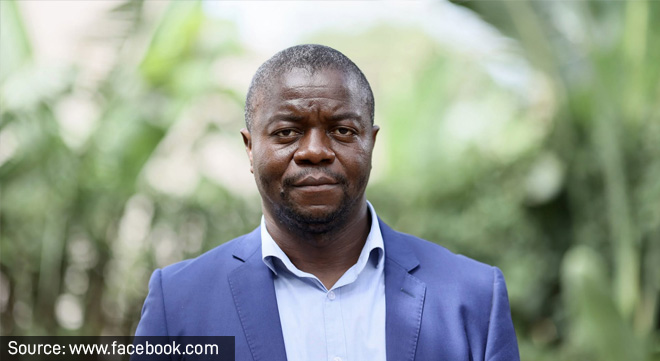
Dr Moses Khangale (pictured), manager: stakeholder programmes at Santam, says structural fire risk needs greater attention as South Africa’s built environment evolves. At the inaugural Western Cape Structural Firefighting Summit in Cape Town, he called for a renewed approach to structural firefighting, including stronger municipal capacity, skills development, and closer collaboration between the public and private sectors.
Major incidents such as the Knysna fires in 2017 and the UCT/Table Mountain fire in April 2021 put considerable attention on wildfire risk. That focus has continued: more than 215 000 hectares were affected by wildfire across the Western Cape during the most recent season, including more than 76 000 hectares of CapeNature-managed land. About 53 000 hectares burned in the Cederberg Wilderness Area alone, its largest wildfire since 1997.
Structural fires carry a different human and economic cost. Figures cited by Western Cape MEC for Local Government, Environmental Affairs and Development Planning Anton Bredell at the summit put South Africa’s fire-related burn death rate at about 8.5 deaths per 100 000 people, with fires accounting for about 7% of injury-related deaths. Research in the Western Cape recorded 1 370 fire-related deaths over 13 years. National estimates put annual fire losses at more than R3 billion.
Khangale says the scale of the wildfire risk should not obscure another shift taking place in South Africa’s built environment.
“Fires remain one of the key drivers of commercial claims,” Khangale said. “But strategic alignment on modern structural firefighting practices is now critical because of evolving fire behaviour, modern building materials, and increasing urban density.”
A changing built environment
The way buildings are designed, powered, and used is changing.
Solar photovoltaic systems and battery energy storage are becoming part of the energy mix. Lithium-ion batteries are increasingly present in buildings, vehicles, and other applications, while electric vehicles are becoming more common.
Rapid urbanisation adds another layer. Khangale cites estimates that more than 70% of the population could live in towns and cities by 2035, with densification increasingly taking place through renewal, infill, and multi-storey development.
Lightweight construction materials are also becoming more widespread.
“All of these factors impact how a fire develops, its intensity, and critically how it is addressed because of impacts on smoke movement, access, evacuation, and firefighter safety,” Khangale said.
“As the environment shifts, our responses need to adapt with it,” he said. “And these changes filter into various aspects such as equipment, training, and even legislation.”
Municipal capacity
The ability to respond to increasingly complex fires ultimately depends on the capacity of the country’s municipal fire services. That capacity is uneven.
At the National Fire Services Indaba in February, Co-operative Governance and Traditional Affairs Minister Velenkosini Hlabisa highlighted persistent gaps in staffing, qualifications, equipment, and fire-safety enforcement.
The department also pointed to a structural funding problem, with fire services expected to meet national priorities without commensurate budgetary support. Metros and larger municipalities are generally better equipped, while rural and under-resourced municipalities remain caught in a low-capacity cycle.
The national government is looking at ways to address this, including a more sustainable funding model for fire services. The National Disaster Management Centre has also identified the need for stronger municipal capacity and governance, better risk profiling and data-driven planning, improved training and professionalisation, and greater co-ordination between government, the private sector and communities.
The challenge is therefore not simply about having enough fire engines. It extends to the skills, equipment, planning, prevention, and operational systems needed to deal with changing fire risks.
The Western Cape provides one example of targeted investment. Bredell said the provincial government invested R16 million in municipal firefighting capacity during 2025/26 and was allocating a further R12m in 2026/27. He called for continued capacity building, improved planning, stronger partnerships, and investment in modern firefighting capabilities.
That investment is also reaching individual municipalities. In July and August, Witzenberg, Swartland, Overstrand, and Bergrivier received specialised firefighting, technical rescue, or hazardous-materials equipment through the province’s Municipal Fire Services Capacity Grant.
Khangale says public and private stakeholders also need to work more closely on structural firefighting readiness.
Santam’s Partnership for Risk and Resilience (P4RR), established in 2012, works with municipalities and government agencies on disaster-risk mitigation and resilience initiatives.
According to Santam, the programme has supported 110 municipalities, reached more than 180 000 people through community-level disaster-risk awareness and education, and had a downstream impact on 29.2 million people. More than 1 500 people have received training in firefighting, safety, disaster management, and related courses.
Prevention and early warning
The response to fire starts before firefighters arrive.
Bredell said prevention should remain central to the approach.
“The best fire is the fire that never starts. Prevention must remain at the heart of our approach.”
That means looking beyond emergency response to building safety, planning, risk mitigation, and identifying emerging hazards. But preparedness also depends on knowing when and where risks are developing, particularly as weather-related hazards become more complex.
Khangale pointed to early-warning systems as an important part of disaster-risk reduction, particularly for vulnerable communities. The principle is reflected in the United Nations’ Sendai Framework for Disaster Risk Reduction 2015–2030, which calls for greater access to multi-hazard early-warning systems and disaster-risk information.
Santam has supported the South African Weather Service (SAWS) in establishing nine automatic weather stations in key provinces.
Read: Santam, SAWS partner to expand weather monitoring network
The stations have been integrated into the SAWS observation network and provide weather data intended to maximising access to early warnings by vulnerable communities and are providing critical weather data.
The insurance perspective
For insurers, fire is not only a question of individual claims. It also involves protecting buildings, businesses, and productive infrastructure, transferring insurable risks to the private sector, and limiting the financial burden that major disasters can place on government.
Khangale said insurers can contribute through risk transfer, technical expertise, and investment in resilience, including in response to increasingly complex and climate-related risks.
The sector can also support research, advocacy, and the mobilisation of resources to help communities and businesses adapt to changing risks.
Santam’s P4RR is one example of the public-private approach he advocates, bringing together municipalities, government agencies, and the private sector around disaster-risk mitigation and resilience.
“Building resilience is a shared responsibility that requires an ‘all of society approach’,” Khangale said.

