
If you were among those puzzled by Sanlam Investments’ decision to hand over its active asset management business to Ninety One, you were not alone.
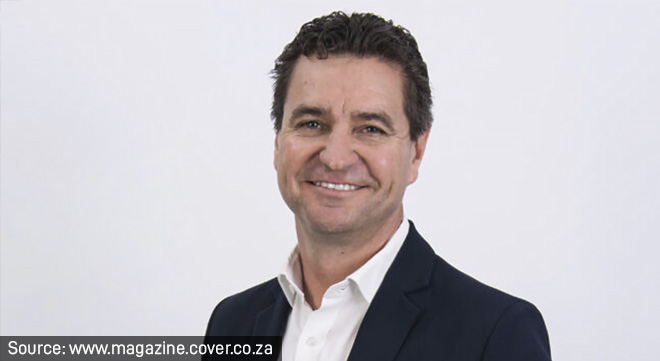
At the recent PSG Annual Conference, Sanlam Investments chief executive Carl Roothman (pictured) said he received several calls after the transaction was announced.
“I got three or four phone calls after we announced [the deal],” Roothman joked. “Carl, what are you going to do now? You’re out of a job.”
The question reflects how dramatically the South African asset management industry has changed over the past decade – and why Sanlam decided it no longer wanted to compete in the same way it once did.
Roothman said the traditional active asset management model has come under growing pressure globally. Passive investing continues to gain ground, margins are tightening, discretionary fund managers increasingly control portfolio construction decisions, and South African investors are allocating more capital offshore.
At the same time, investment businesses are shifting away from standardised product manufacturing towards more customised investment outcomes.
“The industry is moving from mass production of products and investment products to mass customization, where you build solutions for your clients,” Roothman said.
Sanlam’s response was not simply to cut costs or scale back operations. Instead, the group spent years reshaping its operating model around areas where it believed it retained structural advantages: distribution, platform scale, alternatives, and solutions design.
The Ninety One transaction
In November 2024, Sanlam announced a strategic partnership with Ninety One, appointing it as the group’s primary active investment manager for single-managed assets. The arrangement gave Ninety One preferred access to Sanlam’s distribution network, while Sanlam would receive an estimated 12.3% stake in Ninety One through a share issue. At the time, the parties described the deal as a long-term strategic relationship expected to endure for at least 15 years.
The agreement covered about R400 billion in assets, most of them managed in South Africa, and included the planned transfer of Sanlam Investment Management (SIM) and Sanlam Investments UK’s active asset management business to Ninety One.
The relationship evolved in March 2025, when Sanlam and Ninety One released a joint SENS announcement confirming the execution of key operative agreements to implement the transaction. The announcement signalled Sanlam’s exit from active asset management in South Africa and the UK, with Ninety One formally assuming responsibility for the relevant businesses and mandates.
The March announcement also set out how the transaction would unfold across separate South African and UK components, including the sale of SIM to Ninety One Limited, the transfer of Sanlam Investments UK’s active asset management business to Ninety One UK, and the share arrangements that would give Sanlam its stake in Ninety One.
The deal was implemented in stages between 2025 and 2026. In April 2025, Ninety One shareholders approved the share issuance required for the South African leg of the transaction, while the UK component was completed in June 2025 with the transfer of Sanlam Investments UK’s active asset management business to Ninety One UK.
On 11 August 2025, the Competition Commission recommended approval of the South African transaction, subject to conditions relating to employment protections, safeguards around competitively sensitive information, Glacier’s open-architecture platform access for third-party asset managers, and support for smaller and historically disadvantaged asset managers and stockbrokers.
The South African transaction was finalised on 2 February 2026 after the required regulatory approvals were obtained, formally bringing the 15-year strategic relationship into effect. About R400bn in assets formed part of the arrangement, while Sanlam acquired a 12.5% stake in Ninety One, cementing Ninety One’s role as Sanlam’s primary active asset manager for single-managed local and global products.
Roothman said Sanlam concluded that scale had become increasingly important in active asset management, particularly offshore.
At the time, Sanlam’s UK active management business managed about R50bn in assets – scale which, Roothman suggested, was becoming difficult to sustain in an increasingly globalised market.
The company appointed Rothschild & Co to evaluate strategic options and screened several hundred asset managers globally before narrowing the field.
“We started off with about four or 500 asset managers,” Roothman said.
Sanlam wanted a partner large enough to provide genuine global capability, but not so large that the relationship became strategically insignificant.
Ninety One ultimately stood out because of its integrated South African and offshore investment platform, global scale, and local roots.
“You can pick up the phone to the team there,” Roothman said. “If there’s a problem, we can call Hendrik [du Toit] and his management team.”
Sanlam also deliberately avoided taking operational control of Ninety One despite acquiring an equity stake.
“We do not sit on the board. We do not sit on the committees,” Roothman said. “Ninety One is a partner. They’re brilliant in what they do. We think we should leave them to do what they do.”
Roothman framed the Ninety One transaction less as a withdrawal from asset management and more as a decision to focus on areas where Sanlam believes it can still differentiate itself.
“What we did after this Ninety One transaction,” he said, “was say: let us focus on our strengths.”
A shift towards ‘solutions’
Roothman’s broader argument was that asset management increasingly revolves around combining specialist capabilities into tailored investment outcomes rather than manufacturing every capability internally.
That shift is visible in how Sanlam Investments is now structured.
Ninety One effectively becomes the group’s large-scale active management engine, while Satrix continues driving indexation and ETF exposure. Amplify Investments houses boutique active management capabilities, while Sanlam itself is increasingly focused on alternatives, structured solutions, multi-management, and private wealth.
Roothman repeatedly referred to “allocation architecture” as the new source of competitive advantage in asset management.
The emphasis, in other words, is shifting away from building a single flagship investment capability towards assembling portfolios across multiple specialist platforms and asset classes.
That model also relies heavily on Sanlam’s distribution network, insurance balance sheet, and long-term client relationships.
Alternatives are becoming increasingly important
A significant portion of Roothman’s presentation focused on private markets and alternative assets.
Sanlam’s alternatives business now manages more than R160bn in assets, while its multi-manager platform oversees more than R500bn in assets under management and administration.
The group has been expanding into infrastructure, private credit, climate finance, renewable energy, venture capital, healthcare, education, and green hydrogen projects.
Roothman argued that Sanlam’s life insurance operations give it a structural advantage in this space because the group already originates substantial credit exposure through its insurance activities.
Instead of treating that purely as an insurance function, Sanlam increasingly views it as the foundation for a scalable alternatives platform serving institutional and retail clients.
The company has also been building international exposure through Climate Fund Managers and private market strategies extending into Africa, Asia, and Latin America.
Emerging markets remain central to the strategy
Roothman also pointed to India as an increasingly important growth market for the group.
Sanlam has held an investment in the Shriram Group for more than two decades. What began as a relatively small partnership has evolved into one of Sanlam’s most significant offshore growth platforms, spanning credit, life insurance, short-term insurance, asset management, and wealth management.
The broader Shriram ecosystem now serves roughly 30 million clients through about 100 000 agents. Its flagship lending business, Shriram Finance Limited, has a market capitalisation of about $18bn and recently secured a planned $4.4bn capital injection from Mitsubishi UFJ Financial Group in exchange for a 20% stake.
Sanlam said the transaction would strengthen Shriram Finance’s capital base, improve funding access, and support long-term growth while preserving the strategic partnership between Sanlam and the Shriram group.
At the same time, Sanlam has been increasing its exposure to Shriram’s insurance operations. The group expects its effective economic stakes in Shriram General Insurance Company and Shriram Life Insurance Company to rise to 50.99% and 68.41%, respectively, once the latest transactions are completed.
Roothman suggested the group now sees an opportunity to replicate parts of its South African model in India by combining distribution networks, insurance capability, wealth management, and investment solutions.
“If you have a client base of 30 million clients, 100 000 agents, to not go and build an asset management and wealth management business in India would not be wise,” he said.
That aligns with Sanlam’s broader positioning as an emerging markets-focused financial services group spanning South Africa, Africa, and India.

