
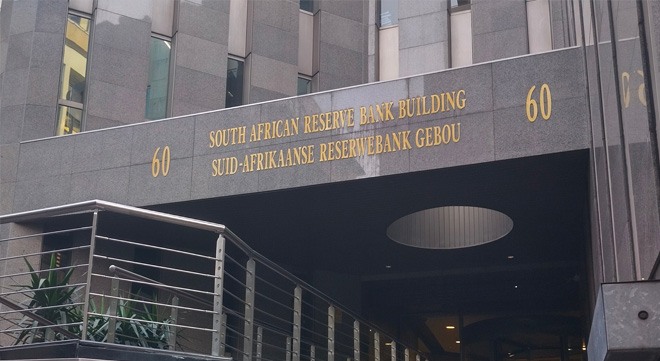
The Institute for International Tax and Finance has called on the South African Reserve Bank to urgently review recent amendments to South Africa’s exchange control manual, warning that the changes could deter much-needed foreign investment.
The SARB’s Financial Surveillance Department recently issued updated guidance that, according to the Institute, fundamentally alters how income remittances for non-residents are treated. The new provisions, the Institute said, introduce significant compliance burdens that risk undermining investor confidence and discouraging capital inflows at a time when South Africa has been working to attract more foreign investment.
Recent data underscores the sensitivity of foreign sentiment: in 2024, foreign investors sold a net R113.3 billion in JSE-listed shares, continuing the post-pandemic decline in offshore ownership of South African equities. The Institute noted that non-resident investors play a critical role in maintaining the JSE’s liquidity and depth.
Michael Kransdorff, director of the Institute, described the changes as “an own goal of significant proportions”.
“South Africa was recently removed from the FATF grey list after two years of intensive reforms to restore confidence in our financial system,” he said. “Now, without any prior warning or consultation, we are introducing new barriers that will actively discourage foreign investment. The message being sent to international investors is deeply troubling.”
According to the Institute, the new regime may also incentivise existing non-resident investors to divest from South African assets, reduce JSE liquidity, and delay access to income for weeks or even months.
The additional administrative requirements, it warned, could raise transaction costs, complicate compliance for legitimate investors, and place South Africa at a competitive disadvantage compared to other emerging markets.
Major shift in how non-resident income is treated
Historically, non-residents were required to apply for an Approval for International Transfer (AIT) tax compliance status PIN from the South African Revenue Service only when transferring capital abroad. Ordinary income could be remitted without such approval.
Under the new guidance, several categories of income will now require an AIT, including dividends, profits, and income distributions, directors’ fees, trust income, and rental income. Other forms of income, such as interest, salaries, fees for services rendered, pensions, and annuities, remain exempt.
Kransdorff said the new distinctions create unnecessary confusion.
“There is no rational basis for requiring an AIT for dividends but not for interest, or for rental income but not for service fees. This arbitrary distinction makes no sense and will only serve to confuse and frustrate foreign investors,” he said.
No exemption threshold for non-residents
The Institute also highlighted that, unlike South African residents – who benefit from a R1-million annual single discretionary allowance – non-residents will have no such threshold.
“This means that AITs will be required even for relatively small income amounts, placing a disproportionate administrative burden on non-resident taxpayers,” the Institute said.
Even non-residents not registered with SARS will not be spared, as they must obtain a manual Letter of Compliance – International Transfer from the tax authority before funds can be remitted abroad.
Administrative delays could restrict access to funds
The AIT process, the Institute said, requires extensive documentation, including proof of non-residency status, a detailed source of funds declaration, recent bank statements, and a statement of assets and liabilities for the past three years.
Although SARS indicates that an AIT application can be processed within 21 business days, the Institute noted that actual turnaround times are often much longer, particularly when additional information is requested. As a result, non-resident investors could find themselves unable to access their South African income for extended periods.
The Institute has urged the SARB to reconsider the updated guidance, warning that the unintended consequences could outweigh any compliance benefits and undermine ongoing efforts to rebuild confidence in South Africa’s financial markets.
Call for policy review
The Institute urged the SARB to take immediate steps to mitigate the unintended consequences of the new requirements. Specifically, it called on the Reserve Bank to:
- conduct an urgent review of the recent exchange control changes;
- introduce a de minimis threshold for non-residents, similar to the single discretionary allowance available to residents;
- harmonise the treatment of different income types with a clear policy rationale;
- streamline the AIT process with a maximum turnaround time of seven days; and
- provide transition arrangements and clear guidance for affected investors.
“South Africa cannot afford to send mixed signals to foreign investors,” Kransdorff said. “We need to be making it easier, not harder, for non-residents to invest in our country. These changes urgently need to be reconsidered.”

