
South Africa can rank among the world’s best for transparency and logistics competence, yet dead last for employment. The 2026 Chandler Good Government Index (CGGI) exposes the gap between what the country’s institutions do well and where they struggle to deliver. Why aren’t the country’s strengths translating into better outcomes for ordinary people?
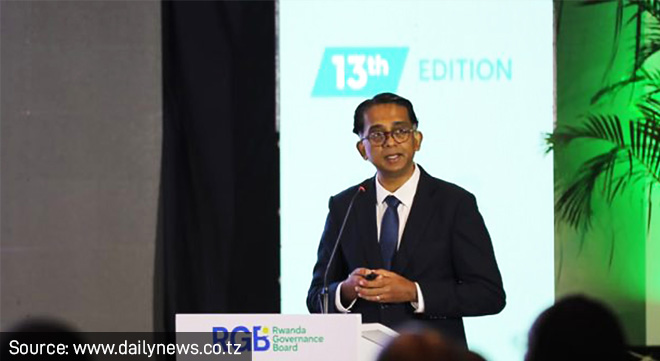
Dinesh Naidu (pictured), director (Knowledge) at Chandler Governance Group, says South Africa needs to build on its existing strengths.
“Sound laws and an enabling marketplace are the foundation, but effective governance takes stronger institutions, consistent policy implementation and responsible resource management, so these strengths carry through to the wider picture,” he said.
The 2026 Chandler Good Government Index (CGGI) ranks 133 countries on government capabilities and performance. Singapore tops the list, followed by Norway, Denmark, Finland, Sweden, Switzerland, Germany, the Netherlands, the United Arab Emirates and Luxembourg. Venezuela ranks last, with Chad second last.
South Africa places 85th, nine positions lower than in the previous edition. Its results differ sharply across the seven pillars and 35 indicators used to assess government performance. Among the 35 African countries included in the index, South Africa ranks sixth, behind Mauritius, Rwanda, Botswana, Morocco and Tanzania.
Published annually by the Chandler Institute of Governance, the CGGI covers countries representing 94% of the world’s population and draws on more than 60 public data sources. Its seven equally weighted pillars are Leadership & Foresight, Robust Laws & Policies, Strong Institutions, Financial Stewardship, Attractive Marketplace, Global Influence & Reputation, and Helping People Rise.
The first six pillars assess government capabilities. Helping People Rise covers outcomes relating to people’s lives, including employment, health, education and personal safety.
Employment, income distribution and safety
South Africa’s lowest-ranked pillar is Helping People Rise, at 119th. Three of its indicators sit close to the bottom of the global rankings: employment at 133rd, income distribution at 132nd and personal safety at 131st.
The employment result puts South Africa last among the 133 countries assessed. The CGGI’s Employment indicator combines three measures: adult unemployment, youth unemployment and informal employment in non-agricultural sectors. The unemployment measures cover people aged 25 and older and those aged 15 to 24, respectively. The informal employment measure looks at the proportion of employed people in non-agricultural sectors who work informally.
All three measures come from the International Labour Organization’s ILOSTAT database. They are normalised and equally weighted before being combined into the indicator.
The ranking reflects South Africa’s performance across these three measures. It is not a direct measure of the number of jobs created by government, and the ranking alone does not show the size of the gap between South Africa and the country in 132nd place.
Income distribution is South Africa’s second-lowest-ranked indicator, at 132nd. It measures the distribution of net income after taxes and transfers, assessing how far the actual distribution deviates from perfect equality. It is not simply a comparison between the highest and lowest salaries.
Personal safety, at 131st, is assessed in terms of the state’s ability to protect people from violent crime. The index combines the Economist Intelligence Unit’s assessment of violent crime, Gallup’s Law and Order Report, and United Nations Office on Drugs and Crime data on homicide and robbery rates. The measures are scaled and averaged to produce the indicator.
The result draws on several measures and assessments, rather than a single set of reported crime figures.
South Africa’s other results within Helping People Rise range from 15th for price stability to 124th for health. The country ranks 67th for gender gap, 60th for environmental performance, 84th for satisfaction with public services, 87th for education and 96th for non-discrimination.
Public finances and spending efficiency
Financial Stewardship is another weak area for South Africa, which ranks 109th globally. The pillar assesses government debt, country budget surplus, spending efficiency and country risk premium.
South Africa ranks 101st for government debt, 104th for country budget surplus, 122nd for spending efficiency and 65th for country risk premium. Spending efficiency is its weakest result in the pillar, while country risk premium is its strongest.
At regional level, the picture is improving. The CGGI reports that Financial Stewardship recorded Africa’s largest year-on-year gain in average score in 2026, followed by Helping People Rise.
“Africa’s strongest gains were in Financial Stewardship, followed by Helping People Rise. This points to progress in public financial management and outcomes such as education and healthcare. The challenge now is to sustain these gains and strengthen the capabilities needed to deliver better outcomes for citizens,” Naidu said.
Laws and logistics stand out
South Africa’s highest-ranked pillar is Robust Laws & Policies, at 44th. Within it, the country ranks 20th for transparency, 37th for quality of the judiciary, 54th for rule of law and 81st for regulatory governance.
The transparency result puts South Africa among the top 20 countries on that measure. However, the Chandler Governance Group says the country’s overall ranking for Robust Laws & Policies has declined gradually over the past three years.
South Africa ranks 58th for Strong Institutions. Its results are 47th for quality of bureaucracy, 50th for data capability, 68th for implementation and 75th for coordination.
These indicators cover different aspects of the legal and institutional framework, from the quality of the judiciary and regulatory governance to the functioning of the bureaucracy and the implementation and coordination of government work.
The country’s Attractive Marketplace ranking has improved from 66th in 2021 to 48th in 2026. Its improvement in score on this pillar over the six-year period was the fourth largest globally.
The individual rankings reveal differences within the pillar. South Africa ranks 17th for logistics competence and 51st for property rights, but 81st for stable business regulations and 83rd for attracting investments.
Logistics competence is South Africa’s second-highest-ranked indicator across the index, after price stability. Its positions for attracting investments and stable business regulations are considerably lower.
Leadership, innovation and international standing
South Africa ranks 85th for Leadership & Foresight. Its results across the five indicators range from 43rd for innovation and 45th for strategic prioritisation to 65th for ethical leadership, 92nd for long-term vision and 114th for adaptability.
For Global Influence & Reputation, South Africa ranks 55th. It places 23rd for nation brand and 41st for international diplomacy, followed by 70th for passport strength and 88th for international trade.
The results differ markedly within both pillars. South Africa’s ranking for innovation, for example, is considerably higher than its position for adaptability. Its nation-brand ranking is also higher than its ranking for international trade.
How South Africa compares with the rest of Africa
South Africa ranks sixth among the 35 African countries included in the index. Mauritius leads the regional group, ranking 55th globally, followed by Rwanda at 62nd, Botswana at 70th, Morocco at 79th and Tanzania at 80th. South Africa ranks 85th.
Across the continent, 71% of the African countries assessed in both the 2025 and 2026 editions improved their overall scores. Average scores increased in six of the seven pillars, with the largest gains in Financial Stewardship, followed by Helping People Rise.
Africa remains the lowest-scoring region in the index, and its average score is still below its 2021 level. Twenty-three of the 35 African countries rank outside the global top 100, and none ranks in the top 50.
Naidu said governments needed to sustain the region’s gains and strengthen the capabilities required to improve outcomes for citizens. He also emphasised the value of using evidence and learning from other countries.
“Every country faces its own governance challenges and is guided by different priorities. Governments that are willing to take stock of the evidence, learn from peers and strengthen their institutions are well placed to achieve meaningful and sustained improvements,” he said.
Note: The CGGI is a comparative diagnostic tool for assessing government performance. Its rankings show how countries compare across the indicators and pillars measured, but they do not, on their own, explain why a country received a particular ranking or establish that government action alone caused a particular outcome.