
Sanlam has the scale, the brand, and the financial muscle. It hasn’t been sitting entirely on the sidelines these past few years, but as digital-first competitors raise the bar on convenience and customer experience, even a giant needs to keep up with the cool kids.
The group’s answer is to bring banking, credit, rewards, insurance, and investments together in one app, powered by its partnership with GoTyme. The ambition is to make the group part of customers’ everyday financial lives, rather than a name to which they turn only when they need insurance or investment advice.
There is a clear commercial logic behind the move. When young people start earning, their first financial needs are more likely to be a transactional account and access to credit than life cover or retirement planning. By the time they need those products, they may already have established relationships with other providers.
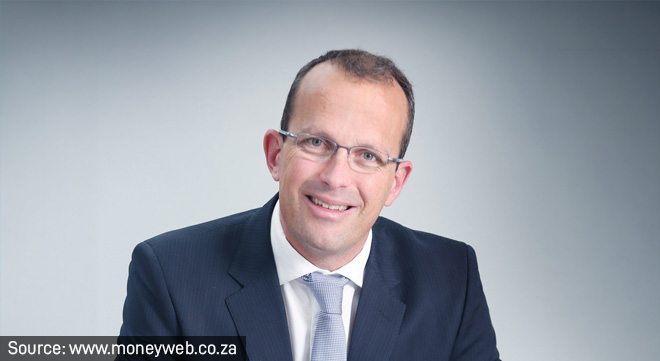
On Sanlam’s Capital Markets Day on 15 October 2026, Anton Gildenhuys (pictured), the chief executive of Sanlam Life and Savings, said the ecosystem was designed to broaden the group’s sources of growth while improving its relevance among younger, mobile-first customers.
“We want them to very firstly think of Sanlam. Sanlam will be able to solve this for me,” he said.
One app, one technology platform
The Sanlam App is being rebuilt with GoTyme on a shared technology platform. This is not simply a case of linking Sanlam’s existing app to a separate GoTyme banking account through application programming interfaces (APIs). The companies are rebuilding the app on GoTyme’s technology stack to create a more integrated experience.
“We rebuilt the entire Sanlam app together with GoTyme on a single technology platform,” Gildenhuys said.
The app is designed to bring together four core elements: transactional banking, retail credit, rewards, and Sanlam’s wider financial-services portfolio. Customers will be able to access GoTyme banking, credit through the SanlamGoTyme joint operation, Boost rewards, and Sanlam’s life insurance, general insurance, savings and investment products.
GoTyme brings its banking capabilities and technology expertise, while Sanlam contributes its brand, financial-services products, and established distribution network of more than 9 400 tied advisers and 163 branches.
The shared platform is intended to make it easier to improve the app as customers use it. Gildenhuys said data on usage patterns, frustrations, and features customers value would inform ongoing development, rather than relying solely on decisions made in boardrooms.
“The success in the digital environment comes from a relentless focus on customer experience,” Gildenhuys said. He explained that the technology allows the app to be updated as frequently as every two weeks, using data to identify where customers get stuck or frustrated.
“We constantly evolve and update the app,” he said,
Already in beta testing
At the time of the Capital Markets Day, about 500 Sanlam employees, including Gildenhuys, were beta testing the app. It was already operational, with users able to interact with real payment services rather than a simulated environment.
“It’s working, and you can actually interact with the real world in there,” Gildenhuys said. “It’s not like in a sandbox environment. You do interact in real payments.”
The next step is a soft launch, planned for November 2026, when the app is to be made available through app stores. Sanlam intends to start with its own staff and intermediaries, using the period to test the experience, stress-test the system, and check that it can handle transaction volumes before opening it to the wider market.
Gildenhuys described the soft launch as more than a beta test, although the initial release will still be a minimum viable product (MVP). The app is expected to bring together everyday banking, payments and transfers, a debit card, rewards linked to financial behaviour, and access to the wider Sanlam portfolio. Customers will also be able to use services such as buying electricity and vouchers.
Some features will follow later. Gildenhuys said a credit card, for example, was still under development and was expected to launch during 2027.
The broader commercial launch is targeted for 2027. Management plans to monitor delivery against the project plan and budget during the build-and-test phase. Once the app is opened to the wider market, the focus will shift to accounts opened, activity rates, transaction volumes, and customer growth.
From 2028 onwards, the emphasis is expected to move towards deepening customer relationships, growing deposits and the credit book, and generating core earnings.
Who pays – and how are the economics shared?
The partnership does not operate on a blanket 50/50 basis. The clearest example of equal ownership is the SanlamGoTyme retail-credit joint operation, which Gildenhuys said was already profitable after the migration of its technology platform to GoTyme’s stack. The venture incorporates the partners’ existing unsecured-credit activities.
Banking is structured differently. GoTyme is the regulated bank and provides the banking services, while Sanlam distributes those services under a distribution agreement. The proposition will be co-branded, with GoTyme receiving equal prominence wherever transactional banking appears.
The technology arrangement is central to the economics. During the Q&A, Gildenhuys was asked whether the annual costs associated with the launch were relatively modest because Sanlam was paying only its share.
“So of course it is our share of the costs, so that helps quite a bit. And then the scale benefit that GoTyme brings into their arrangement,” he said.
GoTyme builds a technology stack used by its operations in the Philippines and South Africa, as well as by Sanlam. This allows Sanlam to draw on an existing platform rather than build a separate banking technology infrastructure from scratch. However, integrating that platform into Sanlam’s wider ecosystem requires additional expenditure.
“We spent some extra money that’s outside of those banking costs to integrate the banking stack into the ecosystem,” Gildenhuys said. He confirmed that launch costs were included in the figures presented to investors.
Sanlam had invested about R180 million in transactional banking by the time of the Capital Markets Day and expected to spend a further R150m to R200m a year through to 2030. Banking services are expected to break even in 2030.
Separately, Sanlam spent about R100m migrating its credit technology to GoTyme’s platform. That migration was complete, and Gildenhuys said the credit joint operation was already profitable.
There may also be a shift in how Sanlam allocates its marketing budget. Gildenhuys said some expenditure traditionally devoted to life insurance could be redirected towards loans and the broader proposition.
“We can reallocate some of the marketing spend that would have traditionally been just life insurance to support the loans off the back,” he said.
He did not quantify the amount, so it remains unclear how much of the marketing support will represent new expenditure and how much will come from reallocating existing budgets.
The companies will also share in the profits from life insurance business sold through the app, with the arrangement depending on which partner brings in the customer.
“We will share profits with GoTyme,” Gildenhuys said.
He did not disclose the details of the profit-sharing agreement.
Sanlam is GoTyme’s sole life insurance partner for the relevant offering, both on GoTyme’s platform and within the Sanlam app. The arrangement gives both businesses a commercial interest in the customers they attract, although the precise economics remain undisclosed.
Asked how much the ecosystem would contribute to Sanlam Life and Savings’ growth targets, Gildenhuys said the contribution would be meaningful, but declined to quantify it separately from growth through existing channels.
“Of course, incrementally quite a bit,” he said. “I’m not going to disclose exactly how much of a growth we expect from the ecosystem and how much we expect from our net submission channels.”
He added that the ecosystem could support margin improvement through lower acquisition costs and better unit economics.
Boost: one rewards platform, a substantial bill
Sanlam is also consolidating its existing rewards programmes under Boost. The platform is intended to bring initiatives such as MyWay cashback, Echo Bonus and Reality together, while adding lifestyle rewards and incentives linked to customers’ financial behaviour.
Sanlam said it had invested R364m to date in consolidating its rewards programmes and developing the new proposition, with a further R100m to R200m expected.
The additional investment is to be funded by participating rewards partners. Gildenhuys named Santam, AfroCentric and Sanlam Life and Savings as examples of businesses bringing their rewards spending under one umbrella.
The intention is to move away from separate programmes towards a shared platform. But Sanlam did not provide a breakdown of the contributions from individual partners or explain how the costs and benefits will be allocated.
The commercial value will depend on more than consolidating the programmes. Customers must engage with the rewards, partners must see value in participating, and the platform must help improve retention or encourage customers to use more of the group’s services.
From banking customers to a bigger credit book
Sanlam is targeting between two million and four million banking customers by 2030. It also wants to grow its unsecured retail-credit book from R6 billion in 2025 to R10bn by 2030.
The targets give investors a way to measure whether the strategy is gaining traction, but customer numbers alone will not establish whether the ecosystem is working. App activity, transaction volumes, deposits, credit growth, and core earnings will also matter.
Sanlam’s existing customer base and adviser network could help it reach people, while the digital platform may create new opportunities to engage customers earlier in their financial lives. But a person who downloads an app for free banking or rewards will not necessarily go on to buy insurance, invest through Sanlam, or consult an adviser.
The group is betting that a more integrated experience will make it easier to deepen those relationships. Gildenhuys said the platform would also allow customers to connect virtually with advisers and arrange a physical meeting when needed.
He believes the benefits could work in both directions: the app could generate new prospects for advisers, while advice could strengthen customer relationships with the digital platform.
The technical opportunity – and the execution risk
The app is intended to become a single digital entry point into Sanlam’s financial-services business. That has potential advantages for customers, but also for the group’s operations.
One example is how Sanlam pays money to customers. Gildenhuys said the group could pay a wealth bonus into a customer’s Sanlam-GoTyme account, allowing the customer to move the money wherever they choose without incurring transaction charges.
He argued that this could also reduce fraud risks associated with requests to pay funds into different bank accounts. With customers verified through the Sanlam app, the group would have greater confidence that it was dealing with the right person before releasing funds.
There may be scope to take the model into other African markets. GoTyme’s technology stack already operates across jurisdictions, but Gildenhuys cautioned against assuming the South African proposition could simply be copied elsewhere.
“You can’t just take what works in South Africa and dump it in Kenya, for example, and think it’ll work,” he said.
Local customer needs and regulatory requirements, including access to the necessary banking licences, would have to be addressed. His view is that Sanlam needs to demonstrate the model at home before considering wider expansion.
“I also am a firm believer that you need to prove your leadership in your home market, and then you can export that as well,” he said.
The technology gives Sanlam a route into customers’ everyday financial lives, while the shared platform could create efficiencies beyond the app itself. But the benefits will depend on execution: customers must find the proposition useful enough to keep coming back, and the group must turn that engagement into sustainable returns.
Bringing sexy back is one thing. Making it stick is another.