Escalating tensions involving Iran, Israel, and the United States have pushed oil prices sharply higher, exposing fuel-importing economies such as South Africa to a fresh external shock.
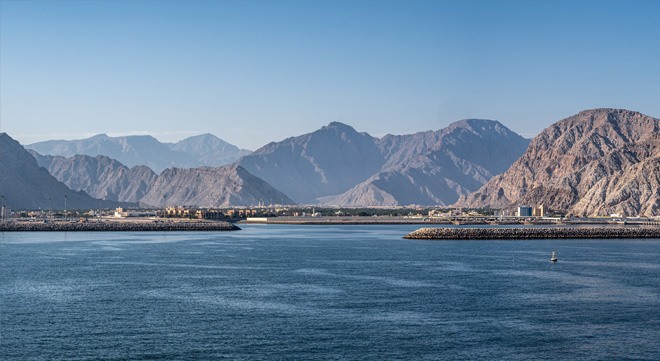
Following a series of attacks and counterattacks, shipping through the Strait of Hormuz – the narrow waterway that carries roughly a fifth of global oil supply – has been heavily disrupted, even though the strait remains formally open and many vessels are avoiding the route because of security risks and sharply higher insurance costs.
According to Paul Gooden, head of global natural resources at Ninety One, the disruption has effectively removed a significant share of global supply from the market.
Oil prices surged more than 25% during the week of 4 to 8 March, briefly climbing above $118 a barrel before easing back into the mid-$90 range, where Brent has continued to trade amid a persistent geopolitical risk premium.
“Roughly 20 million barrels of oil pass through the strait each day, equivalent to about 20% of global supply,” Gooden said. “When supply is disrupted on this scale, inventories fall and prices rise rapidly.”
The impact extends beyond crude oil. Refined products such as petrol, diesel, and jet fuel often react more sharply because of refining and logistics constraints. Jet fuel prices in Europe, for example, have already more than doubled since the start of the year. Natural gas markets are also under pressure because about 20% of global liquefied natural gas exports normally pass through the Strait of Hormuz, forcing Asian buyers to compete for alternative supplies.
Immediate impact on South Africa
South Africa imports most of its refined fuel and is therefore highly exposed to global oil shocks. The rise in oil prices – combined with a weaker rand – is expected to translate into sharp increases in petrol and diesel prices.
The next fuel price adjustment takes effect on 1 April, and early projections suggest significant increases. Current estimates indicate 93 octane petrol could rise by about R3.12 per litre, 95 octane petrol by roughly R3.35 per litre, and diesel by more than R5 per litre. Some projections – if the disruption persists – suggest increases could reach R8 per litre, although such estimates are considered extreme.
The April adjustment will also incorporate tax increases announced in the 2026 Budget. The general fuel levy will rise by 9 cents per litre for petrol and 8 cents for diesel, the carbon fuel levy by 5 cents and 6 cents respectively, and the Road Accident Fund levy by a further 7 cents per litre.
Together, these changes amount to a combined tax increase of about 21 cents per litre for both petrol and diesel.
Higher diesel prices are already raising costs for the freight and logistics sector. The Road Freight Association has warned that these increases will filter through to consumers, pushing up food prices and other goods.
Rising fuel costs and a weaker currency are also likely to add to inflationary pressure, potentially limiting the South African Reserve Bank’s scope to reduce interest rates.
Oil markets exposed to supply shock
The speed of the price surge has surprised markets.
Malcolm Melville, commodities fund manager at Schroders, noted that oil had been trading in the mid-$60 range earlier this year, supported by high inventories and expectations that prices would soften.
The escalation in early March overturned that consensus.
Iran produces about 3.4 million barrels of oil per day, exporting roughly half that volume. Even if other producers increase output, the potential disruption is far larger.
The Organization of the Petroleum Exporting Countries (OPEC) has announced a 200 000 barrel-per-day production increase, but Melville said this would have little impact relative to possible supply losses.
If the disruption persists for several weeks, oil prices could rise to between $100 and $120 per barrel, with the risk of even higher levels if the conflict continues.
Inflation risks return
Higher energy prices also have broader macroeconomic implications.
David Rees, global head of economics at Schroders, said the global economy remains vulnerable to price shocks that can become embedded in wages and labour markets.
A brief spike in oil prices would have limited lasting impact. Sustained increases, however, would squeeze real incomes and weigh on growth.
Higher inflation could also complicate monetary policy, making it difficult for central banks such as the US Federal Reserve to justify further interest-rate cuts.
For rate hikes to occur, however, the shock would need to become embedded in wages and broader price dynamics.
Emerging markets face mixed outcomes
The consequences will not be evenly distributed across emerging markets.
Philip Robotham, head of client group at Schroders South Africa, said many emerging economies have strengthened their balance sheets and reduced reliance on short-term foreign capital, which should help them weather geopolitical shocks.
However, higher oil prices favour exporting countries such as Brazil, Angola, and Nigeria.
For oil-importing economies such as South Africa, the impact is far more negative. Robotham said sustained geopolitical tensions could also weaken global risk appetite while supporting commodities such as gold.
Rethinking diversification
Periods of geopolitical tension also highlight the importance of diversification.
Remi Olu-Pitan, head of multi-asset growth and income at Schroders, said portfolios with exposure to commodities and real assets tend to be more resilient during supply shocks.
Traditional diversification assumptions have been challenged in recent years, particularly when inflation shocks reduced the ability of government bonds to act as reliable hedges. In such environments, assets such as gold and commodities can provide stability.
A structurally tighter energy market?
Some analysts believe the latest shock may be accelerating longer-term shifts in energy markets.
Gooden noted that US shale production growth is slowing as geological challenges increase and investment discipline remains high. At the same time, spare capacity within OPEC has begun to normalise after several years of surplus supply.
Global demand forecasts still suggest oil consumption could continue rising into the 2030s.
“The market may already have been transitioning from a period of oversupply into a structurally tighter environment,” Gooden said.
If shipping through the Strait of Hormuz normalises, oil prices could retreat. Even then, analysts expect a geopolitical risk premium to persist as countries reassess energy security and rebuild inventories.
If the conflict continues, the effects could spread through higher fuel costs, rising inflation, and slower economic growth.