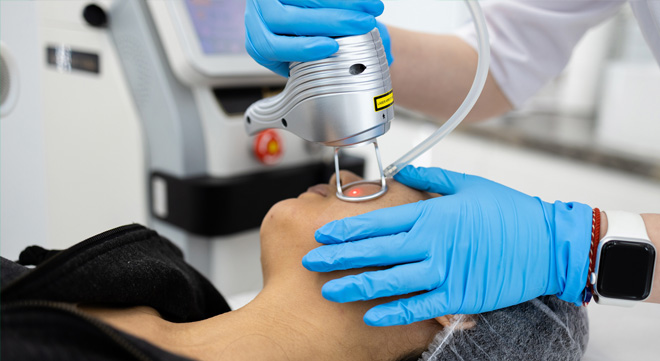
A recent judgment underscores that the line between cosmetic and medical treatment is not always clear-cut in personal injury claims. Treatments that demonstrably restore function, appearance, and psychological well-being after severe trauma – and are backed by expert consensus – can be recognised as legitimate medical expenses.
In September, the High Court in Cape Town ruled that Jill Allen’s laser therapy for facial scarring qualified as a recoverable past medical expense under section 17 of the Road Accident Fund Act. This judgment has important implications for insurers, claimants, and legal practitioners in evaluating therapies that may straddle the cosmetic-medical divide.
Case background: severe injuries and prolonged recovery
On 25 February 2018, Allen was running with friends along Northshore Drive in Hout Bay when she was struck by a vehicle driven by Ntokozo Shabala. The collision, caused solely by the driver’s negligence, left Allen with serious and life-altering injuries, including facial fractures and lacerations, a severe left eye injury, skull fracture, rib and fibula fractures, a right shoulder fracture, and a left index finger fracture. She also suffered hypovolemic shock, anaemia, polyuria, pneumonia, and permanent facial disfigurement.
Allen underwent emergency surgery followed by extensive reconstructive procedures, spending 18 days in intensive care and 10 days in a general ward. Her recovery spanned several years, including 12 to 13 reconstructive surgeries and ongoing rehabilitation.
In June 2019, Allen instituted a civil claim against the RAF for damages arising from the collision. The claims for future medical expenses, loss of income, and general damages were largely settled, but the cost of laser therapy to manage facial scarring – provided by skin care therapist Libby Roos – remained in dispute.
The total claimed for 50 laser sessions was R239 450. Allen argued that the treatment was medically necessary to restore function and appearance after her traumatic injuries.
Issue in dispute: laser treatment costs
The RAF disputed only the costs related to the laser therapy. The Fund’s position was procedural: Roos was not registered with the Health Professions Council of South Africa (HPCSA), and the RAF contended that treatment should have been provided by a dermatologist or plastic surgeon.
Notably, the RAF could not point to any legislative provision in the RAF Act that excluded payment for the treatment.
Expert evidence: consensus on medical necessity
A joint minute of experts dated 25 October 2024 recorded consensus between Dr Arnold Douglas (Allen’s treating plastic surgeon) and Dr Kajal Lutchminarian (RAF expert) that the laser treatment was clinically necessary. The experts confirmed that the extensive scarring required 50 sessions of laser therapy, which effectively minimised and concealed scars, improved skin quality, and addressed functional impairment caused by contracted scars around the nose, mouth, and eyes.
The experts agreed that the therapy produced exceptional results, enhanced appearance, and supported Allen’s psychological well-being and social reintegration.
The judgment referenced prior authority, highlighting that courts may accept expert agreements in joint minutes unless compelling reasons exist to challenge them.
Plaintiff’s testimony: restoring confidence and dignity
Allen described the profound impact of her injuries on her physical appearance, social life, and career in tourism. She recounted her distress at seeing her face immediately after the accident, noting that her self-image and confidence were deeply affected.
Laser therapy with Roos, over 50 sessions spanning 18 months, was life changing. Allen testified that the treatment restored her appearance, self-confidence, and ability to return to work. She paid the treatment costs largely from personal funds, because her medical scheme did not cover the procedure.
The Court noted that her choice of provider was based on trust and proven outcomes, not cost shopping.
Defendant’s evidence: administrative objection
The RAF called Nizaamudien Abdul, a bill reviewer, who confirmed that the claim was rejected because Roos was not registered with the HPCSA.
Although the RAF recognised the effectiveness of the treatment, it relied on procedural technicalities rather than medical necessity to justify non-payment. Abdul could not cite any provision in the RAF Act excluding recovery for laser treatment or unregistered providers, and sections 17 and 19 specifically confirmed that the Act did not preclude such claims.
Court’s findings and ruling
The Court accepted that Allen’s injuries were severe and that the laser therapy produced remarkable improvement. All medical experts agreed the treatment was clinically necessary and not merely cosmetic. The RAF’s submission that only a registered dermatologist or plastic surgeon could perform the treatment was rejected, because expert evidence confirmed that technician-led laser therapy was appropriate and effective.
Under section 17 of the RAF Act, the Court found that Allen satisfied all requirements for compensation. Section 19 exclusions and sections 4(1) and 4(2) regarding claim management did not justify rejecting the treatment. The Court distinguished the precedent relied upon by the RAF, noting that prior cases involved providers required to be registered with a professional body, unlike Roos in 2018.
Two minor charges for neck treatments were excluded, reducing the approved past medical expense claim to R234 100. Costs were awarded to the plaintiff.
What the experts say
In a blog co-authored by associate Maano Manavhela and candidate attorney Yuveshen Naidoo of Norton Rose Fulbright, the legal experts note: “Crucially, the parties’ plastic surgery experts signed a joint minute recording consensus that laser scar therapy is an excellent non-invasive modality for scar management and that, in this case, it yielded exceptional results. The joint minute also captured the course and cost of treatment.”
Manavhela and Naidoo explain that the analysis turns on causation, medical necessity, and reasonableness.
“When a non-surgical intervention is prescribed or recommended by the treating specialist and corroborated by independent expert evidence, especially where surgical revision is contraindicated, then courts can treat the expenditure as part of the claimant’s past hospital and medical expenses flowing from the accident. The judgment therefore underscores that cosmetic therapies may be compensable where they serve a rehabilitative function, supported by outcomes evidence and proper clinical rationale.”
The experts emphasise that the judgment also clarifies the often-blurred line between cosmetic and medical treatment in personal injury claims.
“Where a therapy demonstrably restores function, appearance, and psychological well-being after severe trauma and is supported by expert consensus, courts are prepared to treat it as a legitimate medical expense.”