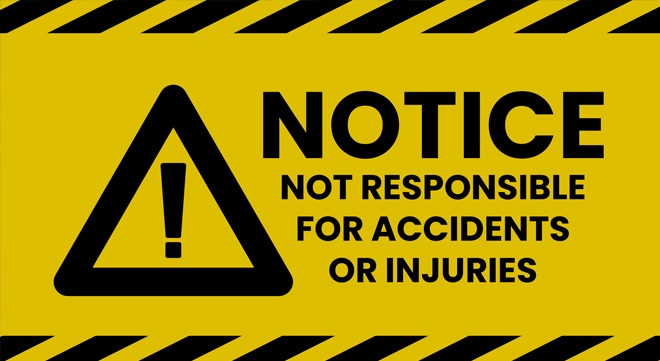
A recent judgment by the High Court in Pretoria has reaffirmed that retail store owners have a legal duty to ensure the safety of their premises for customers – and cannot rely solely on disclaimer notices as a defence against injury claims.
In a case decided in September, the Court found Big Save (Pty) Ltd liable for injuries sustained by a 69-year-old shopper, Mmampelege Johanna Matlou, after a wooden plank fell onto her foot while she was shopping at the store in Hammanskraal.
According to a blog published by Norton Rose Fulbright, Deniro Pillay, director, and Amber Lawlor, associate, said the case serves as a reminder to retailers that disclaimer notices “cannot be the only line of defence” when injuries occur on their premises.
The incident and the defences raised
Matlou was shopping at the store on 6 February 2019 when, according to her account, “an unattended, hazardous shelf timber” fell and struck her. She claimed R1 million in damages for injuries, including head and leg trauma and whiplash.
Big Save admitted that the incident occurred but denied negligence. It argued that another customer had accidentally bumped the shelf, causing the plank to fall, and the store could not be held liable for the actions of a third party.
The retailer also relied on disclaimer notices displayed at the store entrance warning that customers entered at their own risk. It further alleged contributory negligence on Matlou’s part for failing to keep a proper lookout.
The court’s findings
In his judgment, Acting Judge Khashane La M Manamela found that Big Save failed to show that the plank was properly placed or secured for a legitimate purpose within the store.
Pillay and Lawlor noted that the Court accepted that another shopper had dislodged the plank but nonetheless found that the owner had a legal duty to take reasonable steps to prevent harm to customers. “Even if a third party had caused the plank to fall, the owner remained responsible for ensuring that the grocery store environment was safe for customers to use,” they explained.
Turning to the store’s reliance on disclaimer notices, Manamela AJ wrote:
“The authorities cited above are to the effect that for a disclaimer notice to be enforced by the Court its expression ought to be in clear and unambiguous terms, when viewed by a reasonable person. No evidence was led as to the exact location of the disclaimer notice boards by the entrance of the defendant’s premises. Equally, there was no evidence led as to the exact appearance and contents of the disclaimer notice … But nothing would turn on this.”
He added that even if the notices had been seen by the plaintiff, “they would have no bearing on the incident in question”.
“One cannot expect to be hit by a piece of timber or plank in a grocery store, but a hardware store. It would not be fair and just or even comport with public policy, let alone the norms and values of the Constitution, to expect a shopper … to expect to be hit by a plank in the defendant’s store. Therefore, the notices are incompetent of disclaiming responsibility or liability on the part of the defendant under the circumstances of this matter.”
Public policy and consumer protection
Pillay and Lawlor explained that the Court rejected the store’s reliance on the disclaimer notices because they were not proven to be “clear, unambiguous, or brought to the claimant’s attention”. They added that “it would be contrary to public policy and constitutional values to expect a customer to anticipate being struck by a falling plank in a grocery store”.
The Court also found no contributory negligence on the part of Matlou and held that Big Save was 100% liable for her proven or agreed damages.
“As we approach the festive season, this judgment is a reminder to retail store owners that they have a legal duty to ensure that their stores are safe for use by customers. Reliance on disclaimer notices cannot be the only line of defence against claims,” the attorneys wrote.
Read the full judgment here.