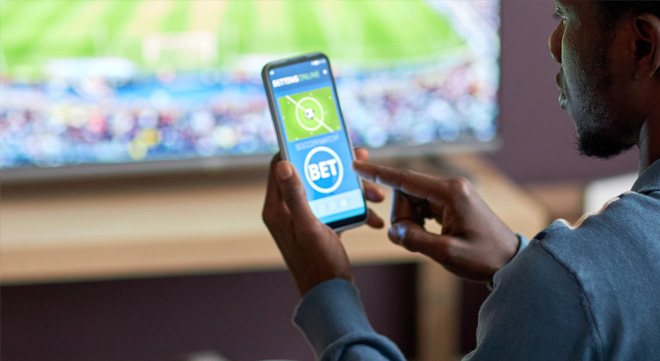
The rapid rise of online betting in South Africa has intensified concerns about the scale of household gambling. But according to the South African Reserve Bank (SARB), some of the most widely cited figures significantly overstate how much households are spending.
In its March 2026 Quarterly Bulletin, the Bank cautions that the oft-quoted figure of more than R1.5 trillion spent on gambling in the year to March 2025 reflects turnover – the total value of bets placed – rather than the amount ultimately lost by players.
Turnover captures the full volume of betting activity, including money that is repeatedly wagered as winnings are recycled. As a result, it measures the intensity of gambling rather than its net cost to households. Treating turnover as expenditure would imply that households are allocating an implausibly large share of their income to gambling – a conclusion the SARB describes as misleading.
Turnover is not the same as spending
A more appropriate measure is gross gambling revenue (GGR), which reflects the portion retained by operators after winnings are paid out and is used as a proxy for household gambling expenditure. On this basis, GGR increased by 183.6% between 2015 and 2024, rising from R26.3 billion to R74.5bn.
The SARB’s analysis highlights that these measures capture different aspects of gambling activity. Turnover reflects the intensity of betting, GGR reflects net losses to players, and national accounts data indicates how significant those losses are in the context of overall household spending. Confusing these measures, the Bank cautions, can lead to very different conclusions about both the scale of gambling and the need for policy intervention.
Growth accelerated after Covid-19
Growth accelerated markedly after the Covid-19 pandemic. According to the SARB, GGR increased at an average annual rate of 6.5% between 2015/16 and 2019/20, before rising to 34.1% in the post-pandemic period from 2021/22 to 2024/25. Although part of this reflected base effects following the contraction in 2020, it was subsequently sustained by increased betting activity.
The SARB notes that this upward trend has raised concerns about the potential impact of gambling expenditure on household finances. In macro-economic terms, GGR remained stable at about 0.6% of GDP between 2015 and 2021, before increasing to 1% in 2024.
The composition of gambling has shifted significantly over the same period. According to the SARB, betting has overtaken casinos as the dominant source of gambling revenue, with its share of GGR rising from 12.4% in 2012/13 to 69.8% in 2024/25. Casinos’ share declined from 78.4% to 22.3%.
Within betting, online platforms now dominate. The SARB reports that online betting accounted for 85.5% of total betting revenue in 2024/25, up from 80.7% the previous year, reflecting the sustained shift towards digital channels following the pandemic.
Still a small share of household spending
Despite this growth, the SARB finds that gambling remains a relatively small component of overall household spending. In the national accounts, expenditure on “games of chance” accounted for 1.3% of total household final consumption expenditure (HFCE) in 2024, up from 1.1% in 2015.
Statistics South Africa measures this category using the “net surplus” of gambling activity – the difference between amounts wagered and winnings paid out – based on data from the National Gambling Board and the National Lottery, as cited by the SARB.
A similar picture emerges from inflation data. As noted in the SARB Bulletin, games of chance made up 1.6% of the Consumer Price Index basket as of January 2025, slightly lower than in the preceding period, indicating that spending on other goods and services has increased at a faster pace.
Survey data provides further insight into how gambling expenditure is distributed. According to StatsSA’s Income and Expenditure Survey, cited by the SARB, overall spending on games of chance accounts for a small share of total household expenditure, although this is likely understated because of underreporting.
The distribution of spending is uneven. The SARB reports that households in the lowest expenditure decile allocate about 1.4% of their spending to gambling, compared with 18.1% among households in the highest decile. The top five expenditure deciles account for 76.3% of total gambling spend, while the bottom five account for 23.7%.
At the same time, the SARB notes that the share of gambling within recreational spending has increased, even as the overall contribution of recreation and culture to household expenditure has declined. This suggests that gambling is taking up a larger portion of discretionary spending within that category.
The SARB also addresses concerns that withdrawals from the two-pot retirement system may have fuelled gambling activity. While net withdrawals totalled R51.5bn in 2024, this represented less than 1.1% of HFCE. Available evidence, cited by the SARB, suggests that most of these funds were used for debt repayment and essential expenses, rather than discretionary spending such as gambling.
Policy focus shifts to online betting
The SARB’s analysis lands against the backdrop of an evolving policy debate. National Treasury has proposed a 20% national tax on online gambling revenue, aimed at addressing the rapid growth in betting activity and its potential social effects.
Notably, the proposed tax is levied on GGR – the same measure the SARB uses as a proxy for household gambling expenditure – aligning the policy instrument with the net economic impact of gambling rather than headline turnover figures.
The SARB’s findings do not dismiss concerns about gambling. Rather, they place them in context. Gambling activity, particularly online betting, has grown rapidly and is reshaping the structure of the industry. However, it does not appear to have materially displaced spending on essential goods and services when viewed at an aggregate level, according to the SARB.
The implication, as reflected in the SARB’s analysis, is that the current debate is being shaped by different lenses. While policymakers are responding to changes in behaviour and accessibility, the Bank’s data suggests that, at a macro level, gambling remains a relatively small component of household finances.